As industries begin to shift away from fossil fuels, Ampaire is banking on its line of hybrid-electric airplanes to revolutionize air travel. The company recently announced its historic first flight of an existing airline route in Hawaii.
Kevin Noertker, Ampaire CEO, said not only would the environment reap the biggest benefits from a reduction of emissions, but the airline industry could also soar to new heights.
"For the airlines, the biggest impact is reduced cost of operation. Airlines care about the total cost of ownership and operation for their planes. By switching to a hybrid plane, you could reduce that fuel burn by up to 50 percent," Noertker told Cheddar.
The CEO also noted that a fully electric plane would reduce emissions by more than 90 percent.
After launching in 2016 and constructing an aircraft for the last two years, paid flights for the company are on the horizon. "We're looking at about a three-year timeline before we get certification to deploy these planes in that commercial operation," Noertker said.
While the company gears up for commercial flights, it has already been conducting demonstrations under the FAA's experimental market survey, which allows passengers and potential Ampaire customers to fly.
Last month, the company became the first to ever demonstrate a hybrid-electric flight in Maui, which went from Kahului to Hana in about 20 minutes. Like other industries, Ampaire's ability to continue developing and moving forward with test flights, particularly in Hawaii, was impacted by pandemic-related restrictions.
The hybrid-electric planes, according to Noertker, while capable of long-distance flights, are optimal for relatively short-distances. Over the next five to 10 years, however, there are plans to produce an aircraft that can hold up to 20 passengers and will fly "routes between 50 and 500 miles."
"The reality is most routes that airlines like to fly are about 100 miles," Noertker said.
David Stryzewski, CEO of Sound Planning Group, joins Cheddar News' Closing Bell, where he says he believes pent-up demand is driving stocks higher and explains how Wednesday's Fed decision continues to impact investor sentiment.
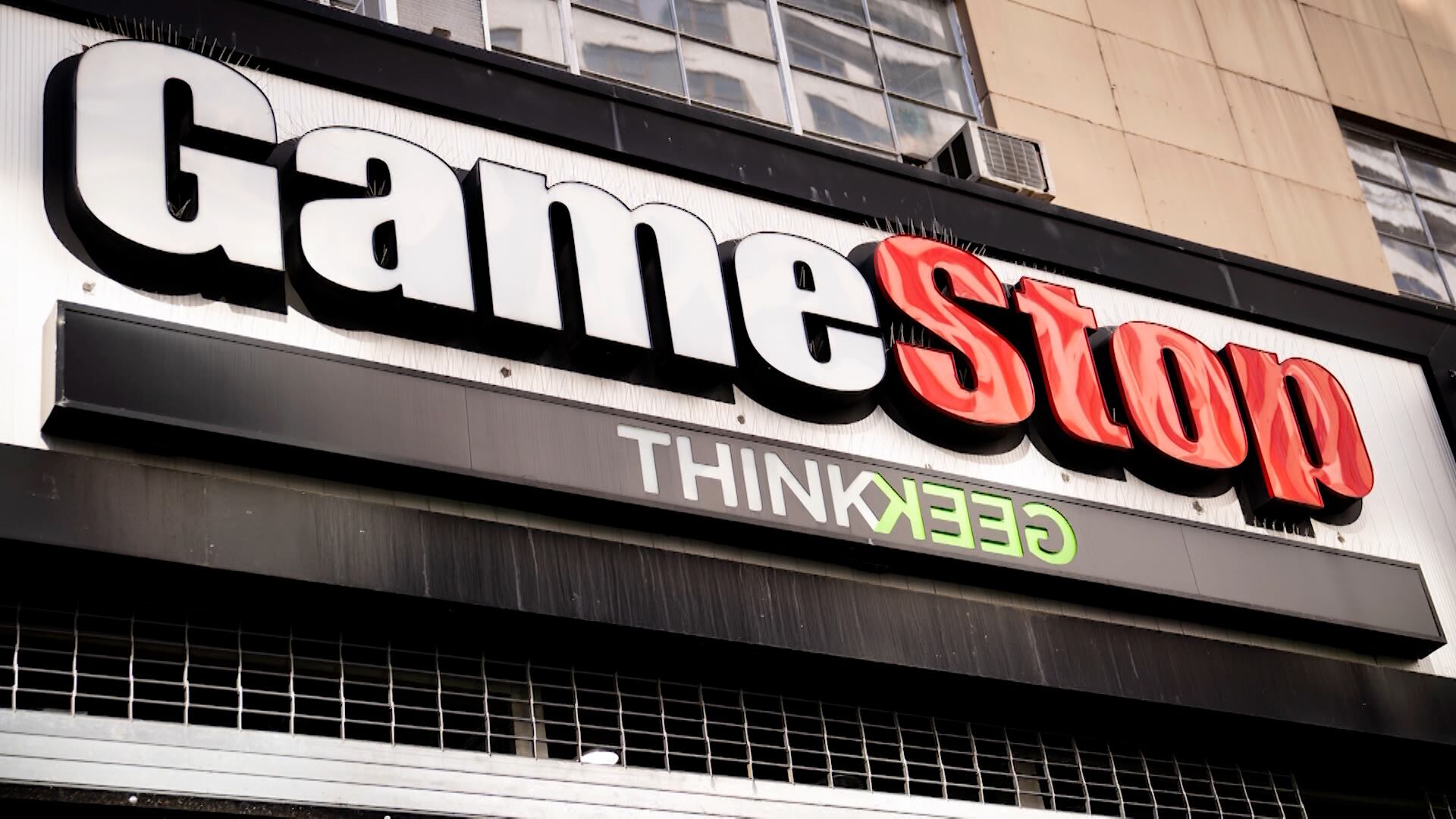
Mario Stefanidis, Vice President of Research at Roundhill Investments, joins Cheddar News' Closing Bell, where he explains why shares of GameStop soared on Wall Street despite mixed results. Stefanidis also breaks down GameStop's NFT plans, which the company is expected to launch over this summer.
Neonvest is a platform connecting startups and entrepreneurs with experts in the VC space. The startup says it's in the process of raising a seed round of approximately $2.5 million from a mix of angel and institutional investors. Aakash Shah, co-founder of NeonVest, joins Cheddar News' Closing Bell to discuss.
The Russia-Ukraine conflict is becoming a global one: as the West isolates Russia's economy with sanctions and China contemplates an alliance of sorts with Russia, global trade relationships and globalization as we know it could change dramatically. John Leer, Chief Economist at Morning Consult, joins Closing Bell to discuss what the invasion means for globalization, global trade and growth, the U.S. economy and consumer, and more.
March Madness kicked off this month as more and more states are legalizing sports betting — and some major upsets almost immediately busting many a bracket. Jay Croucher, the director of trading at the sportsbook PointsBet, joined Cheddar News to talk about the tournament and the current top picks. "There's not too much difference in terms of the busiest days of the year between the Super Bowl and the first day of March Madness," he said.
The Bill Gates-founded Breakthrough Energy company invested $80 million in Verdox Inc. to facilitate efficient, lower-cost technolog to remove carbon from the air and emission sources. CEO of Verdox, Brian Baynes, joined Cheddar News to discuss the investment, how the company's tech works, and where he sees it going. "We anticipate that with technologies like ours, we potentially can get to the scale of about a million tons per year within 5-10 years," he said. "And then ultimately we need to be doing this at the scales of billions of tons per year and ultimately about 10 billion tons per year in the year 2050."
Amazon closed its deal to buy MGM's many content brands for $8.5 billion, and Michael Pachter, a managing director at Wedbush Securities, joined Cheddar News to discuss the e-commerce giant's second-largest acquisition to date and how he thinks it will all pay off. "To make a movie today, you just can't even think about it for less than 30 million bucks, so 4,000 movies, I mean that's several billion dollars worth of assets," he said, noting how it would also add to Amazon's little-known ad-supported IMDb TV service. "I don't know that the IMDb TV guys actually talk to the Amazon Prime Video guys, but a lot of content, it makes the value of a Prime subscription much, much greater, and people are far, far less likely to churn even if they're only buying one package every three months."
Rachel Thomas, the co-founder and CEO of the non-profit Lean In, joined Cheddar amid Women's History Month, to discuss how the organization is taking on issues that continue to impact the workplace through its Circles program. "These are a program that brings women together in small groups, usually 8 to 12, for support, camaraderie, and to learn together," she said. "We also we have a lot of curriculum so women can learn how to navigate workplace biases, how to negotiate with women." Thomas also applauded President Biden's recent call to action on equal pay for women, noting that businesses must do more to be cognizant of inherent gender and racial biases.