As industries begin to shift away from fossil fuels, Ampaire is banking on its line of hybrid-electric airplanes to revolutionize air travel. The company recently announced its historic first flight of an existing airline route in Hawaii.
Kevin Noertker, Ampaire CEO, said not only would the environment reap the biggest benefits from a reduction of emissions, but the airline industry could also soar to new heights.
"For the airlines, the biggest impact is reduced cost of operation. Airlines care about the total cost of ownership and operation for their planes. By switching to a hybrid plane, you could reduce that fuel burn by up to 50 percent," Noertker told Cheddar.
The CEO also noted that a fully electric plane would reduce emissions by more than 90 percent.
After launching in 2016 and constructing an aircraft for the last two years, paid flights for the company are on the horizon. "We're looking at about a three-year timeline before we get certification to deploy these planes in that commercial operation," Noertker said.
While the company gears up for commercial flights, it has already been conducting demonstrations under the FAA's experimental market survey, which allows passengers and potential Ampaire customers to fly.
Last month, the company became the first to ever demonstrate a hybrid-electric flight in Maui, which went from Kahului to Hana in about 20 minutes. Like other industries, Ampaire's ability to continue developing and moving forward with test flights, particularly in Hawaii, was impacted by pandemic-related restrictions.
The hybrid-electric planes, according to Noertker, while capable of long-distance flights, are optimal for relatively short-distances. Over the next five to 10 years, however, there are plans to produce an aircraft that can hold up to 20 passengers and will fly "routes between 50 and 500 miles."
"The reality is most routes that airlines like to fly are about 100 miles," Noertker said.
Andrew Miller, Chief Operating Officer at Benchmark Mineral Intelligence, joined Closing Bell to discuss the warning from Rivian's CEO about a possible EV battery shortage due to lack of access to key metals like lithium.
While the push for sustainable fashion has been gaining traction, traditional swimwear is often still made with toxic plastic fibers. Natalie Herzig joins Cheddar News to explain how her brand Argot Swim is sustainable from sourcing to shipping.
Mike Gauyo, writer and founder of Black Boy Writes Media, joins Cheddar News to talk about the new class of mentees for his Black Boy Writes/Black Girl Writes Mentorship Initiative.
Ron Carson, CEO and Founder of Carson Wealth, sits down with Cheddar's Hena Doba to share why he prioritizes giving back to his community and the world and to share the work being done by his charitable 'Dreamweaver Foundation.'
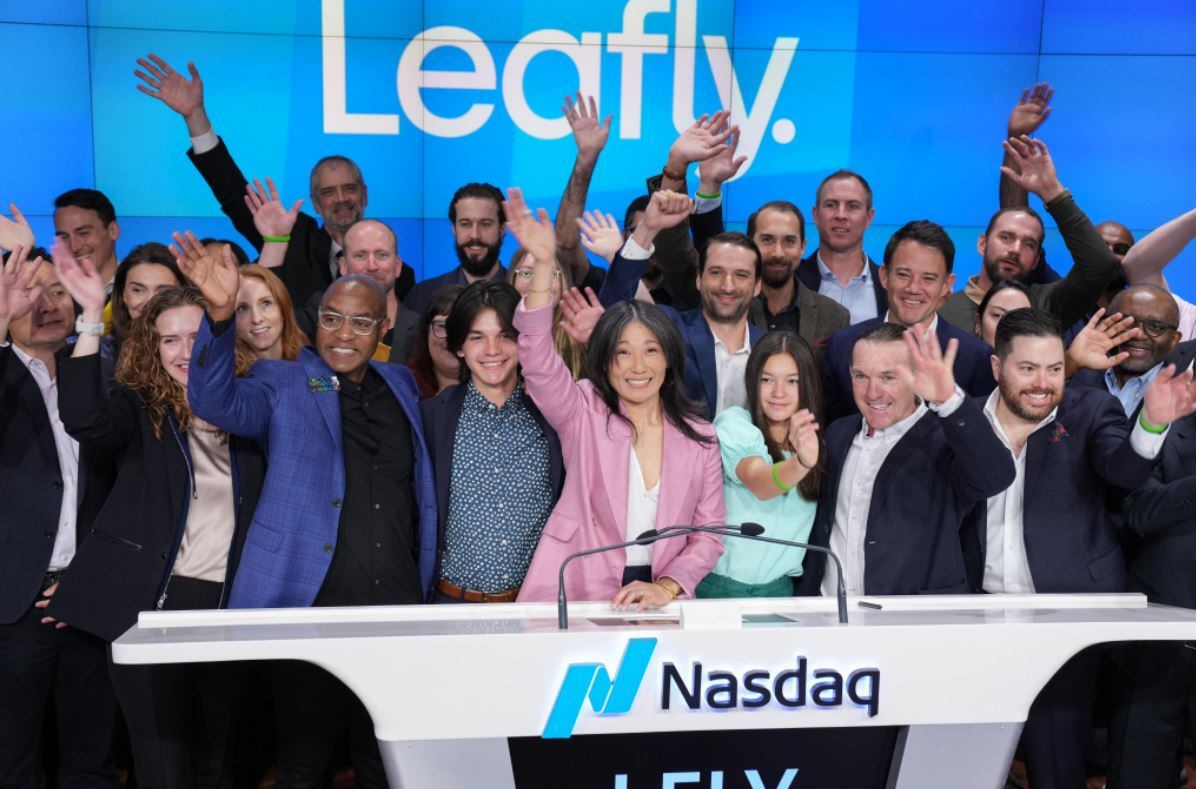
Fresh off of ringing the opening bell on the Nasdaq on the marijuana holiday, 4/20, Yoko Miyashita, CEO of cannabis website Leafly, joined Cheddar News to discuss the future of cannabis in the U.S. and the growth of her company going forward. "I think this is a new a new high, pardon the pun, but really elevating 4/20 from what used to be sort of an insider cultural moment to something that we're recognizing across the industry, really memorials the impact that this industry has," she said.
Fathom Digital Manufacturing, one of the largest on-demand digital manufacturing platforms in North America, went public late last year and serves the product development and manufacturing needs of companies such as Google, Amazon, Tesla, Johnson & Johnson, and more. CEO Ryan Martin joined Cheddar's Opening Bell to discuss what the IPO means to the company and how he thinks digital manufacturing can help mitigate supply chain issues seen throughout the pandemic. "We can take parts that would take 4-6 weeks condense that down into just days using additive manufacturing in many cases. And so it's all about speed," he said.