As industries begin to shift away from fossil fuels, Ampaire is banking on its line of hybrid-electric airplanes to revolutionize air travel. The company recently announced its historic first flight of an existing airline route in Hawaii.
Kevin Noertker, Ampaire CEO, said not only would the environment reap the biggest benefits from a reduction of emissions, but the airline industry could also soar to new heights.
"For the airlines, the biggest impact is reduced cost of operation. Airlines care about the total cost of ownership and operation for their planes. By switching to a hybrid plane, you could reduce that fuel burn by up to 50 percent," Noertker told Cheddar.
The CEO also noted that a fully electric plane would reduce emissions by more than 90 percent.
After launching in 2016 and constructing an aircraft for the last two years, paid flights for the company are on the horizon. "We're looking at about a three-year timeline before we get certification to deploy these planes in that commercial operation," Noertker said.
While the company gears up for commercial flights, it has already been conducting demonstrations under the FAA's experimental market survey, which allows passengers and potential Ampaire customers to fly.
Last month, the company became the first to ever demonstrate a hybrid-electric flight in Maui, which went from Kahului to Hana in about 20 minutes. Like other industries, Ampaire's ability to continue developing and moving forward with test flights, particularly in Hawaii, was impacted by pandemic-related restrictions.
The hybrid-electric planes, according to Noertker, while capable of long-distance flights, are optimal for relatively short-distances. Over the next five to 10 years, however, there are plans to produce an aircraft that can hold up to 20 passengers and will fly "routes between 50 and 500 miles."
"The reality is most routes that airlines like to fly are about 100 miles," Noertker said.
Chris Smyth, EY Americas Private Equity Leader, joins Cheddar News to discuss 2021's banner year of private equity market growth, and trends and predictions going into 2022.
James Whitley, Core Contributor at cypher, joins Cheddar News' Closing Bell, where he discusses the underlying factors that support a bounce-back for Bitcoin despite the token's recent slump.
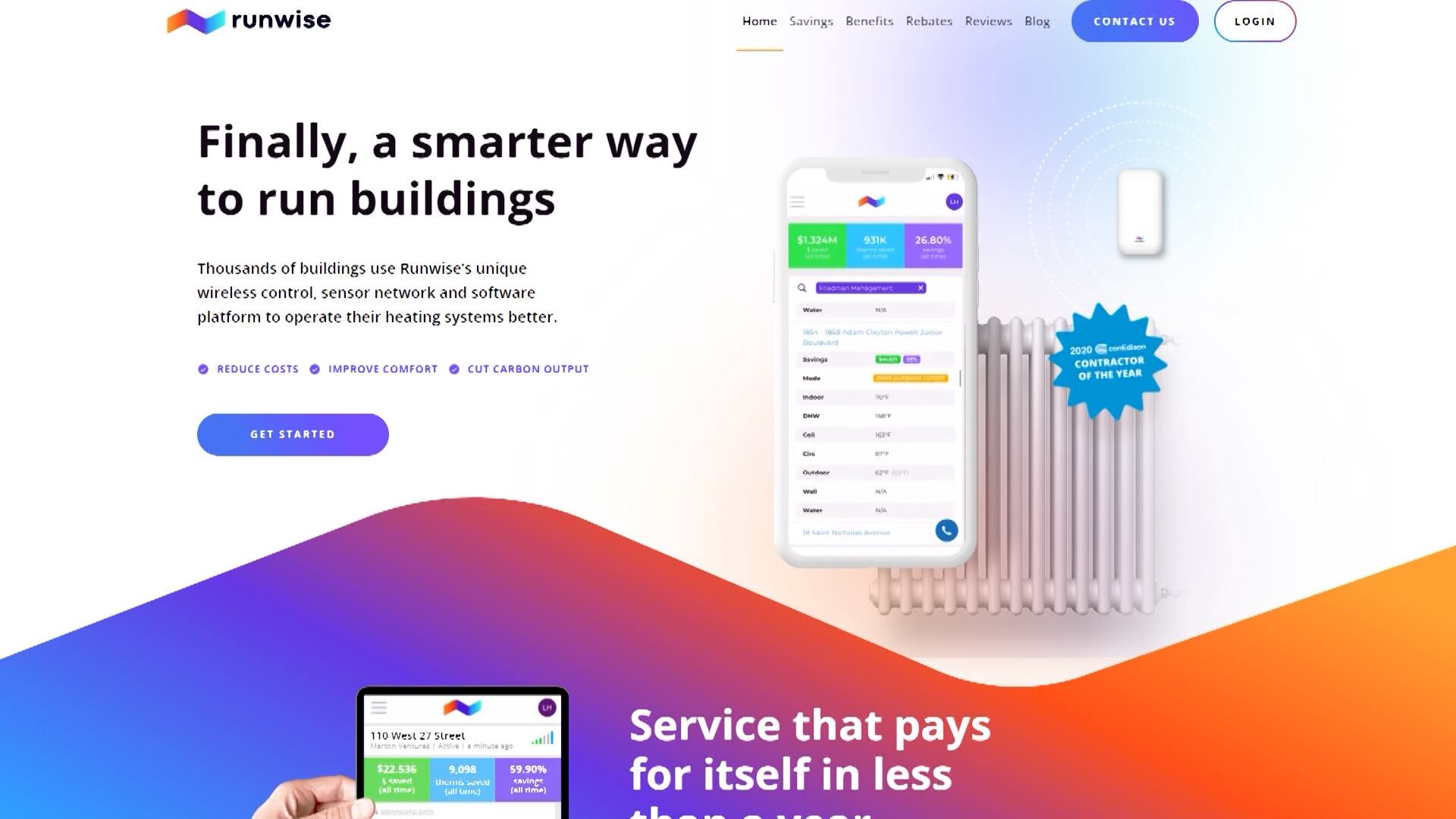
Commercial and residential buildings account for 13% of carbon emissions in the U.S., according to the EPA, and one company says it has a solution. Runwise says it has updated the boiler and heating systems of thousands of buildings, and that its technology not only lowers carbon output but also saves landlords money. Lee Hoffman, Co-Founder and COO of Runwise, joined Cheddar Climate to discuss.
Kirsten Jordan, real estate broker and star of 'Million Dollar Listing New York,' joins Cheddar News to talk about the state of New York City real estate, tips for homebuyers, and season 9 of the Bravo show.
Following sales tech startup Scratchpad raising $33 million in Series B Funding, CEO and co-founder Pouyan Salehi joined Cheddar to discuss how his company's software works to help salespeople with an all-in-one workspace, integrating with Salesforce to optimize notes, spreadsheets, and other relevant information so businesses can forecast and make the best decisions. "If you look at other crafts like artists, they'll have studios; chefs, they'll have kitchens; scientists will have labs, and we just asked, well, if you look at sales as a craft, why doesn't something exist that is designed solely for a salesperson?" Salehi said about his workspace app.
As the 2022 Beijing Winter Olympics inches closer, sponsors are facing mounting pressure to pull out of the games with China is under fire for controversies like the alleged human rights abuses against its Muslim minority population and the disappearance of tennis player Peng Shuai. Rick Burton, professor of sport management at Syracuse University, joined Cheddar to discuss what he expects to happen once the games begin. Burton said China is too large of a market for American advertisers to ignore, and he doesn't expect any of them to pull out of the games. "Olympic sponsors right now I think are really just trying to hang on and get through these 17 days, come out the other end," he said.