An Amazon company logo marks the facade of a building in Schoenefeld near Berlin, March 18, 2022. (AP Photo/Michael Sohn, File)
Amazon is taking another shot at becoming a regular health care source for customers with the launch of a service centered on virtual care.
The e-commerce giant says its Prime customers can now get quick access to a health care provider through a program that costs $9 a month or $99 annually.
The company has made a number of attempts to incorporate healthcare into its platform and has started building momentum after some initial setbacks.
The company announced in August that it was adding video telemedicine visits in all 50 states to a virtual clinic it launched last year.
Yet Amazon shut down a virtual health care service last year that it spent years developing, and it was part of a high-profile but failed push to address health care costs in a partnership with two other major companies, Berkshire Hathaway and JPMorgan.
Through the new service, patients will be able to connect virtually around the clock with care providers through its Prime One Medical membership program. The service includes video chats and an option to make in-person visits if there are One Medical locations near by.
The company said Wednesday that its membership fee covers the cost for the virtual visits. But customers would have to pay for any visits they make to the company’s One Medical primary care offices. They can use insurance for that.
Virtual care grew popular during the COVID-19 pandemic, and many health care providers have since expanded their telemedicine offerings. It has remained popular as a convenient way to check in with a doctor or deal with relatively minor health issues like pink eye.
While virtual visits can improve access to help, some doctors worry that they also lead to care fragmentation and can make it harder to track a patient’s overall health. That could happen if a patient has a regular doctor who doesn’t learn about the virtual visit from another provider.
Updated November 9, 2023 at 4:46 p.m. ET to add missing word in the seventh paragraph and correct "last summer" to "last year" in sixth paragraph.
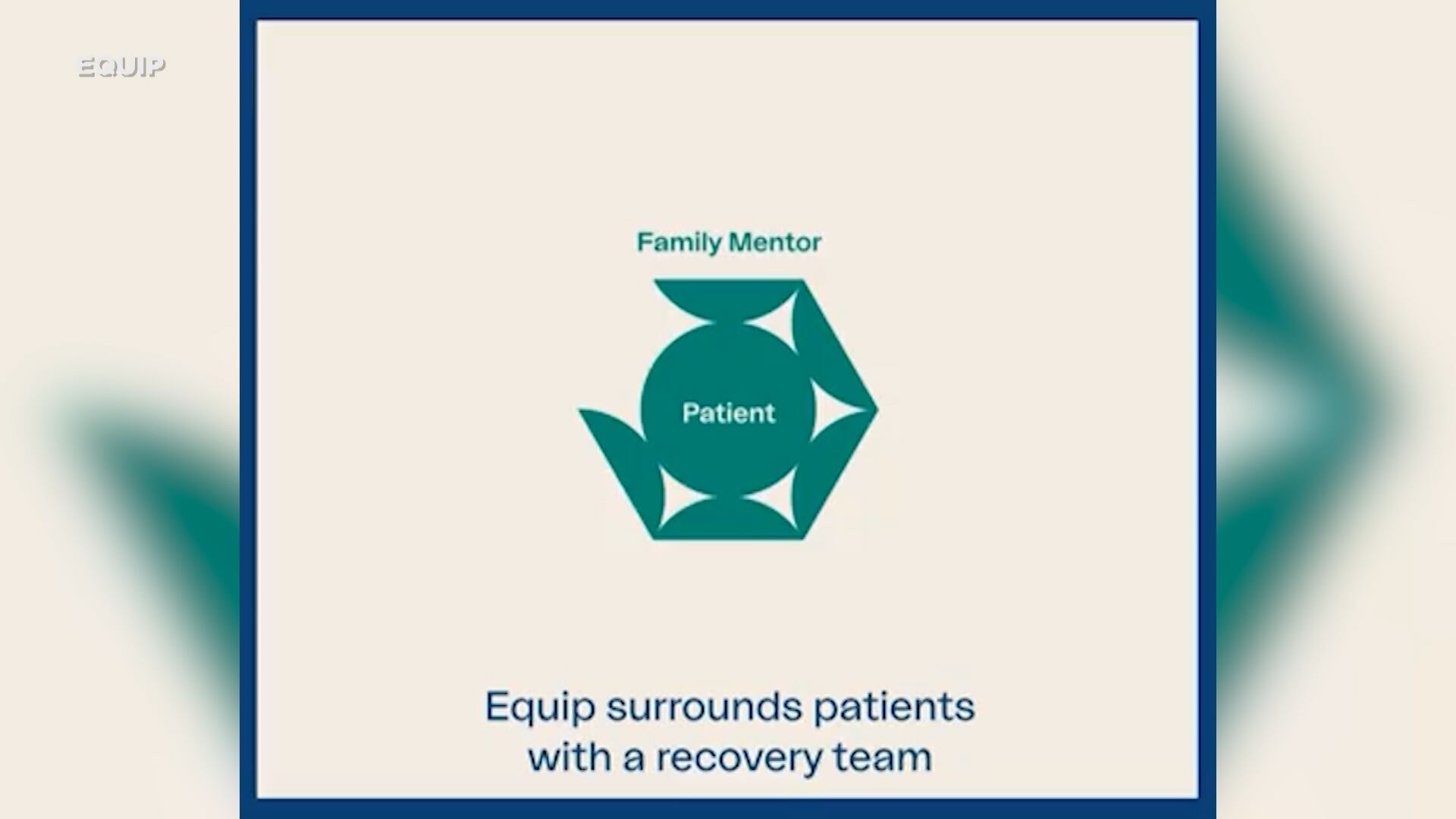
Equip is a virtual treatment platform for eating disorders, and recently raised $58 million in a Series B round led by The Chernin Group. The company aims to revolutionize treatment for eating disorders by delivering virtual care teams and clinical expertise directly to families' homes. Equip says the need for its platform has only been exacerbated by the COVID-19 pandemic. The National Eating Disorder Association's helpline has had a 107% increase in contacts since the start of the pandemic. Kristina Saffran, CEO and co-founder of Equip, joins Cheddar News' Closing Bell to discuss.
U.S. stocks ended today's session sharply lower on the heels of rising geopolitical tensions between Russia and Ukraine. Melissa Brown, Managing Director of Applied Research at Qontigo, joins Cheddar News' Closing Bell to discuss.
President Joe Biden said Tuesday that the U.S. will begin to impose sanctions on Russia, calling recent troop movement into Ukraine an 'invasion.' Biden and other government officials including from the State Department have begun to classify the Russian troop movement as an invasion after Russian President Vladimir Putin ordered troops to two independent Ukrainian areas in an alleged "peacekeeping" mission — which the West considers an act of aggression. Biden said Russia will continue to pay 'an even steeper price' if it continues sending troops into Ukraine. What happens next? Will Putin find a way around these sanctions? Ariel Cohen, senior fellow at the Atlantic Council, joins Closing Bell to discuss Biden's remarks, how the West will protect Ukraine since it doesn't belong to NATO, and more.
Apple retail employees are reportedly looking to unionize, with groups at two locations so far coordinating with major national labor organizations and prepping to file paperwork with the National Labor Relations Board. This comes after a broader push for unionization as Starbucks workers in recent months have voted to unionize, and workers at Amazon are set to hold another vote soon. As the popularity of unions returns after a decades-long slump, will we see more retail and consumer-facing workforces move to unionize? Michael Farren, a research fellow at the Mercatus Center, joins Closing Bell to discuss Apple retail employees' efforts, what a union would mean inside Apple, the broader push for unionization, and more.
A just-released Harris Poll revealed that there are some differences of opinion among workers on returning to the office. The survey showed that 52 percent of women would still prefer to work from home versus 41 percent of men. The report also showed that 52 percent of black workers and 50 percent of women see it as being better when it comes to career advancement. Dr. Laura Morgan Roberts, professor of practice at the University of Virginia’s Darden School of Business, joined Cheddar News to explain the report. "The first set of observations are about infrastructure and flexibility. The second are about inclusion," she said. "And so what we've learned from many non-white workers are that they appreciate the opportunity to focus more on their tasks and to be buffered in a sense from some of the hostilities and the exclusive environment and practice that they had to navigate for many years in their in-person offices."