An Amazon company logo marks the facade of a building in Schoenefeld near Berlin, March 18, 2022. (AP Photo/Michael Sohn, File)
Amazon is taking another shot at becoming a regular health care source for customers with the launch of a service centered on virtual care.
The e-commerce giant says its Prime customers can now get quick access to a health care provider through a program that costs $9 a month or $99 annually.
The company has made a number of attempts to incorporate healthcare into its platform and has started building momentum after some initial setbacks.
The company announced in August that it was adding video telemedicine visits in all 50 states to a virtual clinic it launched last year.
Yet Amazon shut down a virtual health care service last year that it spent years developing, and it was part of a high-profile but failed push to address health care costs in a partnership with two other major companies, Berkshire Hathaway and JPMorgan.
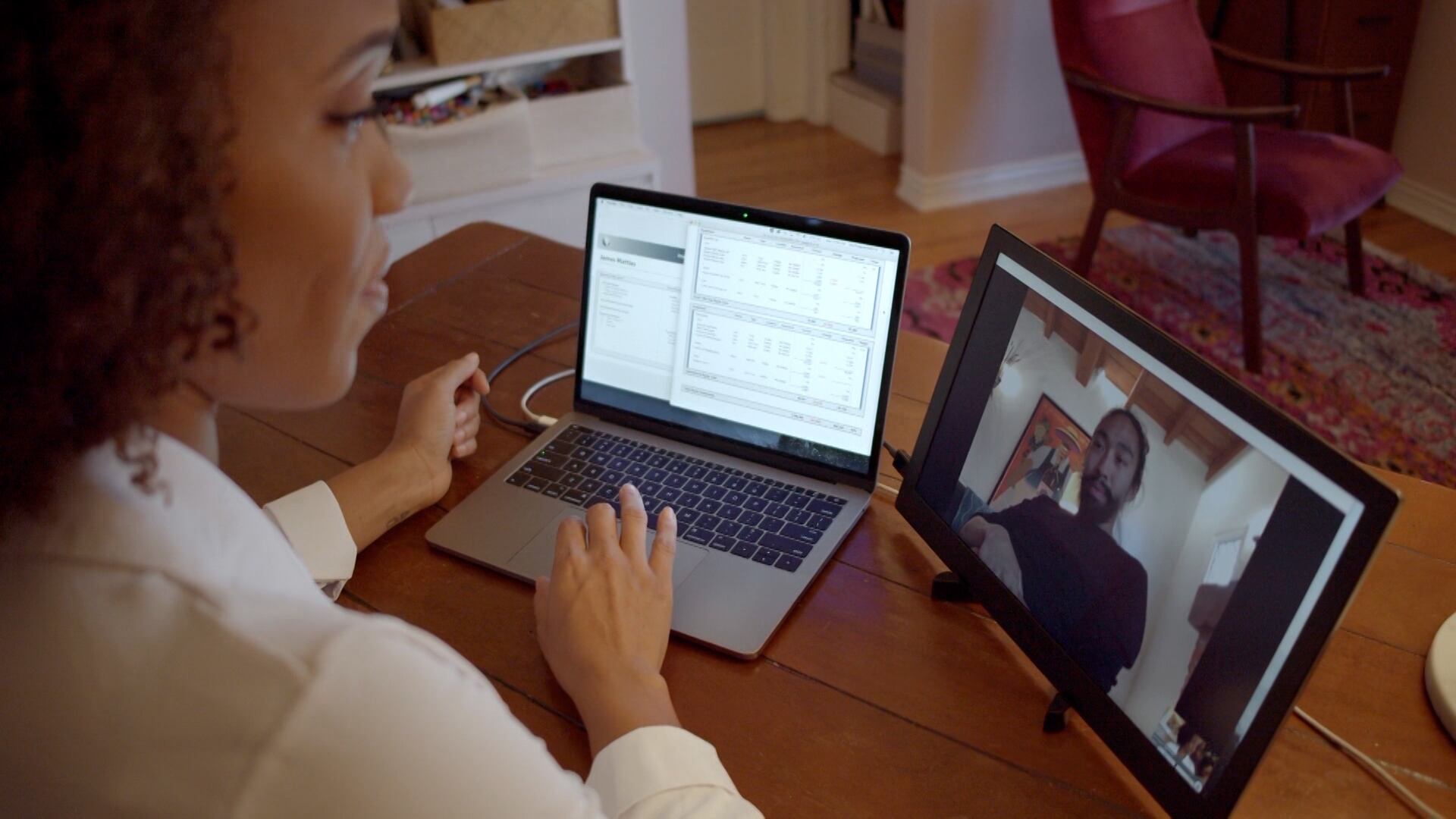
Through the new service, patients will be able to connect virtually around the clock with care providers through its Prime One Medical membership program. The service includes video chats and an option to make in-person visits if there are One Medical locations near by.
The company said Wednesday that its membership fee covers the cost for the virtual visits. But customers would have to pay for any visits they make to the company’s One Medical primary care offices. They can use insurance for that.
Virtual care grew popular during the COVID-19 pandemic, and many health care providers have since expanded their telemedicine offerings. It has remained popular as a convenient way to check in with a doctor or deal with relatively minor health issues like pink eye.
While virtual visits can improve access to help, some doctors worry that they also lead to care fragmentation and can make it harder to track a patient’s overall health. That could happen if a patient has a regular doctor who doesn’t learn about the virtual visit from another provider.
Updated November 9, 2023 at 4:46 p.m. ET to add missing word in the seventh paragraph and correct "last summer" to "last year" in sixth paragraph.
The workforce is incredibly different from what it was just two years ago. Ginnie Carlier, Vice Chair of Talent at EY Americas, joins Cheddar News to discuss the evolving role of the employer, and ways leaders can increase job satisfaction in this current environment.
Grant Stark, Director of Research at CapWealth, joins Cheddar News' Closing Bell, where he says that his firm is closely monitoring oil prices amid the geopolitical conflict between Russia and Ukraine, and elaborates on how inflation will continue to be a problem across multiple sectors.
Cann, a cannabis-infused beverage company, announced today a $27 million Series A funding round from existing investors like Imaginary Ventures and a roster of new celebrity investors including Nina Dobrev, Adam Devine, Zoey Deutch, Jordan Cooper, Sara Foster, and Rosario Dawson. Cann is also announcing its first international expansion with the brand's launch in Canada. Jake Bullock, co-founder and CEO of Cann, joins Cheddar News' Closing Bell to discuss.
Soul Machines is a company that creates autonomously animated digital people in the metaverse and the digital worlds of today. The startup based in New Zealand recently raised the equivalent of $70 million USD, in a funding round led by Softbank's Vision Fund 2. Soul Machines says it helps to bring digital workforces to life for some of the biggest brands in the world, and creates digital twins of celebrities to reimagine the future of digital entertainment. Greg Cross, co-founder and CBO of Soul Machines, joins Cheddar News' Closing Bell to discuss.
Major retailers like Macy's and Walmart have reported earnings as investors begin to see a clearer picture of the sector. Christine Short, Vice President of Wall Street Horizon, joined Cheddar News to dive into the numbers amid rising inflation prices and increasing consumer spending.
Growing tensions in Ukraine might soon be impacting consumers in the United States. With Russia on an invasion footing in the region, gas prices are predicted to go up 10 to 15 cents a gallon in the next coming weeks, according to Robert Sinclair, spokesperson for AAA. Sinclair joined Cheddar to break down what could happen even further. "We've been seeing prices go up, and there's been nothing that's happened to affect supplies," he said. "But it's something known as the fear tax where just the talk of something that might interfere with supplies leads to prices going up speculatively."
The end of 3G is upon us. On Tuesday, AT&T became the first major provider to disable its 3G services, and T-Mobile and Verizon plan to follow suit later this year. The shutdowns are expected to impact millions of vehicles that use 3G networks for updates, remote connection, and certain emergency and convenience features. Lance Ulanoff, the U.S. Editor-in-Chief of TechRadar, joined Cheddar's Closing Bell to discuss the ramifications of the changeover.