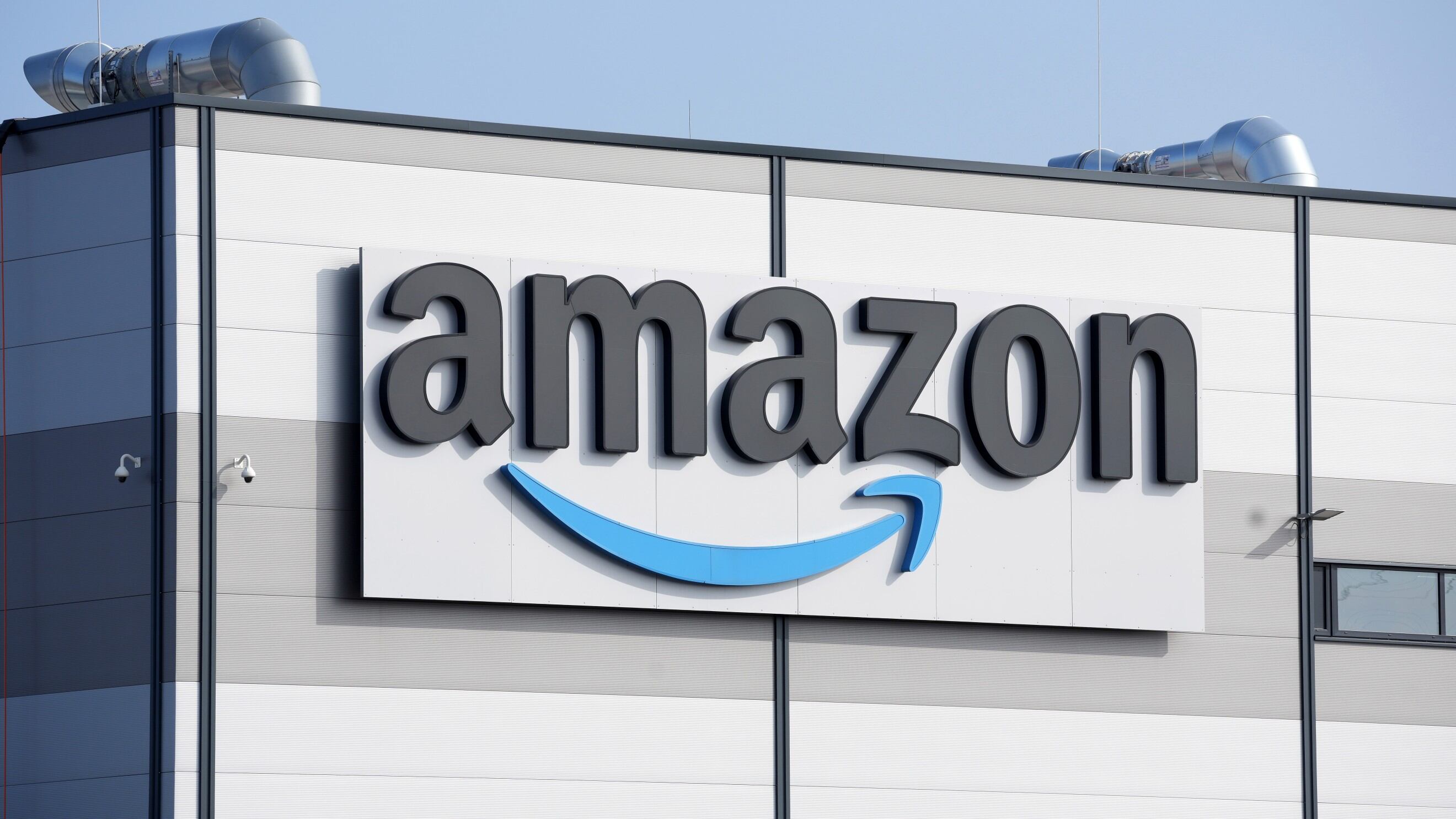
An Amazon company logo marks the facade of a building in Schoenefeld near Berlin, March 18, 2022. (AP Photo/Michael Sohn, File)
Amazon is taking another shot at becoming a regular health care source for customers with the launch of a service centered on virtual care.
The e-commerce giant says its Prime customers can now get quick access to a health care provider through a program that costs $9 a month or $99 annually.
The company has made a number of attempts to incorporate healthcare into its platform and has started building momentum after some initial setbacks.
The company announced in August that it was adding video telemedicine visits in all 50 states to a virtual clinic it launched last year.
Yet Amazon shut down a virtual health care service last year that it spent years developing, and it was part of a high-profile but failed push to address health care costs in a partnership with two other major companies, Berkshire Hathaway and JPMorgan.
Through the new service, patients will be able to connect virtually around the clock with care providers through its Prime One Medical membership program. The service includes video chats and an option to make in-person visits if there are One Medical locations near by.
The company said Wednesday that its membership fee covers the cost for the virtual visits. But customers would have to pay for any visits they make to the company’s One Medical primary care offices. They can use insurance for that.
Virtual care grew popular during the COVID-19 pandemic, and many health care providers have since expanded their telemedicine offerings. It has remained popular as a convenient way to check in with a doctor or deal with relatively minor health issues like pink eye.
While virtual visits can improve access to help, some doctors worry that they also lead to care fragmentation and can make it harder to track a patient’s overall health. That could happen if a patient has a regular doctor who doesn’t learn about the virtual visit from another provider.
Updated November 9, 2023 at 4:46 p.m. ET to add missing word in the seventh paragraph and correct "last summer" to "last year" in sixth paragraph.
U.S. stocks closed sharply lower on Monday as investors weighed record-high Treasury yields, the ongoing Russia-Ukraine conflict, potential policy moves from the Federal Reserve, and the start of earnings season. Ross Mayfield, investment strategy analyst at Baird, joined Cheddar News' Closing Bell to discuss. "We expected volatility to continue after this recent rally of the last past few weeks. None of the big headwinds have really changed," he said.
Dana Peterson, Chief Economist at the Conference Board, joined Closing Bell to break down March CPI numbers, and discuss how skyrocketing prices are affecting American consumers.
McLaren displayed its all-electric, off-roading racing vehicle, the Odyssey, in from of the New York Stock Exchange on Tuesday. Zak Brown, CEO of McLaren Racing, joined Cheddar News to discuss bringing the heavy-duty vehicle to a new racing series with an emphasis on sustainability — and even gender equity with a male and female team of two drivers required. "This is McLaren's first-ever Odyssey, which is an EV. Looks like an SUV — but not really much of an SUV — that we raced five times around the world in various locations where climate has impacted the world," he said.
According to Mark Zuckerberg, a select number of creators in Meta's Horizon Worlds will now have the option to sell virtual assets and experiences they create to other players for a profit.
Jannese Torres-Rodriguez, Host of the 'Yo Quiero Dinero' podcast, fills us in on what taxpayers can write off and highlights the best uses for tax refunds.
Beth Ann Bovino, the U.S. chief economist at S&P Global Ratings, joined Cheddar to break down the March CPI data and outline the bright spots of consumer spending amid rising costs. She noted that with consumers switching more to services coming out of quarantine rather than purchasing goods, it could create a lessening of demand that will help reduce inflationary pressures going forward, but the Fed will still have to move aggressively. "We expect now that the Fed is going to raise rates about 6 to 7 times — a 50-point basis hike is basically baked in the cake right now," Bovino said. "Could there be a second 50-point basis? Certainly, we wouldn't be surprised."