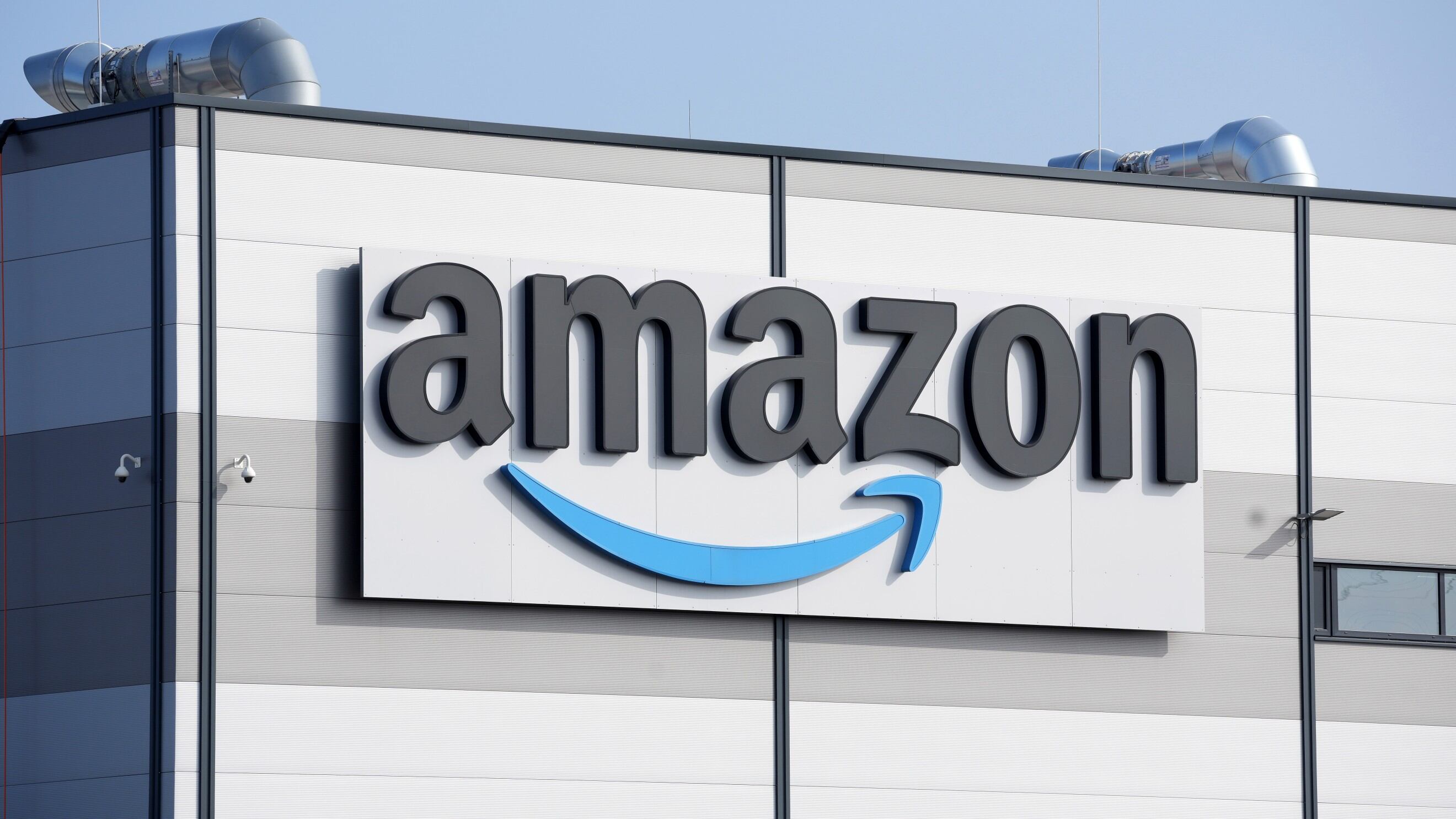
An Amazon company logo marks the facade of a building in Schoenefeld near Berlin, March 18, 2022. (AP Photo/Michael Sohn, File)
Amazon is taking another shot at becoming a regular health care source for customers with the launch of a service centered on virtual care.
The e-commerce giant says its Prime customers can now get quick access to a health care provider through a program that costs $9 a month or $99 annually.
The company has made a number of attempts to incorporate healthcare into its platform and has started building momentum after some initial setbacks.
The company announced in August that it was adding video telemedicine visits in all 50 states to a virtual clinic it launched last year.
Yet Amazon shut down a virtual health care service last year that it spent years developing, and it was part of a high-profile but failed push to address health care costs in a partnership with two other major companies, Berkshire Hathaway and JPMorgan.
Through the new service, patients will be able to connect virtually around the clock with care providers through its Prime One Medical membership program. The service includes video chats and an option to make in-person visits if there are One Medical locations near by.
The company said Wednesday that its membership fee covers the cost for the virtual visits. But customers would have to pay for any visits they make to the company’s One Medical primary care offices. They can use insurance for that.
Virtual care grew popular during the COVID-19 pandemic, and many health care providers have since expanded their telemedicine offerings. It has remained popular as a convenient way to check in with a doctor or deal with relatively minor health issues like pink eye.
While virtual visits can improve access to help, some doctors worry that they also lead to care fragmentation and can make it harder to track a patient’s overall health. That could happen if a patient has a regular doctor who doesn’t learn about the virtual visit from another provider.
Updated November 9, 2023 at 4:46 p.m. ET to add missing word in the seventh paragraph and correct "last summer" to "last year" in sixth paragraph.
Adele Shraiman, Campaign Representative for the Sierra Club’s Fossil Free Finance Campaign, joins Cheddar Climate, where she explains how Wall Street and climate change are related. She also elaborates on how decisions made by financial institutions are actually hurting the ability to reduce carbon emissions.
Hugh Odom, founder and president of Vertical Consultants, shared his expertise on telecommunications with Cheddar on the safety issue raised about 5G deployment by airlines. The installation was partially delayed again on Tuesday as the airlines warned of potentially catastrophic delays in a letter to the Biden administration. Later, both Verizon and AT&T relented and put a pause on some of the implementations. "The first thing the Biden administration needs to do is get everybody in the room and say, look, aviation industry, identify the problem — wireless industry, come up with a solution," said Odom.
Microsoft announced on Tuesday it's acquiring video game publisher Activision Blizzard for nearly $70 billion in cash, a company that's is known for big titles like "Call of Duty" and "World of Warcraft." Lyron Bentovim, Glimpse Group president and CEO, and Dan Ives, managing director and senior equity research analyst at Wedbush, sat down to talk about what Ives called "a shot across the bow" towards the competition. "This is pretty exciting for the industry as a whole because another one of the big players is coming to the metaverse," said Bentovim. "Microsoft using metaverse in the quote from their CEO in their press release shows the importance of this deal."
Netflix may not be staying at the top of the streaming wars, according to some wary investors, as competition heats up and it raises prices yet again. Tuna Amobi, director and senior equity analyst at CFRA Research, spoke with Cheddar about what investors should be considering should they stick with the streaming pioneer or drop the investment. "I think it's always mostly about the subscriber growth for the Q4, which is going to be an indicator of how the company has been navigating the speed bumps that we saw early in the year," said Amobi.
L’Oréal is doubling down on its investment in tech. The French beauty giant unveiled two new high-tech products ahead of CES 2022, aimed at simplifying the hair coloring process. Guive Balooch, global vice president of L’Oréal Technology Incubator, joined Cheddar's Opening Bell to discuss the company's innovations for hair coloring, including the Colorsonic application device and the Coloright AI diagnostic tool.
Walmart is one of the latest companies looking to adapt to the emerging digital economy by possibly establishing its own cryptocurrency. The retail giant filed at least seven applications with the U.S. Patent and Trademark Office, including one for blockchain assets.