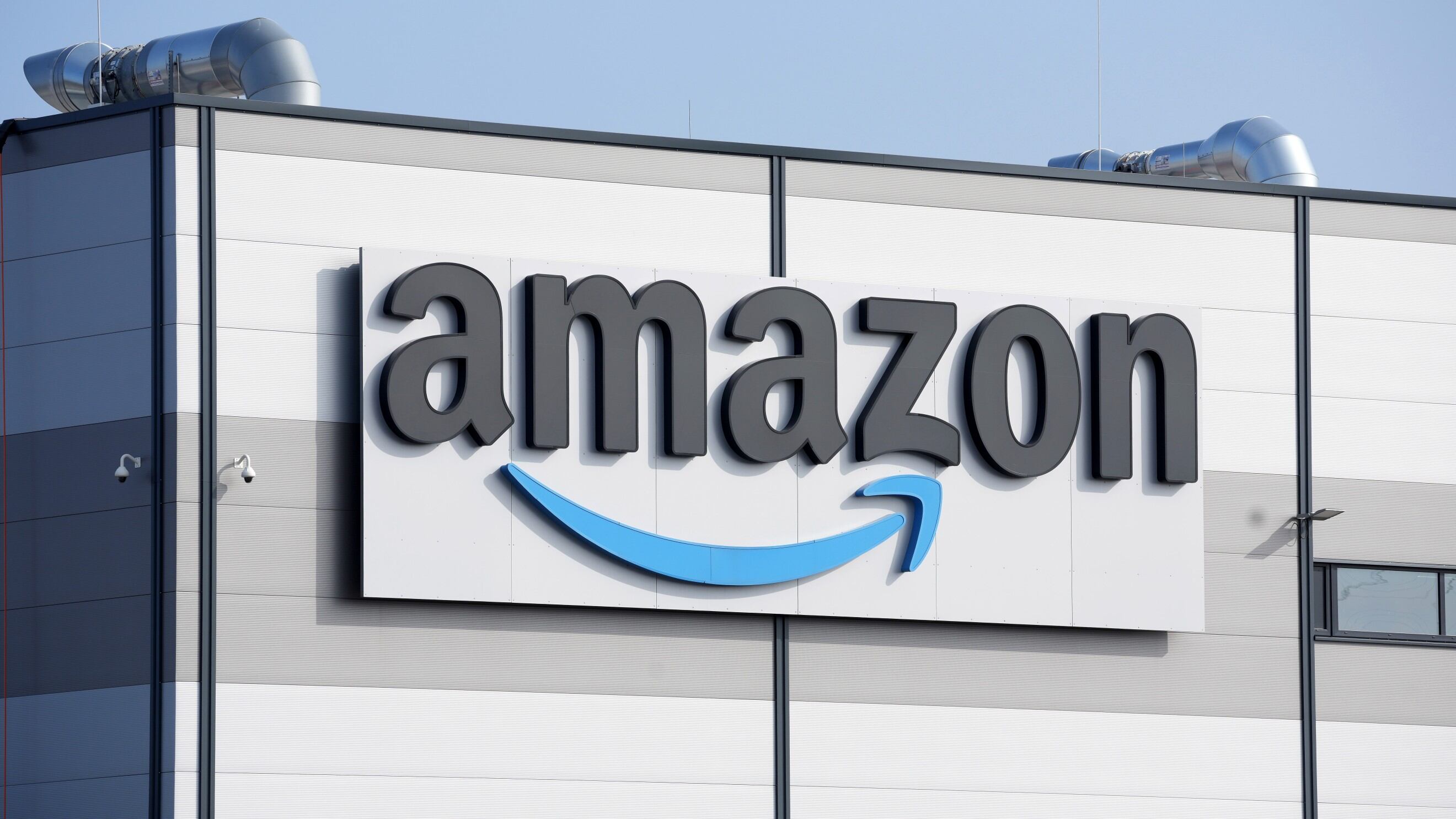
An Amazon company logo marks the facade of a building in Schoenefeld near Berlin, March 18, 2022. (AP Photo/Michael Sohn, File)
Amazon is taking another shot at becoming a regular health care source for customers with the launch of a service centered on virtual care.
The e-commerce giant says its Prime customers can now get quick access to a health care provider through a program that costs $9 a month or $99 annually.
The company has made a number of attempts to incorporate healthcare into its platform and has started building momentum after some initial setbacks.
The company announced in August that it was adding video telemedicine visits in all 50 states to a virtual clinic it launched last year.
Yet Amazon shut down a virtual health care service last year that it spent years developing, and it was part of a high-profile but failed push to address health care costs in a partnership with two other major companies, Berkshire Hathaway and JPMorgan.
Through the new service, patients will be able to connect virtually around the clock with care providers through its Prime One Medical membership program. The service includes video chats and an option to make in-person visits if there are One Medical locations near by.
The company said Wednesday that its membership fee covers the cost for the virtual visits. But customers would have to pay for any visits they make to the company’s One Medical primary care offices. They can use insurance for that.
Virtual care grew popular during the COVID-19 pandemic, and many health care providers have since expanded their telemedicine offerings. It has remained popular as a convenient way to check in with a doctor or deal with relatively minor health issues like pink eye.
While virtual visits can improve access to help, some doctors worry that they also lead to care fragmentation and can make it harder to track a patient’s overall health. That could happen if a patient has a regular doctor who doesn’t learn about the virtual visit from another provider.
Updated November 9, 2023 at 4:46 p.m. ET to add missing word in the seventh paragraph and correct "last summer" to "last year" in sixth paragraph.
Art Hogan, Chief Market Strategist at National Securities, joined Cheddar News' Closing Bell, where he says investors are taking a wait-and-see approach when it comes to the situation between Russia and the Ukraine and elaborates on the impact higher oil prices stemming from the conflict would have on the market.
Kyle Jaeger, senior editor for Marijuana Moment, joined Cheddar News' Closing Bell, where he explains why a stigma still exists for the cannabis industry in advertising and social media after NBC rejected Weedmaps' ad for the big game even though more states across the country are legalizing cannabis.
A bipartisan bill introduced by U.S. Senators Amy Klobuchar (D-MN) and Cynthia Lummis (R-WY) aims to tackle the spread of misinformation on social media platforms, as well as the addictive nature of the sites and negative mental health impacts they have on users. The 'Nudge Act' would require studies to find and compile potential interventions that platforms could use to encourage people to think before they share a post, or log off after spending too much time on an app. The FTC would create rules based on these findings, and hold the platforms accountable. But will it work? Jesse Lehrich, co-founder of Accountable Tech, joins Closing Bell to discuss the bill, whether real results and regulations could come from it, and more.
We know that the Los Angeles Rams emerged as Super Bowl champions, but the crypto industry also came out a winner on Sunday with several notable companies getting airtime in primetime. However, Richard Smith, author of the Risk Rituals Newsletter, joins Cheddar News' Closing Bell, where he says the campaigns were a 'disappointment' and adds that crypto companies would be wiser spending their resources on creating value.
A.I.-based entertainment company, Deedub, recently raised
$20 million in a Series A round, led by Insight Partners. Deepdub uses A.I. technology to automate the dubbing process for foreign-language movies or TV shows, while using actors' original voices. The company says it can take just two to three minutes of data from an actor's voice and transform the voice into a different language. The funding comes as foreign-language films and shows like Netflix's 'Squid Game' have recently become more popular with audiences in the U.S. and around the world. Oz Krakowski, Chief Revenue Officer at Deepdub, joins Cheddar News' Closing Bell to discuss.
Energy Vault, the company developing sustainable, grid-scale energy storage solutions, is now trading on the New York Stock Exchange following the completion of its business combination with Novus Capital Corporation II. Energy Vault develops sustainable, grid-scale energy storage solutions designed to advance the transition to a carbon free, resilient power grid. Robert Piconi, co-founder and CEO of Energy Vault, joins Cheddar News' Closing Bell to disucss.
A new mobile app has launched just in time for Valentine's Day. Our.Love bills itself as an A.I.-powered, gamified, relationship wellness app for couples. The app is set in what the company calls the Coupleverse, a virtual world where each couple can build a virtual relationship home as they also build their real-world relationship. Founder and CEO Tal Zlotnitsky joined Cheddar to discuss how the app works. "The concept behind Our.Love is to give people the opportunity to understand where they stand in their relationship through very simple metrics that we provide within the app that will help them in real-time, see where they stand, see where their partner is, and be able to get closer together," he said.
Alyson Wilson, VP of Brand Innovation at Alo Yoga, joins Cheddar News to discuss the yoga apparel company entering the metaverse and teaming up with Spring Studios for New York Fashion Week.