Just weeks after convincing Congress to allocate $50 billion in taxpayer money to prop up ailing airlines, the commercial airline industry is now fighting rules that require its companies to pay cash refunds to the tens of thousands of passengers whose flights have been canceled as a result of the novel coronavirus.
The industry's global trade group, the International Air Transport Association, or IATA, is arguing that airlines simply cannot afford to pay refunds — at least not until travel restrictions are lifted and airlines' finances recover. For now, it contends, airlines should be allowed to offer travel vouchers instead
“The key element for us is to avoid running out of cash so refunding the canceled ticket for us is almost unbearable financially speaking,” IATA CEO Alexandre de Juniac reportedly said during an online news conference Tuesday.
The remarks came days after de Juniac, in a blog post on the organization's website, said that "Airlines need time. And that is why I am supporting airlines (and our partners in the travel and tourism sector) in their request for governments to delay the requirement for immediate refunds. We propose vouchers that could be used for future travel or refunded once we are out of this crisis period. This would buy the industry vital time to breathe — surviving the crisis so that they are ready to fly when better days arrive."
The airline industry's main trade group in the U.S., Airlines for America, did not immediately respond to a request for comment Wednesday afternoon.
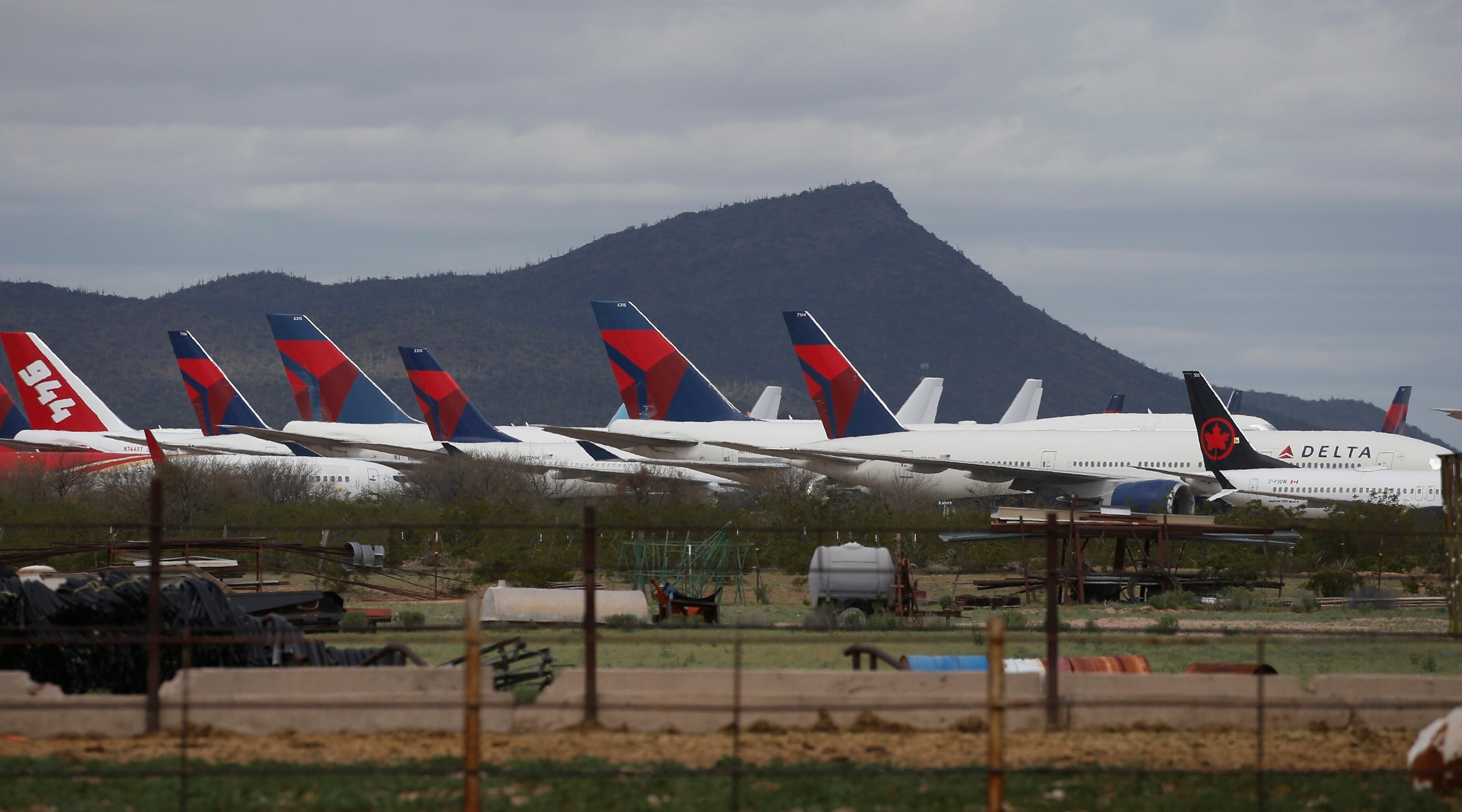
Passenger travel has plunged as nations around the world, as well as state and local governments, have instituted travel restrictions to slow the spread of COVID-19. Airlines, in turn, have drastically slashed flights — American Airlines, for example, this week cut its New York-area flights from 270 a day to 13 — and some have even turned to transporting cargo in passenger aircraft to help generate revenue.
"They're getting into severe cash trouble," said Christian Nielsen, chief legal officer at AirHelp, which helps enforce passenger compensation claims against airlines for delays and cancellations. "They have so many flights that were supposed to be operating now and they'd get the cash from that. And at the same time they're not booking new flights, and you also now have customers claiming refunds."
Airlines may have the cash reserves and other funds on hand to last three to six months, said Nielsen, although some that operate on thinner margins, may only have enough to make it one month.
"The airlines have a relatively short runway in a scenario when they're not generating any revenue," he said. "So having the cash from the seats sold, they're doing everything they can to hold onto it. Because it could mean an additional few months for them."
However, the proposal to replace refunds with vouchers, at least for now, is already prompting pushback from customers and consumer rights advocates. A Minnesota police officer, for example, has reportedly sued United Airlines for refusing to grant a refund for three flights it canceled totaling more than $1,500.
Complaints are also pouring in to regulators. The U.S. Department of Transportation on Friday, citing "an increasing number of complaints and inquiries from ticketed passengers," said that airlines must give cash refunds. But it included an enormous caveat, stating that it will use "discretion" in deciding when to crack down. The language was broadly seen as a signal to airlines that regulators will hold off on enforcing the refund requirement, at least for now.
Even so, there are signs of mounting criticism of airlines, particularly in the European Union, which before the pandemic was considering loosening its consumer regulations of airlines. Those changes, and that heightened skepticism, may reverberate across the Atlantic in the U.S.
"They were looking at actually making the EU law more airline-friendly, and based on the way that the airlines have acted during the crisis — basically ignoring the law — the politicians are taking a step back and completely rethinking air-passenger rights," Nielsen said. "That will have some influence in the U.S."