By Martha Mendoza
Child welfare advocates filed a federal lawsuit Tuesday asking a judge to force the Biden administration to block imports of cocoa harvested by children in West Africa that can end up in America's most popular chocolate desserts and candies.
The lawsuit, brought by International Rights Advocates, seeks to have the federal government enforce a 1930s era federal law that requires the government to ban products created by child labor from entering the U.S.
The nonprofit group says it filed the suit because Customs and Border Protection and the Department of Homeland Security have ignored extensive evidence documenting children cultivating cocoa destined for well-known U.S. candy makers, including Hershey, Mars, Nestle and Cargill.
The major chocolate companies pledged to end their reliance on child labor to harvest their cocoa by 2005. Now they say they will eliminate the worst forms of child labor in their supply chains by 2025.
“They will never stop until they are forced to," said Terry Collingsworth, International Rights Advocates' executive director. He added that the U.S. government has "the power to end this incredible abuse of African children by enforcing the law.”
Spokespeople for CBP declined to comment on the suit, which was filed in the U.S. Court of International Trade. When asked more generally about cocoa produced by child labor, the federal agency said it was “unable to disclose additional information or plans regarding forced labor enforcement activities due to protections of law enforcement sensitive and business confidential information.”
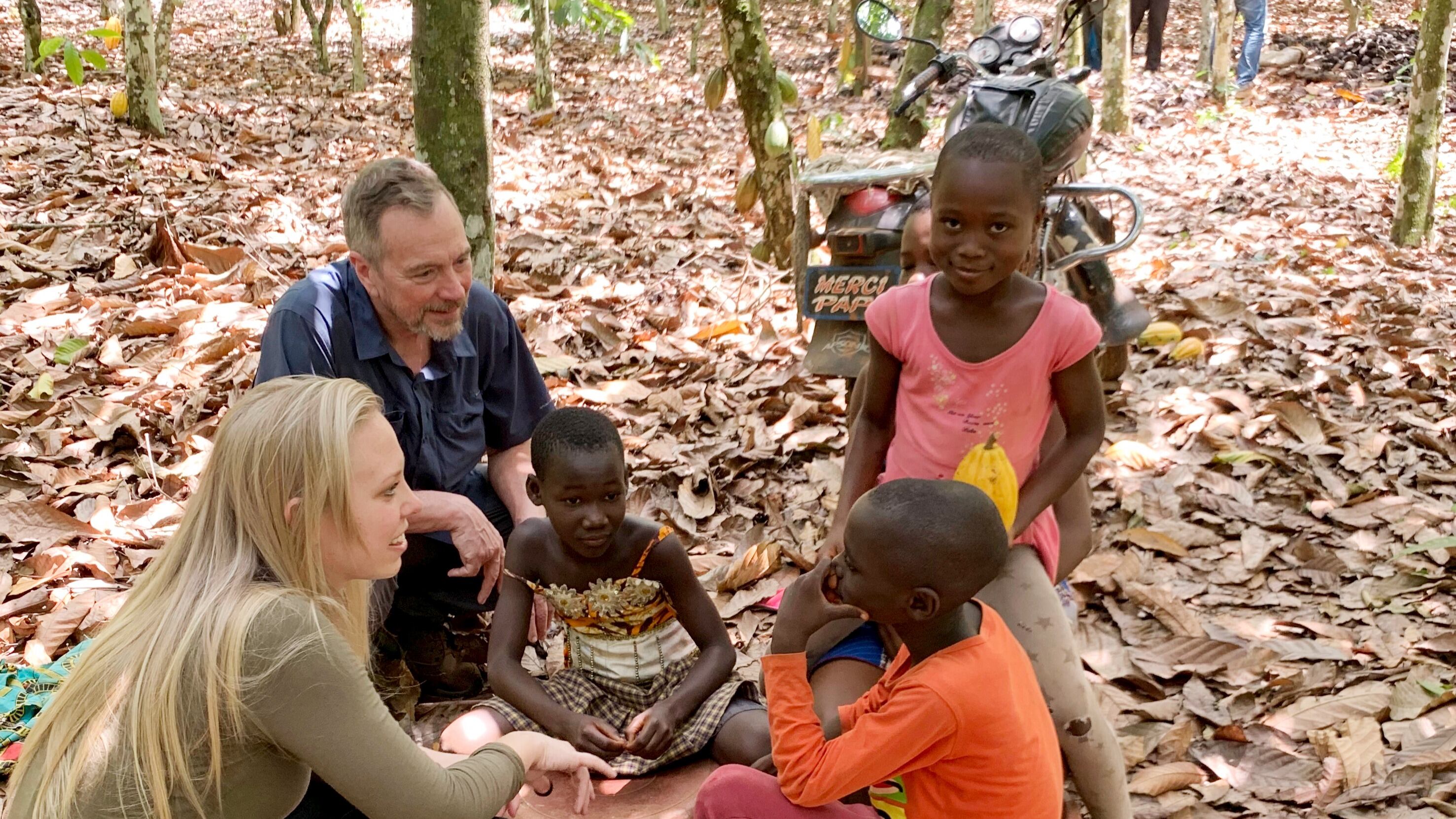
Cocoa cultivation by children in Cote d’Ivoire, also known as the Ivory Coast, as well as neighboring Ghana, is not a new phenomenon. Human rights leaders, academics, news organizations and even federal agencies have spent the last two decades exposing the plight of children working on cocoa plantations in the West African nations, which produce about 70% of the world's cocoa supply.
A 2019 study by the University of Chicago, commissioned by the U.S. government, found 790,000 children, some as young as 5, were working on Ivory Coast cocoa plantations. The situation was similar in neighboring Ghana, researchers found.
The U.S. government has long recognized that child labor is a major problem in the Ivory Coast. The Department of Labor reported in 2021 that “children in Côte d’Ivoire are subjected to the worst forms of child labor, including in the harvesting of cocoa and coffee.”
The State Department in a recent report said that agriculture companies in the Ivory Coast rely on child labor to produce a range of products, including cocoa. The department said this year that human traffickers “exploit Ivoirian boys and boys from West African countries, especially Burkina Faso, in forced labor in agriculture, especially cocoa production."
To try to force companies to abandon cocoa produced by child labor, International Rights Advocates has sued some of the world’s large chocolate companies over the use of child labor in harvesting cocoa beans. It lost a case before the Supreme Court in 2021. Several others are pending.
Pressured by lawmakers and advocates, major chocolate makers in 2001 agreed to stop purchasing cocoa produced by child labor. That goal, experts and industry officials say, has not been met.
“These companies kept saying, ‘We can’t trace it back.’ That’s BS," said former Sen. Tom Harkin, who led a push for legislation to reform the industry, but ended up agreeing to a protocol that allows corporations to regulate themselves. “They just won’t do it because it will cost them money.”
Harkin said Americans don’t realize the treats they hand their children originate with child abuse.
“It’s not just the chocolate you eat, it’s the chocolate syrup you put on your ice cream, the cocoa you drink, the chocolate chip cookies you bake," he said.
The World Cocoa Foundation, which represents major cocoa companies, said it is committed to “improving livelihoods of cocoa farmers and their communities.”
A Hershey spokesperson said the company “does not tolerate child labor within our supply chain.” Cargill, Nestle and Mars did not respond to requests for comment. Their websites all describe their work to end child labor in cocoa plantations.
Ivory Coast officials have said they are taking steps to eradicate child labor but blocking imports of the nation's cocoa would devastate the nation's economy.
“We don’t want to un-employ the whole country,” said Collingsworth, the labor advocate who brought Tuesday's lawsuit. “We just want children replaced by adults in cocoa plantations.”
Collingsworth was in the Ivory Coast investigating working conditions when he noticed children chopping through brush and harvesting cocoa. He pulled out a phone and took video and photographs of the boys and girls at work. He also stopped by a nearby processing facility and took a photos of burlap sacks with labels of U.S. companies.
International Rights Advocates decided to petition the CBP to block imports of the cocoa, filing a 24-page petition in 2020 asking the agency take such action. The petition contained what it said was photographic and other evidence detailing how the companies were violating the law.
Collingsworth said his group also provided CBP with interviews with children as young as 12 who said their wages were being withheld, and that they had been tricked by recruiters into working long hours on a false promise they would be given land of their own.
CBP failed to take any action on the petition, the lawsuit alleges.