By David McHugh
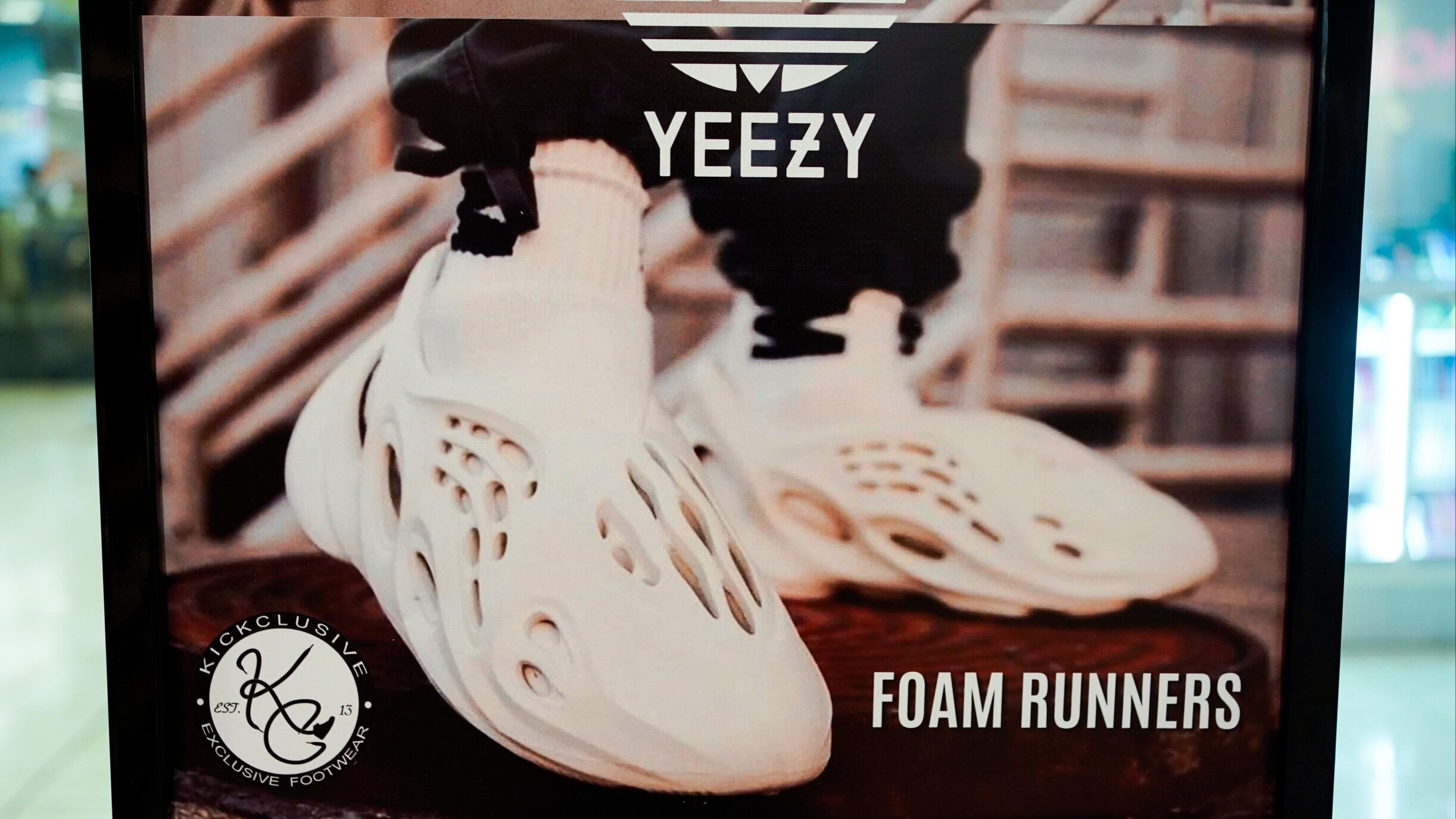
Adidas said it might have to write off the remaining 300 million euros ($320 million) worth of Yeezy shoes left unsold after it cut ties with rapper Ye, formerly known as Kanye West. The company will decide in the coming weeks whether or not to do a third release of the shoes next year to generate more donations to groups fighting antisemitism.
The shoe and sports clothing company, which cut ties with Ye in October 2022 after he made antisemitic remarks online, has sold 750 million euros worth of the shoes in two stages earlier this year through Adidas smartphone apps and its website. Part of the profits went to groups like the Anti-Defamation League and the Philonise & Keeta Floyd Institute for Social Change, run by social justice advocate Philonise Floyd, the brother of George Floyd.
The company included the possible write-off of the remaining Yeezy inventory in its outlook Wednesday for its earnings this year, narrowing its expected loss to 100 million euros from an earlier prediction of 450 million euros, thanks in part to the earlier two releases of Yeezy shoes. CEO Bjorn Gulden, who took over after the Yeezy breakup, is leading an effort to recover from the loss of the profitable Yeezy business.
The announcement from Adidas comes at a time of rising antisemitism and islamophobia after the outbreak of the Israel-Hamas war. Gulden referenced the “terrible circumstances” in the Middle East, saying some of the company’s more than 600 employees in Israel had been called up for military service and that “we, as a company, are starting donations programs, for the whole area, also for Gaza." The company is working with the SOS Kinderdoerfer weltweit children’s relief agency to help those who have been affected by the conflict.
The assumption in the outlook is that remaining Yeezy inventory "will be written off....if that will happen or not is something that we evaluate all the time, so there are no decisions on what we'll do,” Gulden told reporters on a conference call. “Right now, that is financially the worst case and it is a possibility. Currently there is no decision. ”
He added that “we of course hope we can do more drops next year and we can get more value out of it and donate the proceeds, but right now financially we haven’t made a decision and that’s why the outlook is the way it is.”
He said there were “many scenarios” and that the shoes were stored in a number of different locations. He declined to say what the company would do with the shoes if they remain unsold.
The breakup with Ye left the company, based in Herzogenaurach, Germany, with 1.2 billion euros worth of unsold Yeezys and searching for a responsible way to dispose of them. Giving the shoes away to people in need would have raised concerns about informal resales due to their high market value, the company said, while restitching them to remove the brand identification would have been dishonest.