By Stephen Groves
The federal government is just days away from a shutdown that will disrupt many services, squeeze workers and roil politics as Republicans in the House, fueled by hard-right demands, force a confrontation over federal spending.
While some government entities will be exempt — Social Security checks, for example, will still go out — other functions will be severely curtailed. Federal agencies will stop all actions deemed non-essential, and millions of federal employees, including members of the military, won't receive paychecks.
A look at what's ahead if the government shuts down on Sunday.
WHAT IS A GOVERNMENT SHUTDOWN?
A shutdown happens when Congress fails to pass some type of funding legislation that is signed into law by the president. Lawmakers are supposed to pass 12 different spending bills to fund agencies across the government, but the process is time-consuming. They often resort to passing a temporary extension, called a continuing resolution or CR, to allow the government to keep operating.
When no funding legislation is enacted, federal agencies have to stop all nonessential work and will not send paychecks as long as the shutdown lasts.
Although employees deemed essential to public safety such as air traffic controllers and law enforcement officers still have to report to work, other federal employees are furloughed. Under a 2019 law, those same workers are slated to receive backpay once the funding impasse is resolved.
WHEN WOULD A SHUTDOWN BEGIN AND HOW LONG WILL IT LAST?
Government funding expires Oct. 1, the start of the federal budget year. A shutdown will effectively begin at 12:01 a.m. Sunday if Congress is unable to pass a funding plan that the president signs into law.
It is impossible to predict how long a shutdown would last. The Democratic-held Senate and Republican-controlled House are working on vastly different plans to avert a shutdown, and House Speaker Kevin McCarthy is struggling to win any support from hard-right conservatives to keep the government open.
Many are bracing for a stoppage that could last weeks.
WHO DOES A SHUTDOWN AFFECT?
Millions of federal workers face delayed paychecks when the government shuts down, including many of the roughly 2 million military personnel and more than 2 million civilian workers across the nation.
Nearly 60% of federal workers are stationed in the Department of Defense, Veterans Affairs and Homeland Security.
While all of the military's active-duty troops and reservists would continue to work, more than half of the Department of Defense's civilian workforce, which is roughly 440,000 people, would be furloughed.
Across federal agencies, workers are stationed in all 50 states and have direct interaction with taxpayers — from Transportation Security Administration agents who operate security at airports to Postal Service workers who deliver mail.
U.S. Transportation Secretary Pete Buttigieg has said new training for air traffic controllers will be halted and another 1,000 controllers in the midst of training will be furloughed. Even a shutdown that lasts a few days will mean the department won't hit its hiring and staffing targets for next year, he said.
“Imagine the pressure that a controller is already under every time they take their position at work, and then imagine the added stress of coming to that job from a household with a family that can no longer count on that paycheck," Buttigieg said.
Beyond federal workers, a shutdown could have far-reaching effects on government services. People applying for government services like clinical trials, firearm permits and passports could see delays.
Some federal offices will also have to close or face shortened hours during a shutdown.
Businesses closely connected to the federal government, such as federal contractors or tourist services around national parks, could see disruptions and downturns. The travel sector could lose $140 million daily in a shutdown, according to the U.S. Travel Industry Association.
Lawmakers also warn that a shutdown could rattle financial markets. Goldman Sachs has estimated that a shutdown would reduce economic growth by 0.2% every week it lasted, but growth would then bounce back after the government reopens.
Others say the disruption in government services has far-reaching impacts because it shakes confidence in the government to fulfill its basic duties. The U.S. Chamber of Commerce warned, “A well-functioning economy requires a functioning government.”
WHAT ABOUT COURT CASES, THE WORK OF CONGRESS AND PRESIDENTIAL PAY?
The president and members of Congress will continue to work and get paid. However, any members of their staff who are not deemed essential will be furloughed.
The Supreme Court, which begins its new term Monday, would be unaffected by a short shutdown because it can draw on a pot of money provided by court fees, including charges for filing lawsuits and other documents, court spokeswoman Patricia McCabe said.
The rest of the federal judiciary also would operate normally for at least the first two weeks of October, said Peter Kaplan, a spokesman for the judiciary.
Even in a longer shutdown, the entire judiciary would not shut down, and decisions about what activities would continue would be made by each court around the country. The justices and all federal judges would continue to be paid because of the constitutional prohibition on reducing judges’ pay during their tenure, according to the Congressional Research Service.
Notably, funding for the three special counsels appointed by Attorney General Merrick Garland would not be affected by a government shutdown because they are paid for through a permanent, indefinite appropriation, an area that’s been exempted from shutdowns in the past.
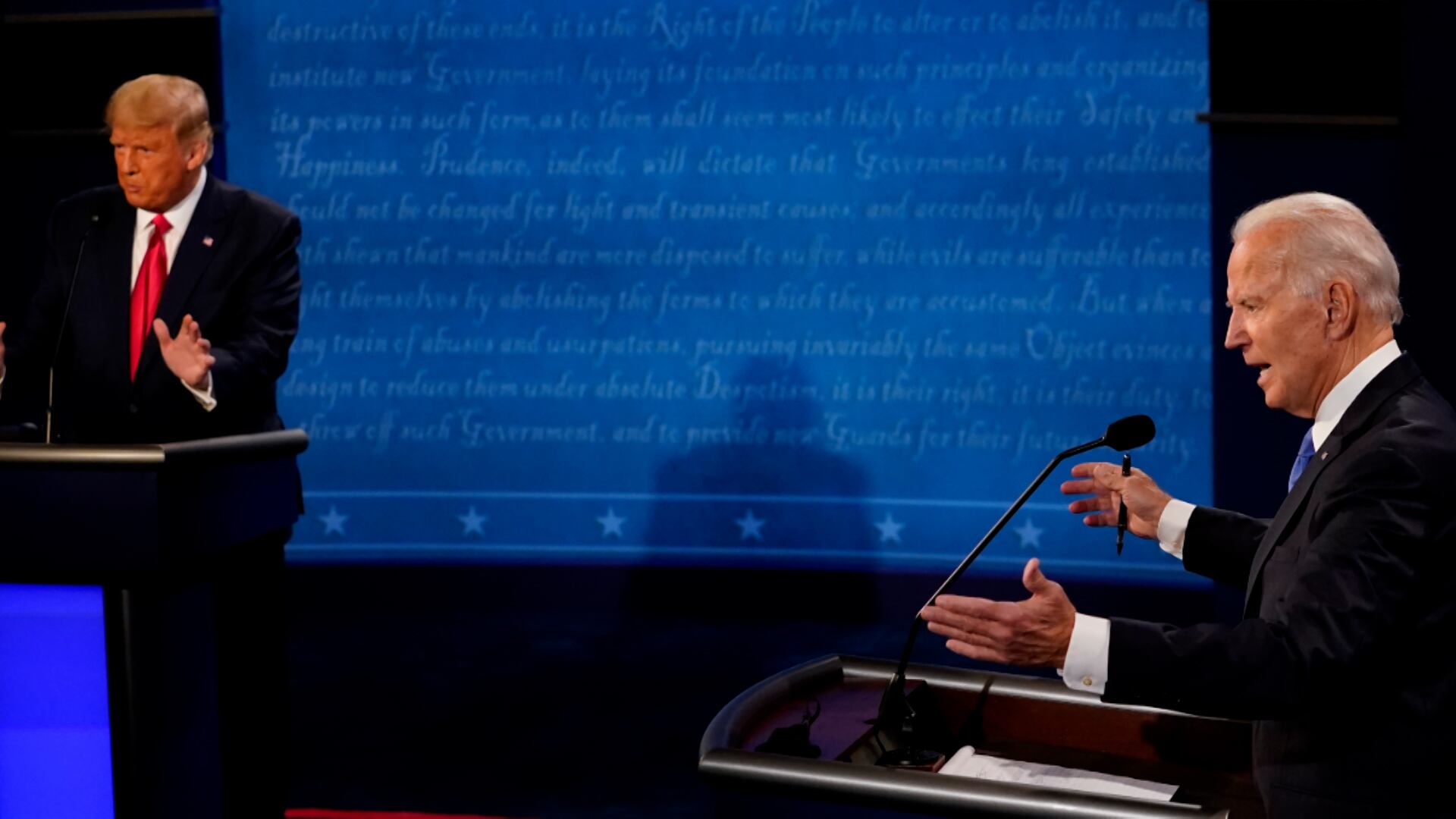
That means the two federal cases against Donald Trump, the former president, as well as the case against Hunter Biden, the son of President Joe Biden, would not be interrupted. Trump has demanded that Republicans defund the prosecutions against him as a condition of funding the government, declaring it their “last chance” to act.
HAS THIS HAPPENED BEFORE?
Prior to the 1980s, lapses in government funding did not result in government operations significantly shuttering. But then-U.S. Attorney General Benjamin Civiletti, in a series of legal opinions in 1980 and 1981, argued that government agencies cannot legally operate during a funding gap.
Federal officials have since operated under an understanding they can make exemptions for functions that are “essential” for public safety and constitutional duties.
Since 1976, there have been 22 funding gaps, with 10 of them leading to workers being furloughed. But most of the significant shutdowns have taken place since Bill Clinton's presidency, when then-Speaker Newt Gingrich and his conservative House majority demanded budget cuts.
The longest government shutdown happened between 2018 and 2019 when then-President Trump and congressional Democrats entered a standoff over his demand for funding for a border wall. The disruption lasted 35 days, through the holiday season, but was also only a partial government shutdown because Congress had passed some appropriations bills to fund parts of the government.
WHAT DOES IT TAKE TO END A SHUTDOWN?
It's the responsibility of Congress to fund the government. The House and Senate have to agree to fund the government in some way, and the president has to sign the legislation into law.
The two sides are deeply entrenched and nowhere near reaching a deal to avert a shutdown.
But if the shutdown lasts for weeks, pressure will build to end the impasse, particularly if active-duty military members miss pay dates on Oct. 13 or Nov. 1. If the wider public starts seeing disruptions in air travel or border security as workers go unpaid, it will further goad Congress to act.
Congress often relies on a so-called continuing resolution, or CR, to provide stopgap money to open government offices at current levels as budget talks are underway. Money for pressing national priorities, such as emergency assistance for victims of natural disasters, is often attached to a short-term bill.
But hardline Republicans say any temporary bill is a non-starter for them. They are pushing to keep the government shut down until Congress negotiates all 12 bills that fund the government, which is historically a laborious undertaking that isn't resolved until December, at the earliest.
Trump, who is Biden's top rival heading into the 2024 election, is urging on the Republican hardliners.
If they are successful, the shutdown could last weeks, perhaps even longer.
Associated Press writers Lolita Baldor, Mark Sherman, Fatima Hussein, Lindsay Whitehurst, Josh Boak, Kevin Freking and Lisa Mascaro contributed to this report.