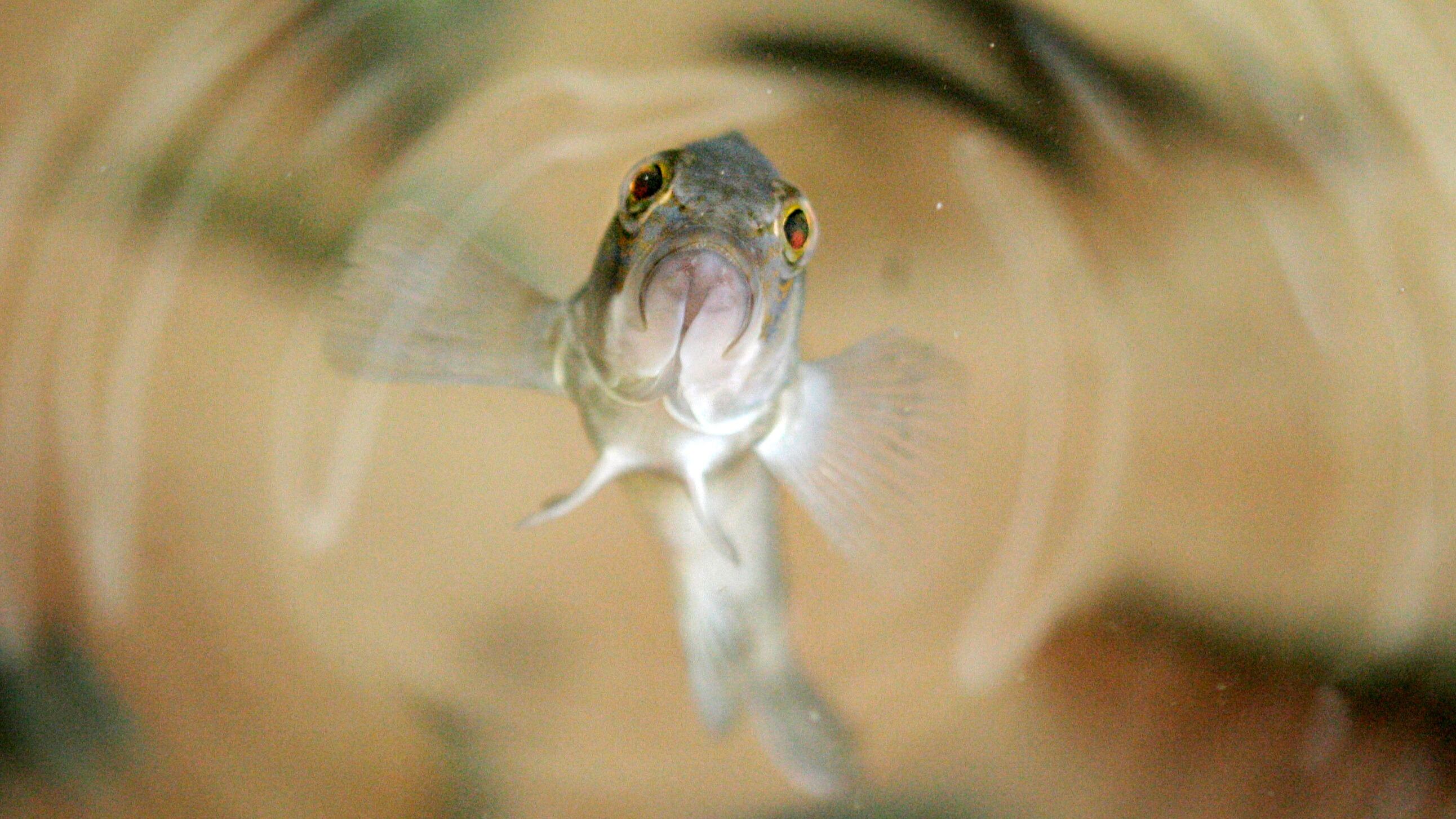
File photo of sea bass. (Photo: AP Photo/Steven Senne, File)
A commercial fisherman accused of conspiring with others to sell 200,000 pounds (90,000 kilos) of fish in excess of legal quotas has been convicted in federal court in New York.
Christopher Winkler, 63, of Montauk, was convicted Wednesday in Central Islip of one count of criminal conspiracy, two counts of mail fraud and two counts of obstruction of justice. Winkler, the captain of a fishing trawler called the New Age, was accused of falsifying records to sell illegal fluke and black sea bass worth nearly $900,000 between 2014 and 2017.
“Fluke and black sea bass play a vital part in our marine ecosystem and quotas are designed to prevent overfishing and stabilize populations for the public good,” Assistant Attorney General Todd Kim said in a news release. “We will continue to seek justice against those who flout laws that protect fisheries and the fishing industry.”
Winkler's attorneys Richard Levitt and Peter Smith said the case was based on outdated limits on fluke, also known as summer flounder.
“There is nothing at all rational about this system, but Mr. Winkler and other Long Island fishermen are easy scapegoats for this regulatory insanity,” the lawyers said in a statement.
The New York Times reported that Levitt told jurors that Winkler was a “working stiff” who had been wronged by the government in a misguided prosecution. Levitt also pointed to rules that force fishermen to throw over-quota fish back into the water even if most die.
Prosecutors said Winkler supplied over-the-limit fish to dealers, including Gosman’s fish dock in Montauk and two others that operated out of the New Fulton Fish Market in the Bronx.
Two members of the Gosman family, cousins Asa and Bryan Gosman, pleaded guilty in 2021 to a single count of mail fraud and cooperated in the government’s investigation.
Newsday reported that Winkler's attorneys sought to paint the prosecution's witnesses as untrustworthy, noting that many, including the Gosmans, admitted to drug and alcohol use.
Prosecutor Christopher Hale said during his summation that some of the witnesses were “scoundrels” but added, “We take the witnesses as they come. It’s not a beauty pageant.”
Levitt vowed to appeal the verdict. Winkler remains free on bail and no date has been set for his sentencing.
Although still early in development, blockchain technology, Web3, also known as Web 3.0 has been getting a lot of attention from some top tech names lately. Web3 is based on blockchain technology, which powers NFT’s and cryptocurrencies such as bitcoin. With Web3, users would ideally control their own data, rather than have it be controlled by a few large companies. But, Tesla CEO Elon musk isn't buying into Web3 just yet, tweeting over the weekend that the decentralized iteration of the internet seems more like a marketing "buzzword" right now than reality. Twitter co-founder Jack Dorsey also chiming in to the conversation, expressing doubt over whether or not Web3 would actually be decentralized if ownership still belonged to venture capital firms. Parker McCurley, co-founder & CEO of Decent Labs explains the significance of Web3 catching the eye of the tech giants, and what Web3 could mean for the future of the internet.
The FDA has granted emergency use authorization to Pfizer's pill to treat covid-19. The treatment, called Paxlovid, is the first antiviral covid-19 pill that people can take at home.
Pfizer says the pill can reduce the risk of severe illness by 90 percent and is intended for people at high risk for severe disease, including those over 65, people with obesity, diabetes, or a weakened immune system. Professor Peter Pitts, Founder, Center for Medicine in the Public Interest & Former FDA Associate joined Wake Up with Cheddar to discuss.
On December 20th, the TSA reported that for the fourth day in a row, it had screened more than 2 million people through its airports as the Omicron variant continues to rage and spread rapidly throughout the country. The CDC now reporting that roughly 73% of all covid cases are caused by the Omicron variant ahead of President Biden’s remarks aimed towards curbing the virus and helping hospitals battle rises in hospitalizations. Dr. Nasia Safdar breaks down the latest on traveling during the pandemic.
Ahead of a four day week for the markets due to the upcoming Christmas holiday, investors hoping for a quiet end to the year, or even a Santa Claus rally, may not be in luck. Investors are still digesting the latest from the Fed regarding a quicker than expected taper, as well as ever increasing blow back as the Omicron variant spreads. Octavio Marenzi, CEO of Opimas LLC, explains why the markets have been so volatile ever since the emergence of the latest variant and what to expect going forward into 2022.
Carlo and Baker cover the heartening news on the Covid front ahead of the holiday, plus President Biden punting student loan repayments again, a new space telescope and Love, Hate, Ate: Christmas Eve Eve Edition!
Stocks closed lower Monday as investors continued to price in COVID-19 omicron variant fears. Reopening stocks like airlines, financial companies, restaurants and hotels, and more, dragged on the major indexes as businesses and events took a pause over the weekend amid rising case numbers in metropolitan areas. This comes a week after the Federal Reserve announced it plans to speed up its asset tapering timeline in January and institute three rate hikes next year. Is that plan aging well? Robert Conzo, CEO of The Wealth Alliance, joins Cheddar News' Closing Bell to discuss market movement, how stocks could close out the year, what the Fed could do in 2022, and more.
After a vote in one Buffalo, New York-area Starbucks created the first workers union in the coffee chain's history, the company has announced that it is ready to negotiate in good faith with the new bargaining unit. But a tense process where labor organizers leveled accusations of anti-union activity at the coffee giant may make that difficult. Cortlin Harrison, a barista at the unionized store, spoke to Cheddar about making a deal. "We can move past all the dirty tricks, the union-busting, the captive audience meetings," he said. "I'm ready to go to the table, and my fellow baristas are ready to go to the table, and just move forward."