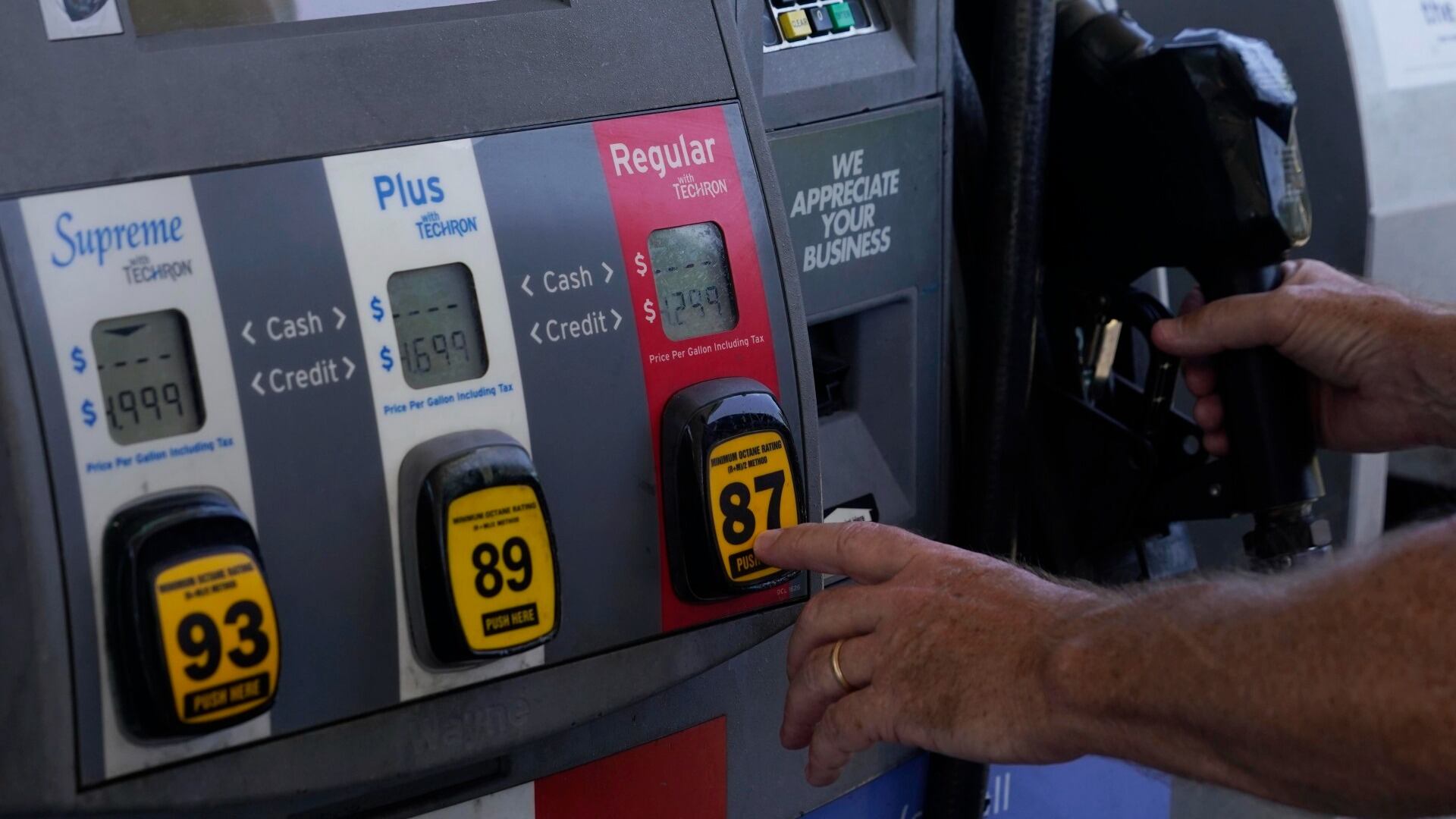
Drivers are in for another headache at the pump as U.S. gas prices continue to rise.
The national average for gas prices stood at about $3.78 a gallon on Tuesday — about 25 cents higher than that seen one month ago, according to motor club AAA. While today's prices at the pump remain far lower than they were last year, when energy costs soared worldwide in the months following Russia's invasion of Ukraine, experts say such a jump is unusual.
“Usually it takes a hurricane to move prices that much,” said AAA spokesperson Andrew Gross, who said the rise is especially interesting as “fewer people are are fueling up” their cars this summer compared to years past.
In the U.S., gasoline prices are highly dependent on crude oil. West Texas Intermediate crude, the U.S. benchmark, has stayed above $80 per barrel since Thursday, standing at over $81 as of Tuesday afternoon. That marks a $12 jump since July 3, according to OPIS global head of energy analysis Tom Kloza.
There are a few factors causing oil prices to rise, Gross and Kloza say, including global supply production cuts and impacts of this summer's extreme heat on refineries. Here's what you need to know.
WHY ARE GAS PRICES RISING? BLAME THE HEAT AND PRODUCTION CUTS
This summer's record temperatures are partly to blame for the rising gas prices.
“While the heat may be keeping people home, it’s also keeps refineries from making refined product,” Gross explained, noting that refineries are typically designed to operate between 32 and 95 degrees Fahrenheit (0 and 35 degrees Celsius). “They don’t like temperature extremes because they’re inherently dangerous places... So they dial back the production for safety purposes, but that then constrains supply.”
According to Kloza, there are about 10 million daily barrels of U.S. refining capacity on the Gulf Coast. The heat wave has caused those refineries to operate below normal capacity — resulting in a loss of hundreds of thousands of barrels each day, he said.
Still, “the fact that some refineries are struggling has meant that the ones who are able to operate are making really nice profits," he said. Today's U.S. domestic demand is about 9 million barrels a day, about a half a million below expectations for peak summer months, but the country is exporting a lot of gasoline, he added.
Beyond the heat, Kloza pointed to crude supply cuts from major producing countries in the OPEC+ alliance. In July, for example, Saudi Arabia starting reducing how much oil it sends to the global economy by 1 million barrels each day. Russia is also exporting less, he said.
The cuts aren't OPEC-wide, Gross noted. As inflation eases, he suspects that better economic prospects may also be putting pressure on oil worldwide.
WHICH STATES HAVE THE HIGHEST GAS PRICES TODAY?
As always, certain parts of the U.S. are facing high gas prices than others — due to factors ranging from routine maintenance at regional refineries to limited supplies in some states.
On Tuesday, according to the AAA, California had the highest gas prices in the nation at an average of $5.01 a gallon. Washington and Oregon followed at $4.96 and $4.92, respectively.
Mississippi had the lowest average at about $3.29 per gallon, followed by $3.39 in Louisiana and and $3.40 in Alabama.
WILL GAS PRICES CONTINUE TO CLIMB?
It's hard to know what gas prices will look like in the coming weeks, experts say.
While relief from the heat can hopefully be expected as we enter the fall, both Gross and Kloza pointed to risk of hurricanes — which, of course, leads refineries to power down.
“If you could guarantee we’re not going to have tropical storm force or hurricane winds in the Gulf of Mexico, I’d say it’s going to be clear sailing for the rest of the year. But that’s a real fly in the ointment,” Kloza said, pointing to the unprecedented water temperatures the region has seen recently.
HOW CAN I SAVE GAS?
If you're looking to save money and cut back on trips to the pump, there are a few ways you can maximize your mileage per gallon.
One important habit is staying on top of getting your tire pressure checked, Gross said. In addition to safety risks, low tire pressure is “not maximizing your fuel efficiency,” costing you more money down the road, he said.
AAA offers additional gas saving tips — which include using cruise control when possible, not overfilling your tank at the pump and removing unneeded items in your car's trunk to cut down on excess weight.