By Daria Litvinova
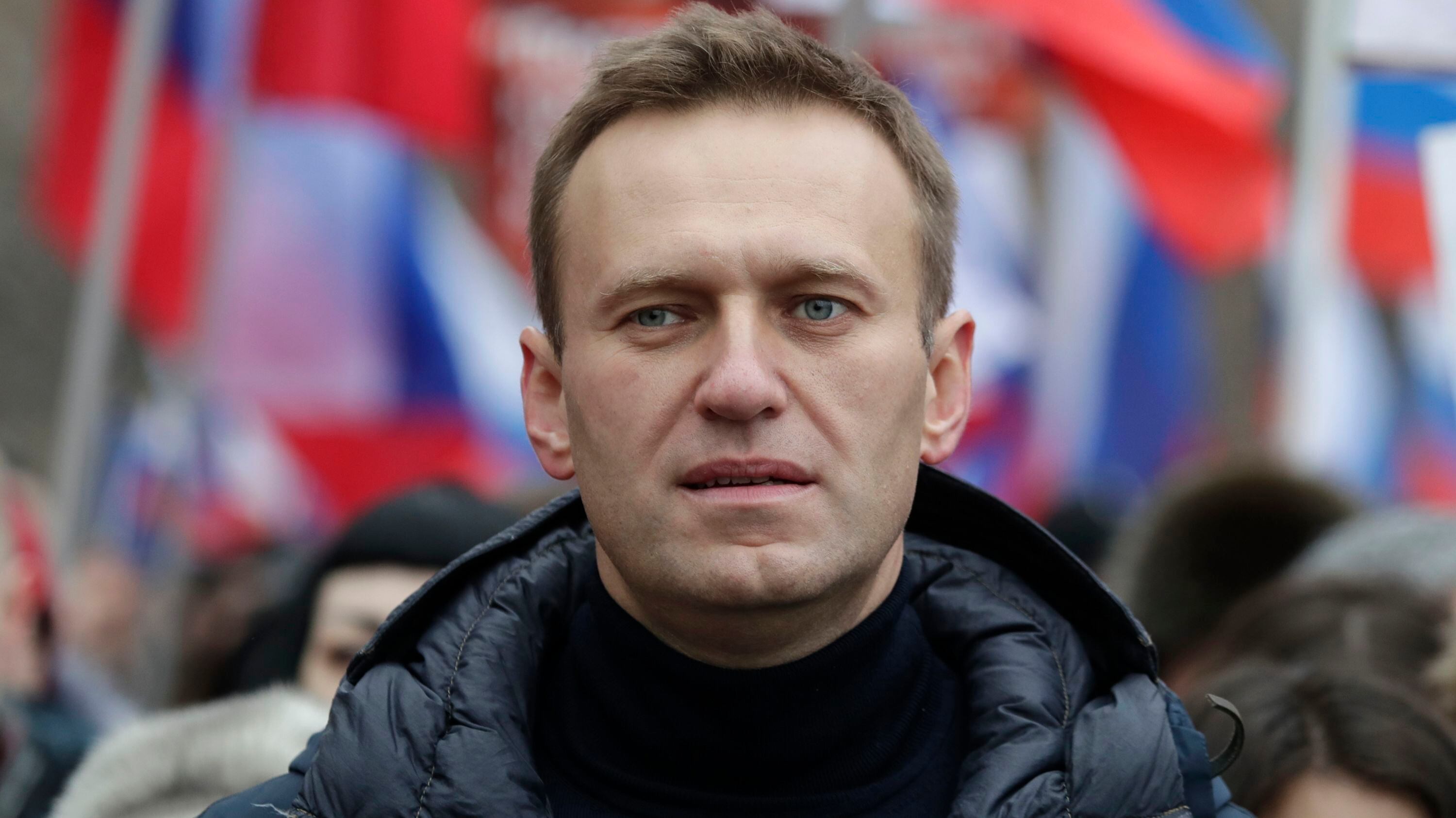
Russian opposition leader Alexei Navalny was in a coma and on a ventilator Thursday in an intensive care unit in Siberia after falling ill from suspected poisoning that his allies believe is linked to his political activity.
The 44-year-old critic of Russian President Vladimir Putin felt unwell on a flight back to Moscow from Tomsk, a city in Siberia, and was taken to a hospital after the plane made an emergency landing in Omsk, Navalny's spokeswoman, Kira Yarmysh, said on Twitter.
She told the Echo Moskvy radio station that he must have consumed poison in tea he drank at an airport cafe before boarding the plane early Thursday. During the flight, Navalny started sweating and asked her to talk to him so that he could "focus on the sound of a voice." He then went to the bathroom and lost consciousness, and has been in a coma in grave condition ever since.
Other opposition figures were quick to suggest Kremlin involvement.
"We are sure that the only people that have the capability to target Navalny or myself are Russian security services with definite clearance from Russia's political leadership," Pyotr Verzilov, a member of the protest group Pussy Riot who ended up in intensive care after suspected poisoning in 2018, told The Associated Press. "We believe that Putin definitely is a person who gives that go-ahead in this situation."
Doctors at Omsk Ambulance Hospital No.1, where the politician is being treated, remain tight-lipped about his diagnosis and only said they were considering a variety of theories, including poisoning.
According to Yarmysh, they initially refused to let Navalny's wife, Yulia, see her husband and have rejected requests for documentation that would allow him to be transferred to a European hospital for treatment.
Navalny's doctor, Yaroslav Ashikhmin, told the independent Meduza outlet that he was trying to arrange the opposition leader's transfer to a clinic in Hanover or Strasbourg.
The secretary general of Chancellor Angela Merkel's party, Paul Ziemiak, has offered Germany's help in providing medical treatment for Navalny.
Verzilov, who was flown to Berlin for treatment in 2018, said hospitals in Omsk or Moscow would not be able to treat Navalny properly and expressed concern about possible pressure from security services that doctors could be under in Russia.
Kremlin spokesman Dmitry Peskov said it was necessary to wait for test results showing what caused Navalny's condition, adding the authorities would consider a request to allow Navalny to leave Russia, which has not fully opened its borders after a coronavirus lockdown, for treatment.
State news agency Tass reported that police were not considering deliberate poisoning, a statement the politician's allies dismissed.
The widow of Alexander Litvinenko, the Russian agent who was killed in London by radioactive poisoning in 2006, voiced concerns that Navalny's enemies within Russia may have decided that it's time to use a "new tactic."
"It was obvious he would not be stopped," Marina Litvinenko told The Associated Press from Sicily, Italy. "Maybe they decided to do a new tactic not to stop him just with an arrest but to stop him with poison. It looks like a new tactic against Navalny."
Reports about the alleged poisoning made waves in the West. British Foreign Secretary Dominic Raab said in a tweet that he was "deeply concerned" by the reports of suspected poisoning, and Amnesty International demanded a full and thorough investigation from Russian authorities.
Edward Snowden, the former U.S. National Security Agency contractor in exile in Russia, tweeted that if poisoning is confirmed, "it is a crime against the whole of Russia."
Like many other opposition politicians in Russia, Navalny has been frequently detained by law enforcement and harassed by pro-Kremlin groups. In 2017, he was attacked by several men who threw antiseptic in his face, damaging an eye.
Last year, Navalny was rushed to a hospital from prison, where he was serving a sentence following an administrative arrest, with what his team said was suspected poisoning. Doctors said then that he had a severe allergic attack and discharged him back to prison the following day.
Navalny's Foundation for Fighting Corruption has been exposing graft among government officials, including some at the highest level. Last month, he had to shut the foundation after a financially devastating lawsuit from Yevgeny Prigozhin, a businessman with close ties to the Kremlin.
Belarus' authoritarian President Alexander Lukashenko accused Navalny last week of organizing unprecedented mass protests against his re-election that have rocked Russia's ex-Soviet neighbor since Aug. 9. He did not, however, provide any evidence and that claim was one of many blaming foreign forces for the unrest.
The most prominent member of Russia's opposition, Navalny campaigned to challenge Putin in the 2018 presidential election, but was barred from running.
He set up a network of campaign offices across Russia and has since been promoting opposition candidates in regional elections, challenging members of Russia's ruling party, United Russia. One of his associates in Khabarovsk, a city in Russia's Far East that has been engulfed in mass protests against the arrest of the region's governor, was detained last week after calling for a strike at a rally.
In the interview with Echo Moskvy, Yarmysh said she believed the suspected poisoning was connected to this year's regional election campaign.
Vyacheslav Gimadi, a lawyer with Navalny's foundation, said the team has requested that Russia's Investigative Committee open a criminal probe. "There is no doubt that Navalny was poisoned because of his political stance and activity," Gimadi said in a tweet.
Commentators say Navalny has become increasingly dangerous for the Kremlin as Putin's approval has plummeted this year to a record low of around 60% amid the coronavirus pandemic and growing public frustration with the declining economy.
Navalny's ability to mobilize voters against pro-Kremlin candidates poses a particular challenge ahead of the 2021 parliamentary elections, said Abbas Gallyamov, a former Kremlin speechwriter-turned-political analyst.
"The Duma elections are particularly important for the Kremlin," as the new Duma will be operating in 2024, when Putin's current presidential term expires and he may announce running for re-election, Gallyamov told the AP.
"Imagine if now the parliament in Belarus announced not recognizing election results," Gallyamov said. "This would be the end of the regime."
"That's why controlling the next State Duma is crucially important for the Kremlin. Navalny really makes it harder for the Kremlin to establish that control," Gallyamov added.
At the same time Navalny, who rose to prominence by exposing corruption all over Russia, could have other enemies, Gallyamov said, and may have been targeted by people featured in one of his investigations, if he was indeed deliberately poisoned.
Navalny is not the first opposition figure to come down with a mysterious poisoning.
In 2018 Verzilov spent a month in a hospital, recovering from a suspected poisoning by an unknown substance. He told the AP that Navalny's initial symptoms — loss of coordination, pain, fainting — were very similar to his.
Opposition activist Vladimir Kara-Murza was hospitalized with poisoning symptoms twice — in 2015 and 2017. Prominent journalist Anna Politkovskaya was also reportedly poisoned in 2004 — two years before being murdered.
___
Associated Press writers Pan Pylas in London, Alexander Roslyakov in Moscow and Kirsten Grieshaber in Berlin contributed.