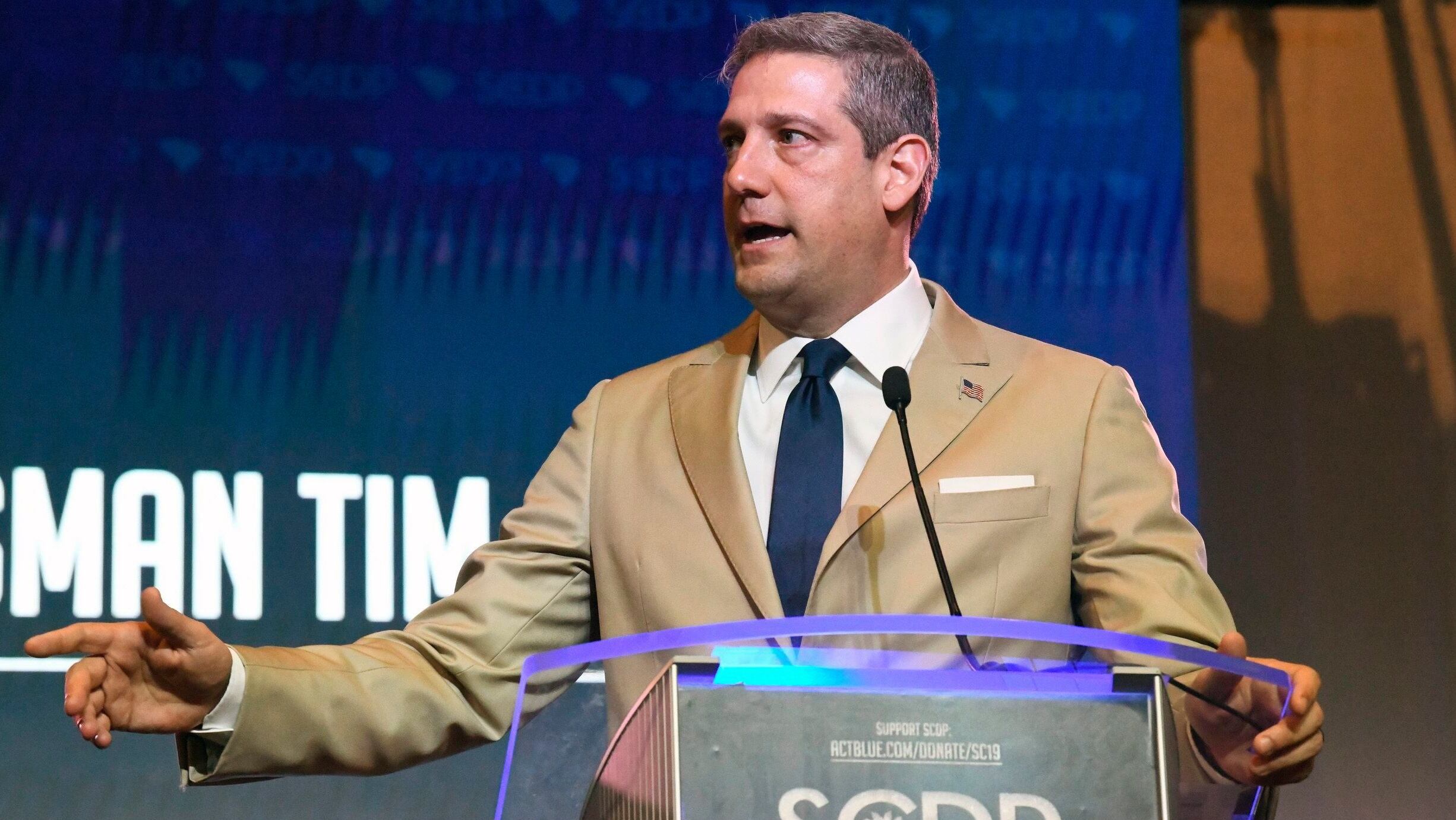
Polling at just one percent in nearly all the major early 2020 presidential polls, Congressman Tim Ryan (D-Ohio) is hoping to break through on the debate stage Wednesday night by portraying himself as the one leader who faced hardships similar to most Americans.
"I'm just going to be myself. I know who I am, and where I come from, and I want to share that with the American people," Ryan told Cheddar at Rep. Jim Clyburn's "World Famous Fish Fry" in Columbia, South Carolina on Friday night.
A self-described capitalist, Ryan's 2020 stump speech has been for the worker. The district Ryan has represented for eight-terms, Ohio 13, is located in the northeast portion of the state, and includes working class, auto manufacturing cities like Lordstown and Youngstow, both of which have been crushed by changes in the industry. Ryan drew parallels between his constituents and the South Carolinian voters at Clyburn's event.
"This is a working class state, and our motto is 'JOBS, JOBS, JOBS,'" Ryan said. "I mean the best social program is a job, and we want to start building things again, and the communities I represent like Youngstown, Ohio look a lot like South Carolina."
In March, Ryan's district was hit hard when a massive GM manufacturing plant shuttered in Lordstown with nearly 1,700 hourly workers being sent home without a plan in sight.
But these hardships might help a presidential candidate understand the reality Americans face in 2019. Ryan wants to increase U.S. investment in electric vehicles and solar energy as a way to both go green and drive job growth.
On the debate stage Wednesday, Ryan intends to discuss what he has overcome (or is in the process of overcoming) as a way to level with the American people. "I come from a community that has seen job loss, has seen an opioid epidemic, that has seen an infant mortality epidemic, and the next president has got to deeply understand what the American people are going through."
President Donald Trump has signed an executive order to block states from regulating artificial intelligence. He argues that heavy regulations could stifle the industry, especially given competition from China. Trump says the U.S. needs a unified approach to AI regulation to avoid complications from state-by-state rules. The order directs the administration to draw up a list of problematic regulations for the Attorney General to challenge. States with laws could lose access to broadband funding, according to the text of the order. Some states have already passed AI laws focusing on transparency and limiting data collection.
The New York Times and President Donald Trump are fighting again. The news outlet said Wednesday it won't be deterred by Trump's “false and inflammatory language” from writing about the 79-year-old president's health. The Times has done a handful of stories on that topic recently, including an opinion column that said Trump is “starting to give President Joe Biden vibes.” In a Truth Social post, Trump said it might be treasonous for outlets like the Times to do “FAKE” reports about his health and "we should do something about it.” The Republican president already has a pending lawsuit against the newspaper for its past reports on his finances.
President Donald Trump says he will allow Nvidia to sell its H200 computer chip used in the development of artificial intelligence to “approved customers” in China. Trump said Monday on his social media site that he had informed China’s leader Xi Jinping and “President Xi responded positively!” There had been concerns about allowing advanced computer chips into China as it could help them to compete against the U.S. in building out AI capabilities. But there has also been a desire to develop the AI ecosystem with American companies such as chipmaker Nvidia.
House Republicans in key battleground districts are working to contain the political fallout expected when thousands of their constituents face higher bills for health insurance coverage obtained through the Affordable Care Act. For a critical sliver of the GOP majority, the impending expiration of the enhanced premium tax credits after Dec. 31 could be a major political liability as they potentially face midterm headwinds in a 2026 election critical to President Donald Trump’s agenda. For Democrats, the party’s strategy for capturing the House majority revolves around pinning higher bills for groceries, health insurance and utilities on Republicans.
President Donald Trump says a deal struck by Netflix last week to buy Warner Bros. Discovery “could be a problem” because of the size of the combined market share. The Republican president says he will be involved in the decision about whether federal regulators should approve the deal. Trump commented Sunday when he was asked about the deal as he walked the red carpet at the Kennedy Center Honors. The $72 billion deal would bring together two of the biggest players in television and film and potentially reshape the entertainment industry.
The two-sentence footnote raised serious concerns about accuracy and credibility.
Load More