*By Carlo Versano* The bitter midterm election season is coming down ー as it always does ー to who turns out to vote. With control of both chambers of Congress and dozens of statehouses up for grabs on Tuesday, and a polarizing president at the center of it all, the 2018 midterm election will be seen as one of the most consequential in modern U.S. history. Democrats hope that Trump's unpopularity will drive voters to the polls and, in so doing, repudiate his agenda and divisive style of leadership. Republicans are counting on a booming economy to counterbalance the conventional midterm wisdom that the party in power loses seats. That focus on the economy ー historically low unemployment, a bull market, and sustained wage growth ー would have been easy to miss during the last leg of the campaign season, as Trump and his surrogates went all-in on a hard-line immigration message. Nick Givas, a reporter with The Daily Caller, said that the economy was the GOP's best bet for holding off Democratic gains: "If there's one thing voters can point to that's tangible, it's more jobs, it's more money in their wallet," he said. Trump's incendiary rhetoric, particularly on the subject of immigration, is a callback to the very strategy that got him elected. "Immigration also helped him rise in the polls as a presidential candidate," Givas said. "He's going back to his bread and butter here" and making a bet that getting his base "hot and bothered" will drive turnout. But that strategy is exactly what mobilizes Democrats to vote, as noted by the DCCC's Molly Mitchell in an earlier interview on Cheddar. "We've built the largest battlefield for Democrats in over a decade, and we've recruited incredible candidates across the country," she said. The DCCC counts 80 House districts in play nationwide, 71 of which are Republican-held. Democrats need a net gain of 23 seats to take the House. The Senate map remains favorable for the GOP, and the chalk bet is that the party will keep control of that chamber, but lose the House. Meanwhile, 36 governorships (26 of which are held by Republicans) will also be decided, with Democrats expected to make inroads in red states. Then, of course, there are the ballot initiatives that have been largely overshadowed by so many contentious races. From marijuana legalization to gas taxes to minimum wage, voters in 37 states have 155 ballot propositions in front of them. Wall Street will be particularly attuned to whether voters choose to legalize pot for recreational use (Michigan, North Dakota) or medical use (Missouri, Utah) and whether minimum wage hikes (Arkansas, Missouri) can get passed in an era of soaring corporate profits. With so much at stake and so much attention being paid, it will come down to turnout ー a worry for Democrats in the East, which is under widespread threat of severe weather. Bad weather on Election Day is widely believed to favor Republicans ー as the people most likely to stay home tend to be Democrats. The first polls close at 6 p.m. ET in parts of Kentucky and Indiana, and the "first test of what kind of night this going to be" will come when polls close at 7 p.m. in Virginia, according to Reid Epstein, political reporter at The Wall Street Journal. He's keeping an eye on VA-7, the district outside Richmond. If incumbent GOP Rep. Dave Brat falls early, that will bode well portend good things for Democrats. Epstein cautioned against gleaning too much from exit polling aside from the composition of a given electorate. After all, Democrats who took exit polls as gospel in 2016 went to bed thinking they would wake up to President Hillary Clinton. As the night progresses and the results roll in, California could throw a wrench into the results things. The massive state, home to multiple swing districts and notoriously slow to tabulate results, allows mail-in ballots through Election Day, meaning if control of the House is riding on the Golden State, we may not know right away. Polls there close at 11 p.m. ET. "We may all be sitting and watching the mail get delivered in Santa Ana and Irvine over the course of the next few days," Epstein cautioned. Both he and Givas, and the Daily Caller reporter, agreed on one thing: "It's going to be a long night." For full interview [click here](https://cheddar.com/videos/voters-head-to-the-polls-on-election-day).
Share:
More In Politics
US tariffs are having an uneven effect on holiday prices and purchases
Many U.S. consumers say they’ve noticed higher than usual prices for holiday gifts in recent months, according to a a December poll from The Associated Press-NORC Center for Public Affairs Research. A contributing factor is the unusually high import taxes the Trump administration put on foreign goods. While the worst-case consumer impact that many economists foresaw from the administration’s trade policies hasn’t materialized, some popular gift items have been affected more than others. Most toys and electronics sold in the U.S. come from China. So do most holiday decorations. Jewelry prices have risen due to the cost of gold.
Serbia organized crime prosecutors charge minister, others in connection with Kushner-linked project
Serbia’s prosecutor for organized crime has charged a government minister and three others with abuse of position and falsifying of documents related to a luxury real estate project linked to U.S. President Donald Trump’s son-in-law Jared Kushner. The charges came on Monday. The investigation centers on a controversy over a a bombed-out military complex in central Belgrade that was a protected cultural heritage zone but that is facing redevelopment as a luxury compound by a company linked to Kushner. The $500 million proposal to build a high-rise hotel, offices and shops at the site has met fierce opposition from experts at home and abroad. Selakovic and others allegedly illegally lifted the protection status for the site by falsifying documentation.
Trump signs executive order to block state AI regulations
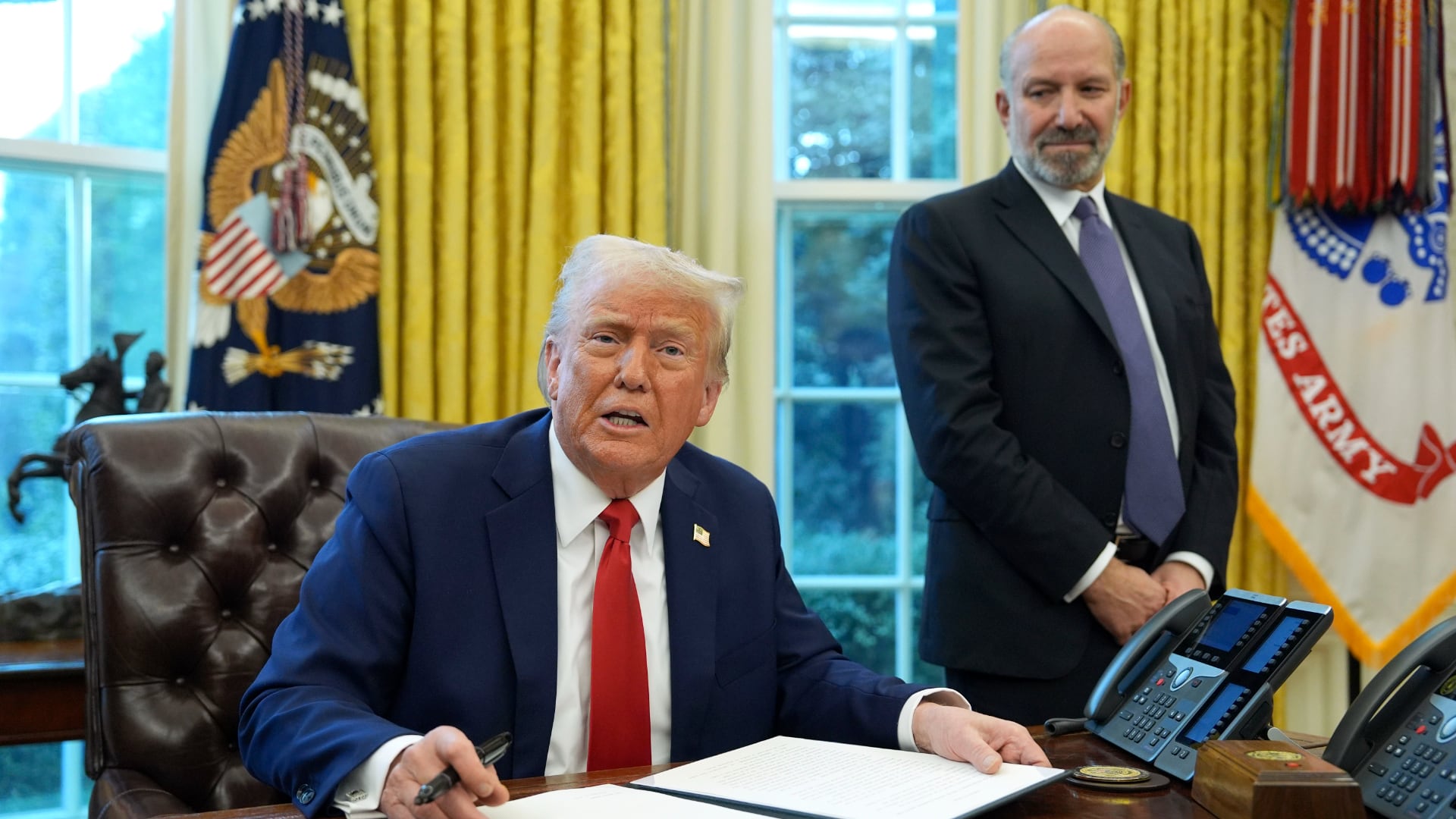
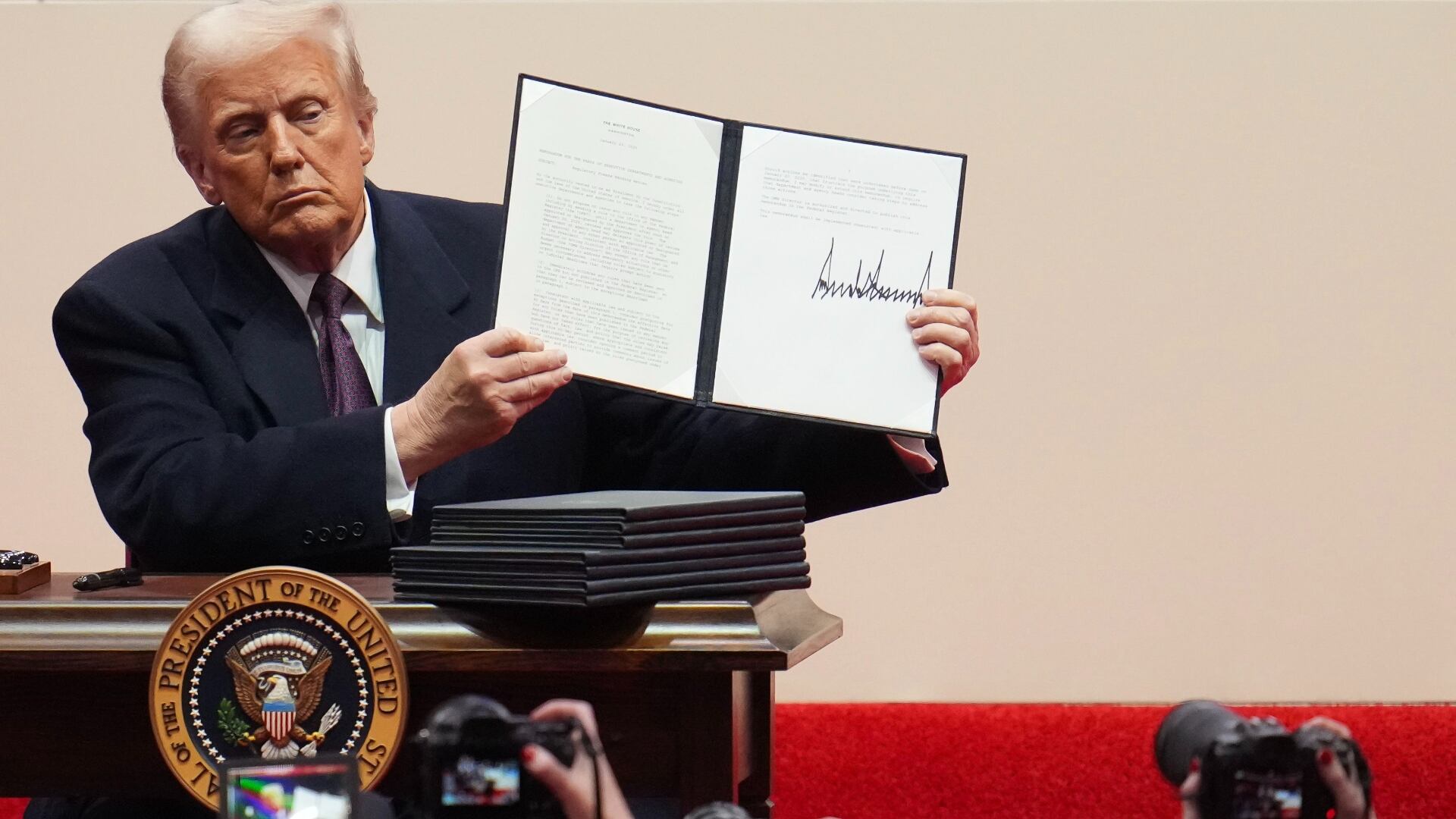
President Donald Trump has signed an executive order to block states from regulating artificial intelligence. He argues that heavy regulations could stifle the industry, especially given competition from China. Trump says the U.S. needs a unified approach to AI regulation to avoid complications from state-by-state rules. The order directs the administration to draw up a list of problematic regulations for the Attorney General to challenge. States with laws could lose access to broadband funding, according to the text of the order. Some states have already passed AI laws focusing on transparency and limiting data collection.
New York Times, after Trump post, says it won’t be deterred from writing about his health
The New York Times and President Donald Trump are fighting again. The news outlet said Wednesday it won't be deterred by Trump's “false and inflammatory language” from writing about the 79-year-old president's health. The Times has done a handful of stories on that topic recently, including an opinion column that said Trump is “starting to give President Joe Biden vibes.” In a Truth Social post, Trump said it might be treasonous for outlets like the Times to do “FAKE” reports about his health and "we should do something about it.” The Republican president already has a pending lawsuit against the newspaper for its past reports on his finances.
Trump approves sale of more advanced Nvidia computer chips used in AI to China
President Donald Trump says he will allow Nvidia to sell its H200 computer chip used in the development of artificial intelligence to “approved customers” in China. Trump said Monday on his social media site that he had informed China’s leader Xi Jinping and “President Xi responded positively!” There had been concerns about allowing advanced computer chips into China as it could help them to compete against the U.S. in building out AI capabilities. But there has also been a desire to develop the AI ecosystem with American companies such as chipmaker Nvidia.
Swing district Republicans brace for political fallout if health care subsidies expire
House Republicans in key battleground districts are working to contain the political fallout expected when thousands of their constituents face higher bills for health insurance coverage obtained through the Affordable Care Act. For a critical sliver of the GOP majority, the impending expiration of the enhanced premium tax credits after Dec. 31 could be a major political liability as they potentially face midterm headwinds in a 2026 election critical to President Donald Trump’s agenda. For Democrats, the party’s strategy for capturing the House majority revolves around pinning higher bills for groceries, health insurance and utilities on Republicans.
Load More