NEW YORK (AP) — Walmart, which became the nation’s largest retailer by making low prices a priority, has found itself in a place it’s rarely been: Warning customers that prices will rise for goods ranging from bananas to car seats.
Executives at the $750 billion company told industry analysts Thursday that they are doing everything in their power to absorb the higher costs from tariffs ordered by President Donald Trump.
Given the magnitude of the duties, however, the highest since the 1930s, higher prices are unavoidable and they will hurt Walmart customers already buffeted by inflation over the past three years.
Trump’s threatened 145% import taxes on Chinese goods were reduced to 30% in a deal announced Monday, with some of the higher tariffs on pause for 90 days.
Those higher prices began to appear on Walmart shelves in late April and accelerated this month, Walmart executives said Thursday. However, a larger sting will be felt in June and July when the back-to-school shopping season goes into high gear.
“We’re wired to keep prices low, but there’s a limit to what we can bear, or any retailer for that matter,” Chief Financial Officer John David Rainey told The Associated Press on Thursday after the company reported strong first quarter sales.
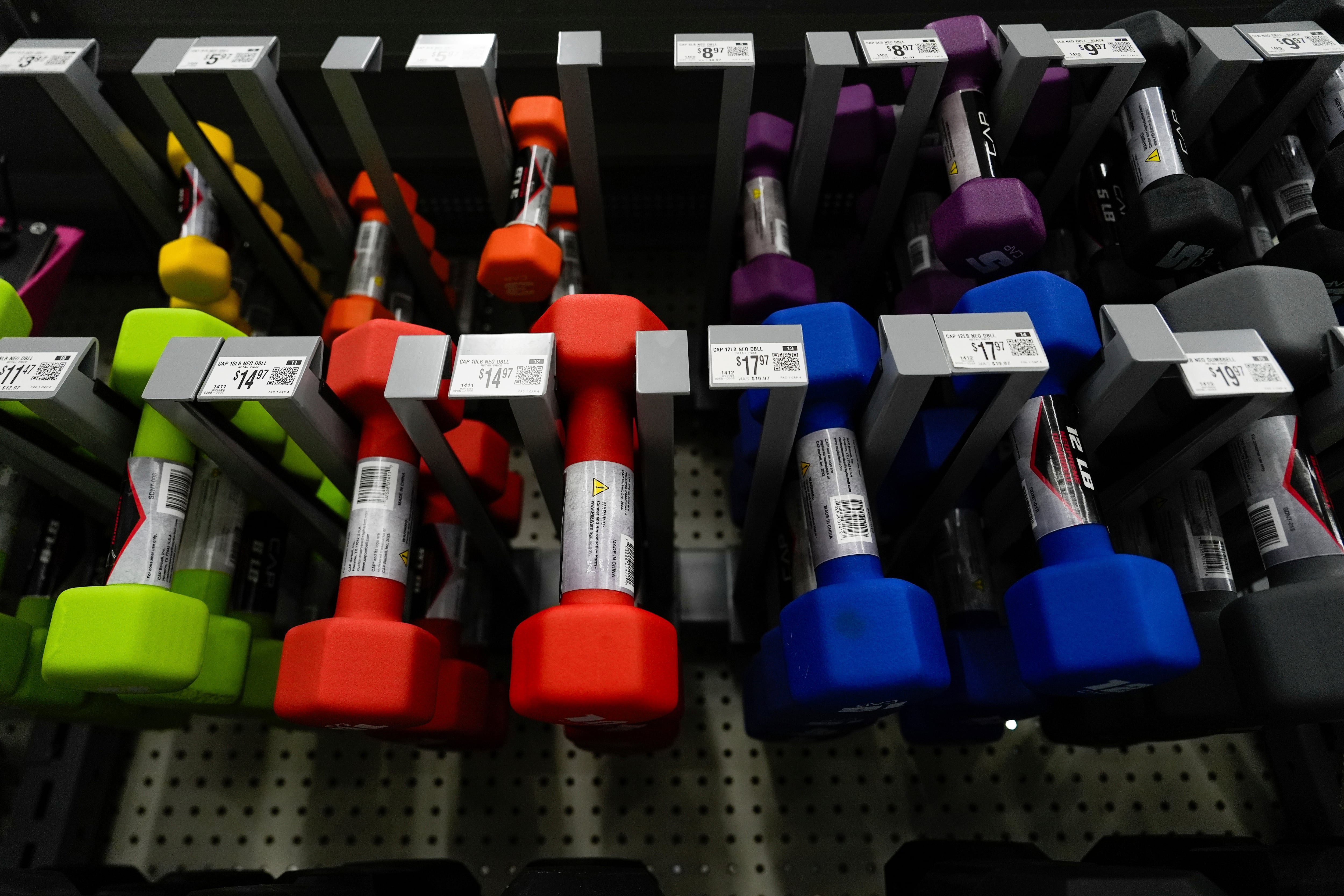
Rainey emphasized that prices are rising not just for discretionary items such as patio furniture and trendy fashions, but for basic necessities as well. The price of bananas, imported from Costa Rica, rose from 50 cents per pound, to 54 cents. He thinks car seats made in China that currently sell for $350 at Walmart will likely cost customers another $100. Baby strollers are also sourced from China, Rainey said.
Higher prices arrive as many Americans pull back on spending as they grow increasingly uneasy about the economy.
Government data Thursday revealed slowing sales growth for retailers. Walmart says that its consumers have become cautious and selective.
Tariffs on China and other countries are threatening the low-price model at the core of Walmart’s success.
Retailers and importers had largely halted shipments of shoes, clothes, toys, and other items due to new tariffs, but many are resuming imports from China in the narrow window that opened during the temporary “truce” this week, hoping to avoid sparse shelves this fall. Yet retailers, already operating on thin margins, say they have no choice but to raise prices to offset higher costs from tariffs. And they are also bracing for higher shipping costs fueled by a surge of companies scrambling to get their goods on ships to the U.S.
Rainey told The Associated Press that the retailer did not pause shipments from China as a result of the tariffs like others because it didn’t want to hurt its suppliers and wanted to keep merchandise flowing. It has built in hedges against some tariff threats. Two-thirds of Walmart’s merchandise is sourced in the U.S., with groceries now accounting for roughly 60% of Walmart’s U.S. business.
Still, Walmart isn’t immune.
CEO Doug McMillon told analysts Thursday that Walmart imports general merchandise from dozens of countries. But China, in particular, represents a big chunk of volume in certain categories like electronics and toys.
Tariffs on countries like Costa Rica, Peru and Colombia are raising costs on groceries like avocados, coffee and roses, in addition to bananas, company executives said. Walmart is absorbing costs on general merchandise within departments and has yet to pass along rising costs in some cases.
Walmart is also asking suppliers to swap input materials for components if possible, for example, using fiberglass instead of aluminum, which Trump hit with tariffs in early March.
“We’re very dependent upon imports for these types of products,” Rainey told The Associated Press.
He said there are some goods for which Walmart simply can’t shift production or produce easily in the United States.
Walmart earned $4.45 billion, or 56 cents per share, in the quarter ended April 30, down from $5.10 billion, or 63 cents per share, in the same period last year.
Adjusted earnings per share were 61 cents, exceeding the 58 cent projections from industry analysts, according to FactSet.
Revenue rose 2.5% to $165.61 billion, just short of analyst estimates.
Walmart’s U.S. comparable sales — those from established physical stores and online channels — rose 4.5% in the second quarter, though that’s slowed from a 4.6% bump in the previous quarter, and a 5.3% increase in the third quarter of 2024. .
Business was fueled by health and wellness items as well as groceries. Sales were weaker in home and sporting good, which was offset by robust sales of toys, automotive goods and kid’s clothing, the company said.
Global e-commerce sales rose 22%, up from 16% in the previous quarter.
Walmart said it expects sales growth of 3.5% to 4.5% in the second quarter.
Like many other U.S. companies, however, it did not issue a profit outlook for the quarter because of the chaotic environment, with stated U.S. tariff policies changing constantly. The company maintained its full-year guidance issued in February.