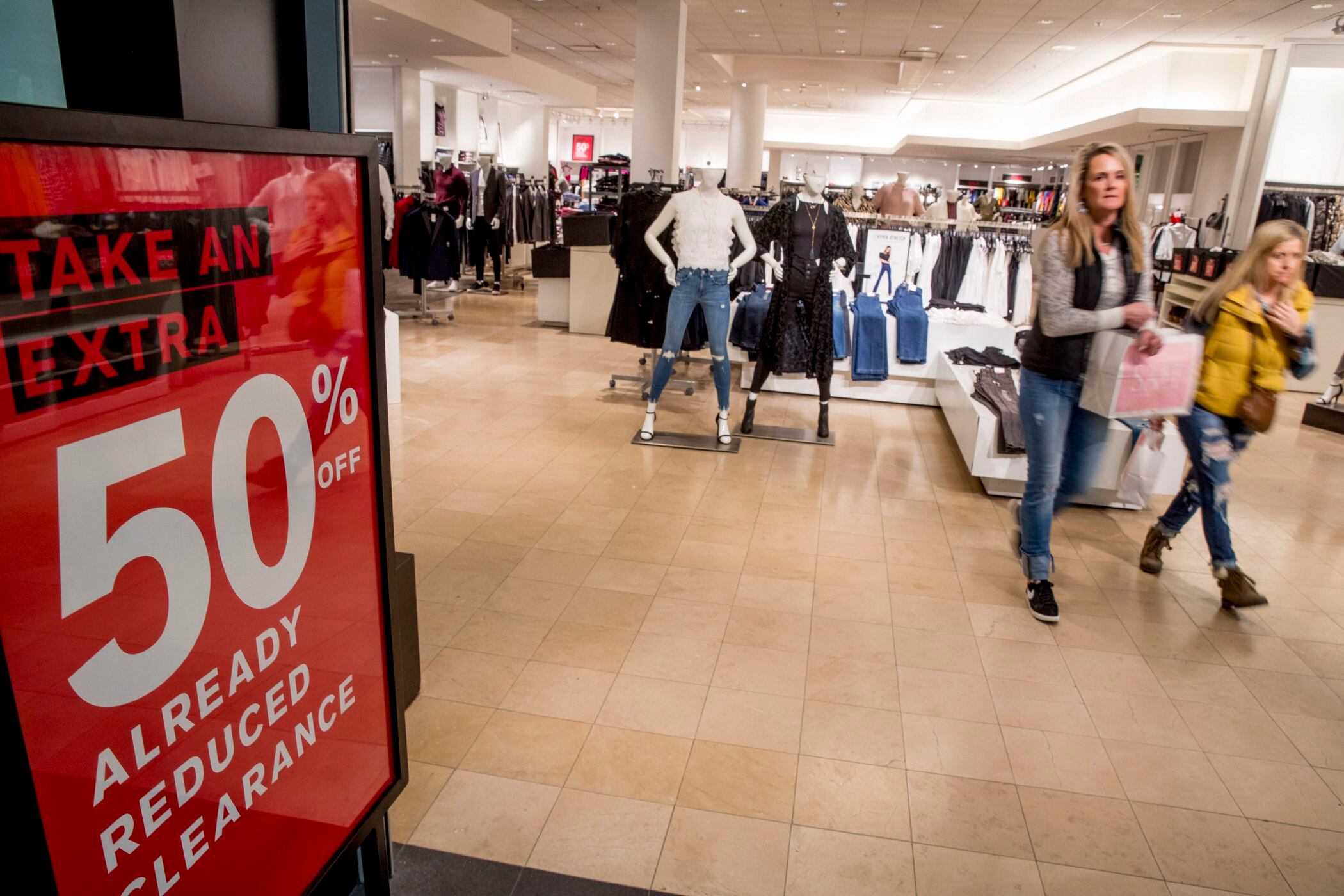
In this Jan. 22, 2020, file photo people leave a retail clothing store in Valley West Mall in West Des Moines, Iowa. On Friday, Feb. 28, the Commerce Department issues its January report on consumer spending, which accounts for roughly 70 percent of U.S. economic activity. (AP Photo/Andrew Harnik, File)
By Martin Crutsinger
U.S. consumer confidence rose in January as Americans became more optimistic about the future.
The Conference Board reported Tuesday that its consumer confidence index increased to 89.3, a rebound from December when it dipped to 87.1.
The increase was fueled by the board's rising expectations index, which measures perceptions about the future path of incomes, business and labor market conditions. The present situation index weakened further, however, reflecting concerns over the resurgence of COVID-19.
“The slow rollout of the vaccines and the still raging pandemic continue to depress consumer confidence despite the prospect of further fiscal aid and a brighter and a brighter health situation,” said Kathy Bostjancic, chief U.S. financial economist at Oxford Economics.
For January, the report showed that the views on current conditions weakened with the percentage of consumers who ranked business conditions as bad rising from 39.7% to 42.8%. Consumers' perceptions of the labor market also declined with the percentage of consumers saying that jobs are plentiful declining from 21% to 20.6% while those claiming jobs were hard to get rising from 22.9% to 23.8%.
In terms of future prospects, the percent of consumers expecting business conditions to improve over the next six months increased from 29.5% to 33.7%.
The survey found that the number of people expecting to buy a home in the next six months improved to a reading of 7.2%, up from 6% in December. Economists took this increase as a good indication that sales of existing homes should show improvements in coming months.
Robert Frick, corporate economist at Navy Federal Credit Union, said this increase could indicates people are becoming more willing to move once virus levels drop. “That could free up tight housing inventories as an unusually high number of homeowners are choosing to stay in their homes during the pandemic,” he said.
Updated on January 26, 2021, at 11:23 a.m. ET with the latest information.
Wealthfront’s CFO Alan Iberman talks the $2.05B IPO and the major moment for robo banking as the company bets on AI, automation, and “self-driving money."
A rare magnum of Dom Pérignon Vintage 1961 champagne that was specially produced for the 1981 wedding of Prince Charles and Lady Diana has failed to sell during an auction. Danish auction house Bruun Rasmussen handled the bidding Thursday. The auction's house website lists the bottle as not sold. It was expected to fetch up to around $93,000. It is one of 12 bottles made to celebrate the royal wedding. Little was revealed about the seller. The auction house says the bids did not receive the desired minimum price.
The New York Times and President Donald Trump are fighting again. The news outlet said Wednesday it won't be deterred by Trump's “false and inflammatory language” from writing about the 79-year-old president's health. The Times has done a handful of stories on that topic recently, including an opinion column that said Trump is “starting to give President Joe Biden vibes.” In a Truth Social post, Trump said it might be treasonous for outlets like the Times to do “FAKE” reports about his health and "we should do something about it.” The Republican president already has a pending lawsuit against the newspaper for its past reports on his finances.
OpenAI has appointed Slack CEO Denise Dresser as its first chief of revenue. Dresser will oversee global revenue strategy and help businesses integrate AI into daily operations. OpenAI CEO Sam Altman recently emphasized improving ChatGPT, which now has over 800 million weekly users. Despite its success, OpenAI faces competition from companies like Google and concerns about profitability. The company earns money from premium ChatGPT subscriptions but hasn't ventured into advertising. Altman had recently announced delays in developing new products like AI agents and a personal assistant.
President Donald Trump says he will allow Nvidia to sell its H200 computer chip used in the development of artificial intelligence to “approved customers” in China. Trump said Monday on his social media site that he had informed China’s leader Xi Jinping and “President Xi responded positively!” There had been concerns about allowing advanced computer chips into China as it could help them to compete against the U.S. in building out AI capabilities. But there has also been a desire to develop the AI ecosystem with American companies such as chipmaker Nvidia.