In the decade since they've become ubiquitous, rideshare drivers have contributed a greater and greater share of traffic congestion and carbon emissions, despite popular platforms such as Uber and Lyft touting their ability to provide alternatives to personal transportation.
This has made ridesharing a prime target for the electric vehicle transition, which is gradually taking hold across the U.S. with more vehicle options, infrastructure, and awareness.
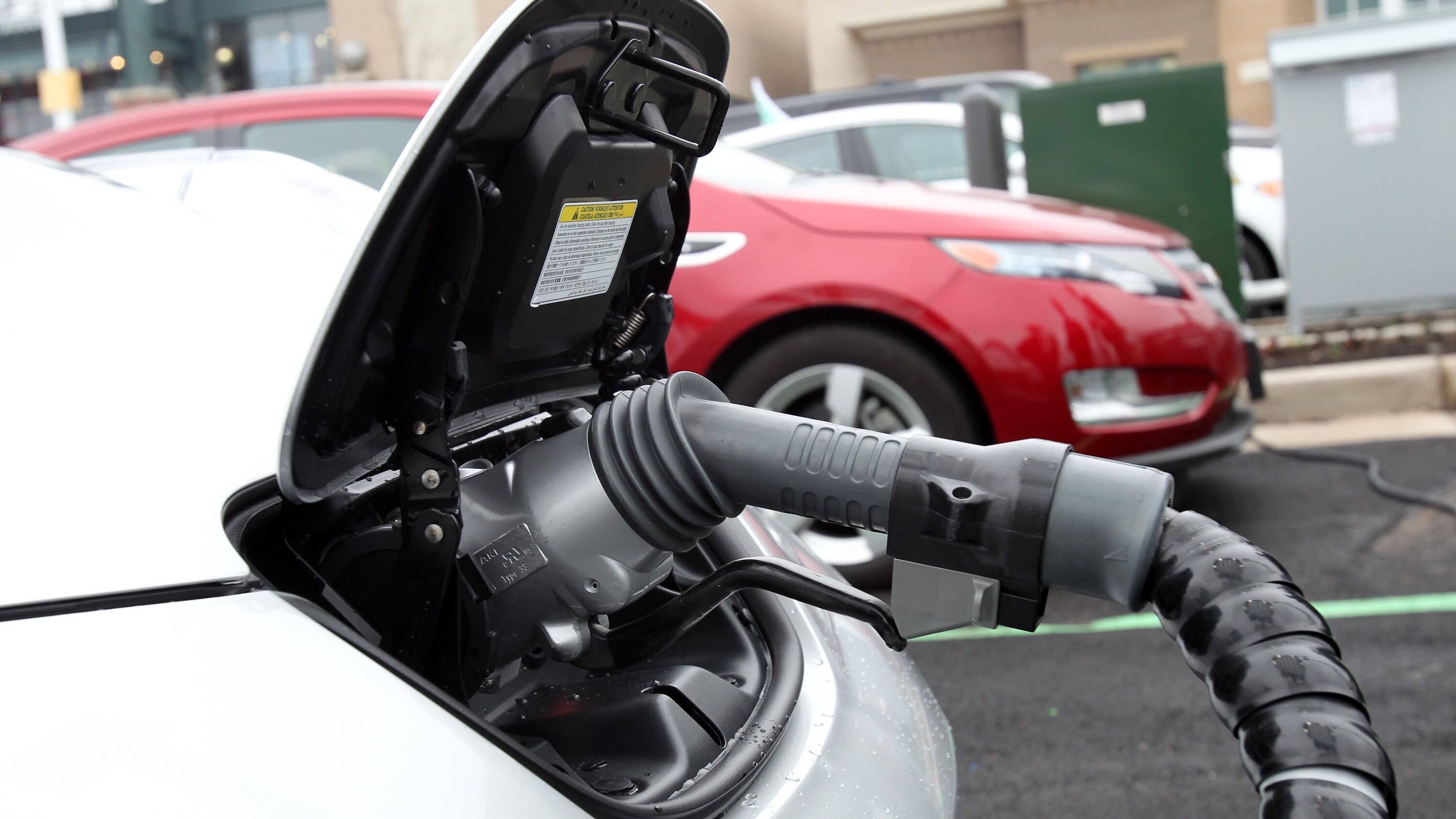
EVgo, the largest public electric vehicle charging network in the U.S., is trying to speed up this process through a partnership with Uber that offers discounted rates to rideshare drivers based on how many miles they travel in a day, with higher-volume drivers getting the biggest break.
"The typical retail driver in American can drive something like 200 miles in a week," Jonathan Levy, senior vice president of business development for EVgo, told Cheddar. "A rideshare driver can drive 200 miles in a day."
Most home chargers are "Level 2" units and can take four to six hours to fill a fully depleted battery. Fast-charging stations are "Level 3" and can fill a battery as quickly as 20 minutes.
For most drivers, an overnight charge in the garage is usually enough, but high-volume professional drivers tend to run their batteries down much faster.
One study from EVgo in 2019 found that rideshare drivers who spend more than 40 hours per week driving can clock 3-7 times more miles than the average EV owner.
"Not surprisingly, when your commercial basis is predicated on high utilization of your car, you don't have the time to sit there and slow-charge on an L2 for four hours or so," Levy said. "So being able to integrate it directly with your lunch break to get 20 minutes of charge and then get back to your day was obviously a win-win for rideshare drivers and EVgo."
Meeting this demand, however, means building fast-charging infrastructure across the country.
EVgo currently has 800 stations across the U.S., many of them clustered around urban areas or what Levy calls "ridesharing hotspots."
Much of this footprint is centered in California, but an ambitious expansion is already underway. EVgo partnered with General Motors earlier this year to build 2,700 new fast-charging stations over the next five years.
Levy could not provide specific numbers on what percentage of rideshare drivers have transitioned to electric, but noted that it's still in the "early days" when it comes to adoption.
For the moment, he said, the benefits of helping rideshare drivers transition to electric stems from their outsized contribution to emissions.
A recent study from the peer-reviewed science journal Nature, for instance, found that rideshare drivers transitioning to electric offers three times the emission reduction benefits of regular drivers. Again, the crux of this benefit is that rideshare drivers simply drive more.
"Sustainability is a team sport, and the path to zero-emissions is being laid with partnerships like these," said Uber Head of Sustainability Policy Adam Gromis in a statement. "Making EV charging access more accessible in more places is a crucial step to electrifying the rideshare industry and helping drivers transition to carbon-free options."
In September, Uber announced its commitment to become a "zero-emission mobility platform" by investing $800 million to help "hundreds of thousands" of drivers transition to electric by 2025. It will also soon offer customers the option to select an electric or hybrid vehicle when riding.
These kinds of initiatives, Levy said, give rideshare drivers the opportunity to serve as "EV evangelists" by exposing passengers to electric vehicles for the first time.
"It's this great opportunity to hit a couple birds with that one stone: decarbonize the transportation sector, get Uber drivers and other rideshare drivers into great vehicles, and help expose passengers to the benefits of electrified driving," he said.
Starting last week, Uber drivers were able to begin signing up for the discount program on the Uber website.