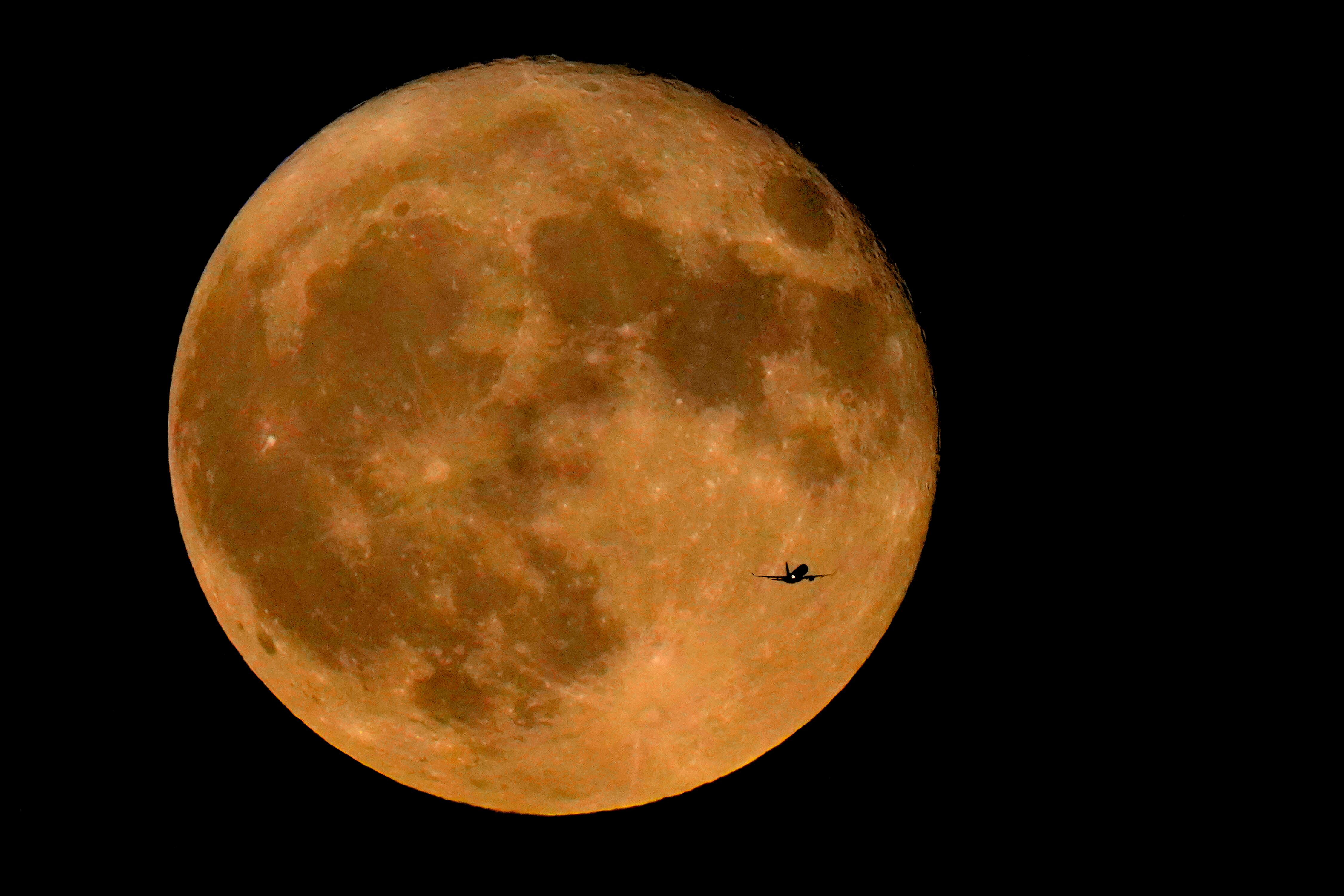
A commercial airliner flies Northwest across Lake Michigan in front of the "Full Buck" supermoon, the first of four supermoons in 2023, July 3, 2023, in Chicago. The cosmos is offering up a double feature in August: a pair of supermoons. Catch the first show Tuesday night, Aug. 2, as the full moon rises in the southeast. (AP Photo/Charles Rex Arbogast, File)
The cosmos is offering up a double feature in August: a pair of supermoons culminating in a rare blue moon.
Catch the first show Tuesday evening as the full moon rises in the southeast, appearing slightly brighter and bigger than normal. That’s because it will be closer than usual, just 222,159 miles (357,530 kilometers) away, thus the supermoon label.
The moon will be even closer the night of Aug. 30 — a scant 222,043 miles (357,344 kilometers) distant. Because it’s the second full moon in the same month, it will be what's called a blue moon.
“Warm summer nights are the ideal time to watch the full moon rise in the eastern sky within minutes of sunset. And it happens twice in August,” said retired NASA astrophysicist Fred Espenak, dubbed Mr. Eclipse for his eclipse-chasing expertise.
The last time two full supermoons graced the sky in the same month was in 2018. It won’t happen again until 2037, according to Italian astronomer Gianluca Masi, founder of the Virtual Telescope Project.
Masi will provide a live webcast of Tuesday evening’s supermoon, as it rises over the Coliseum in Rome.
“My plans are to capture the beauty of this ... hopefully bringing the emotion of the show to our viewers,” Masi said in an email.
“The supermoon offers us a great opportunity to look up and discover the sky,” he added.
This year’s first supermoon was in July. The fourth and last will be in September. The two in August will be closer than either of those.
Provided clear skies, binoculars or backyard telescopes can enhance the experience, Espenak said, revealing such features as lunar maria — the dark plains formed by ancient volcanic lava flows — and rays emanating from lunar craters.
According to the Old Farmer’s Almanac, the August full moon is traditionally known as the sturgeon moon. That’s because of the abundance of that fish in the Great Lakes in August, hundreds of years ago.
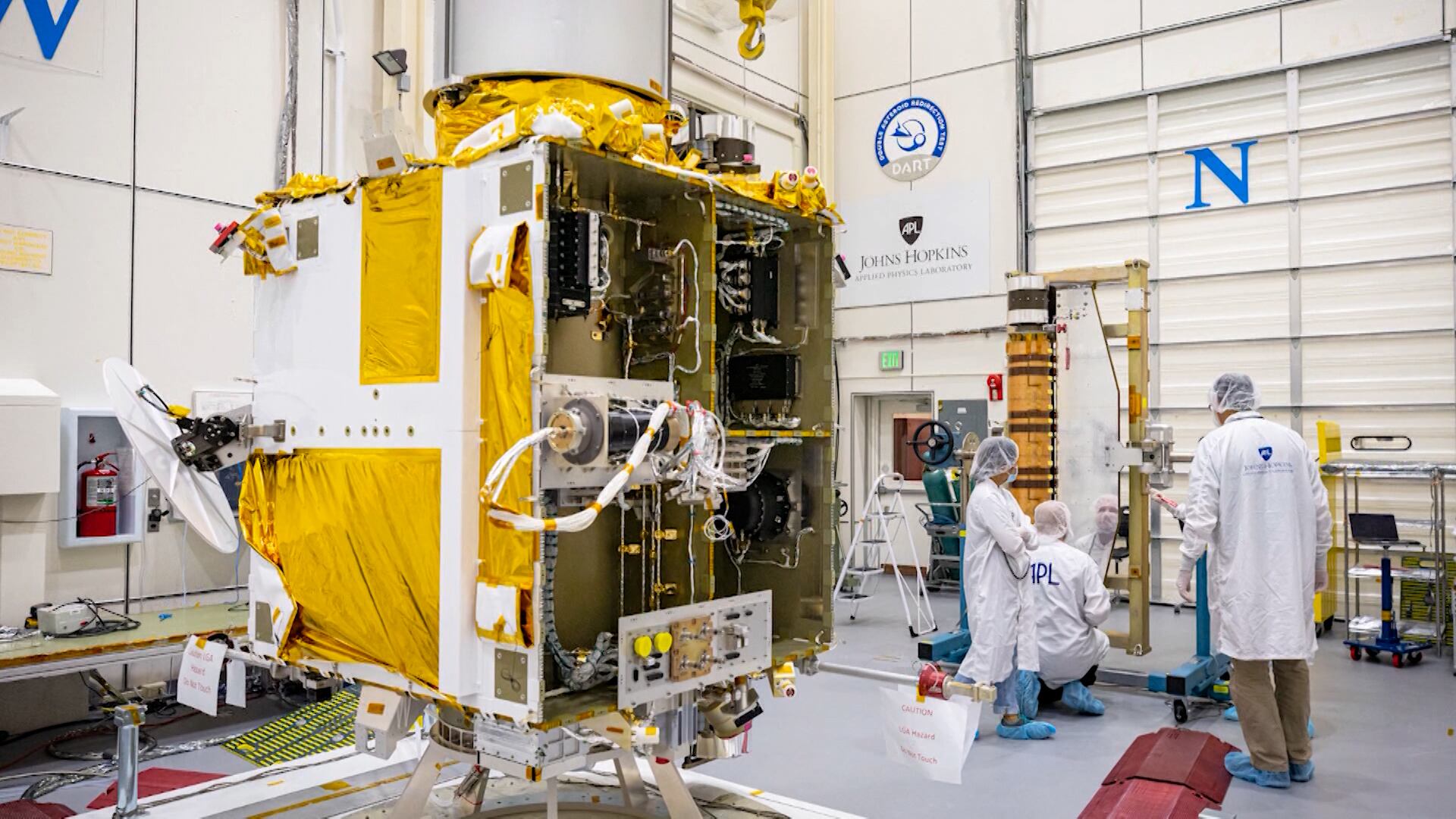
NASA is gearing up this week for a mission to launch a SpaceX Falcon 9 rocket into a near-Earth asteroid in an attempt to move it slightly off its projected course. Thomas Zurbuchen, an associate administrator for the NASA Science Mission Directorate, joined Cheddar's "Opening Bell" to provide some additional details about the Double Asteroid Redirection Test (DART) and explained why it is necessary as a means to protect Earth.
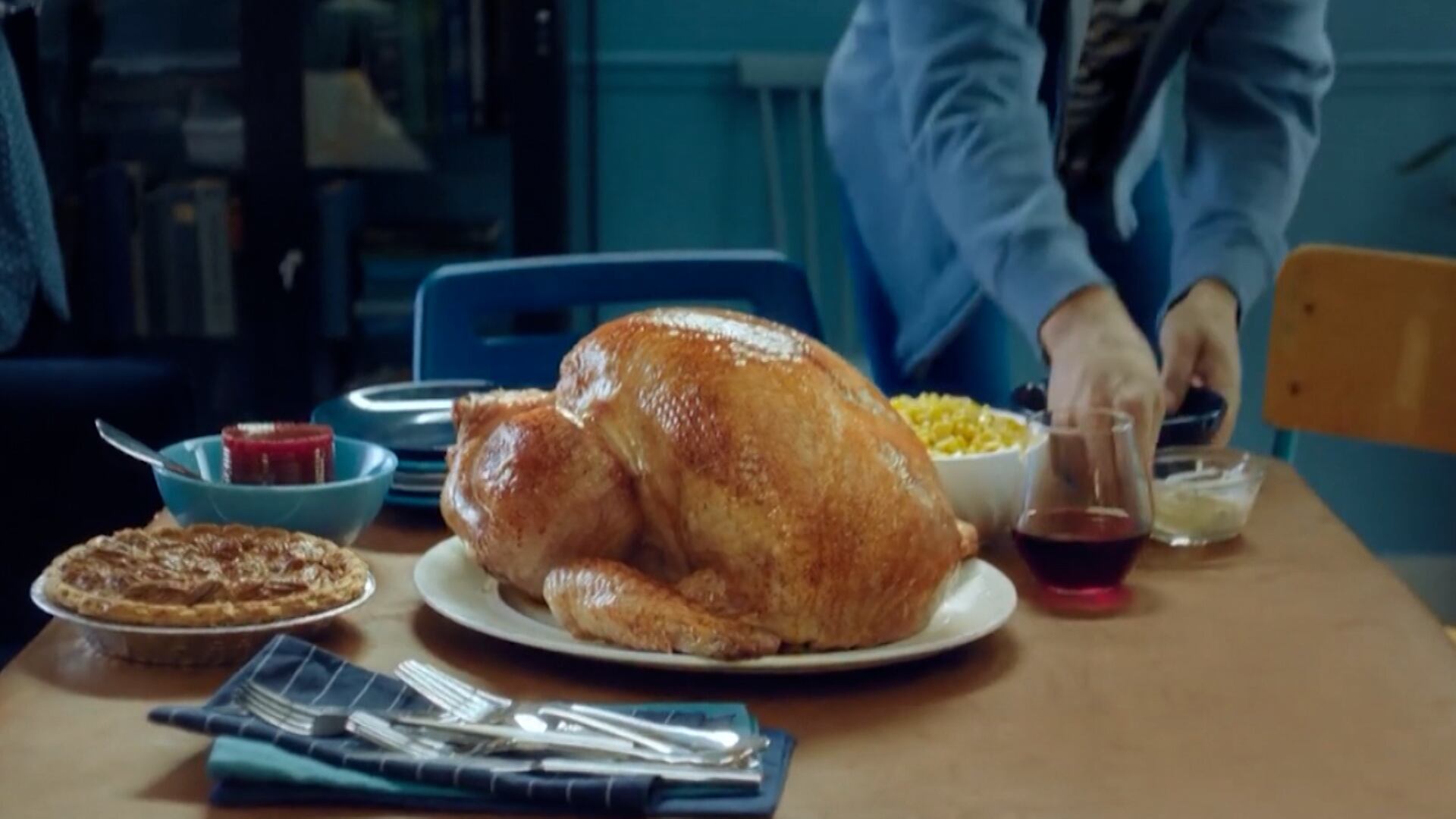
With Thanksgiving two days away, the USDA is reminding hosts of the importance of food safety. Karen Hunter, Food Safety Expert, USDA, joined Cheddar's Opening Bell to discuss the best food handling and leftover tips ahead of the holiday.
Jill and Carlo are a bit delayed today on account of Carlo's internet not working. Better late than never, they discuss what we know about the suspect in the Christmas parade crash, closing arguments in the Arbery killing trial, and more.
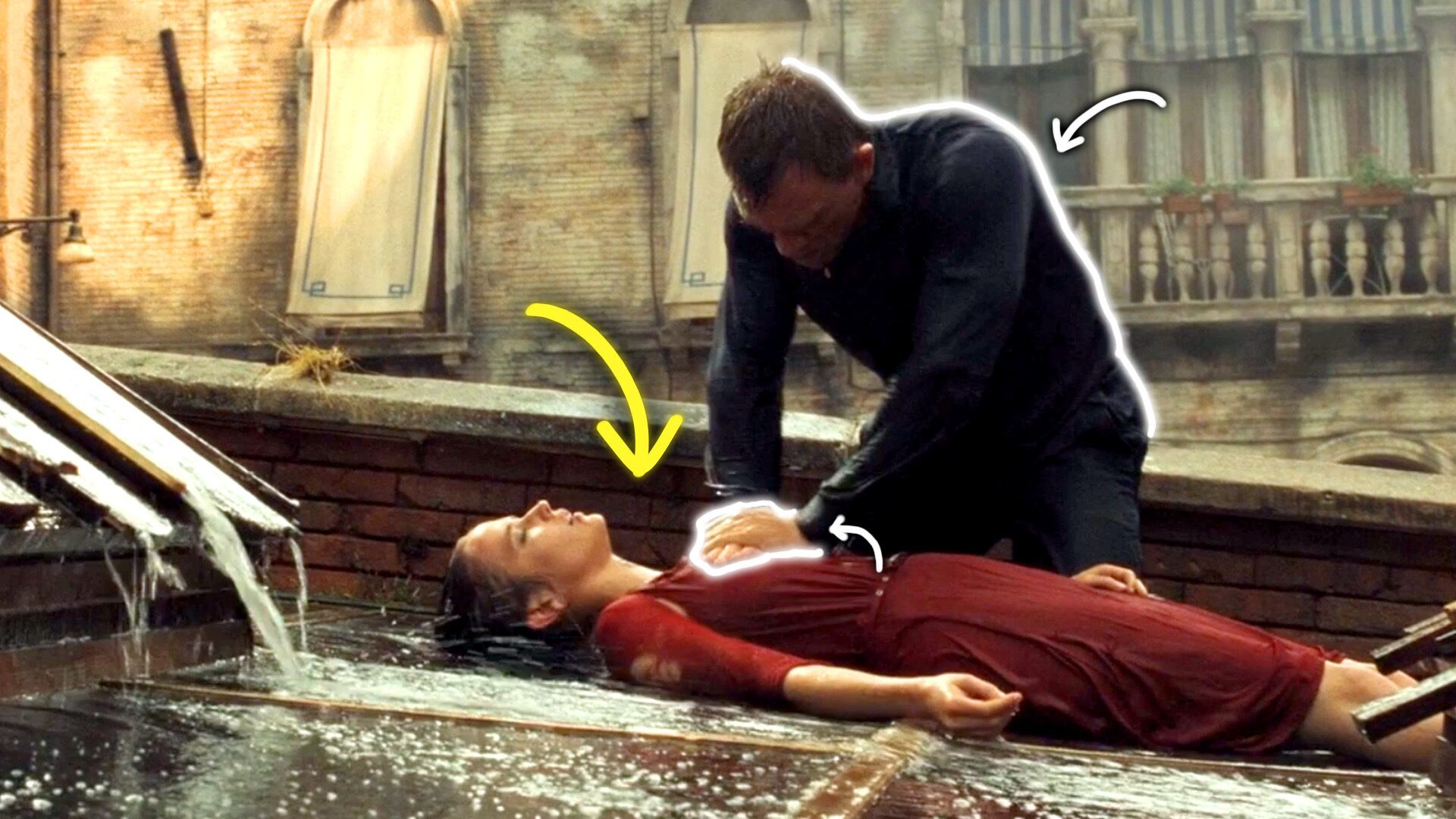
If you’ve ever watched a show or movie where a character is unconscious for some reason - drowning, electrocution, stabbed in a knife fight - you probably know what to expect next. Some hero will come perform what looks like cardiopulmonary resuscitation (CPR) for a minute or two, perhaps in slow motion, and definitely with a dramatic musical score. And bing, bang, boom, the unconscious character miraculously comes back to life.
If you’ve ever suspected that this is a gross exaggeration of the efficacy of CPR, well, you’re right. But exactly how wrong Hollywood gets CPR is hilarious at best and downright dangerous at worst.
Countries around the world continue to grapple with rising COVID cases, with Germany confirming case numbers at their highest at any point during the pandemic. German officials say that 48,000 new cases are being reported everyday.
Jill and Carlo cover the developing story out of suburban Milwaukee, where a speeding SUV careened through a Christmas parade. Looters get more brazen in San Francisco, the missing Chinese tennis star resurfaces, and more.
A CDC panel has unanimously endorsed boosters of the Pfizer and Moderna COVID-19 vaccines for all adults. Internal medicine physician Dr. Vivek Cherian joined Cheddar News to weigh in.
Neuroscientist Dr. Bankole Johnson joined Cheddar News to talk about the expectation of boosters for all U.S. adults and what the move would mean in the fight against the pandemic.
Deborah Sass, CO-CEO and Founding Partner of Space Hero, joins ChedHER to discuss how she's creating a global competition to send someone on a 10-day trip to space, her experience in the space industry without a background in STEM, and how she hopes to inspire younger generations of women.