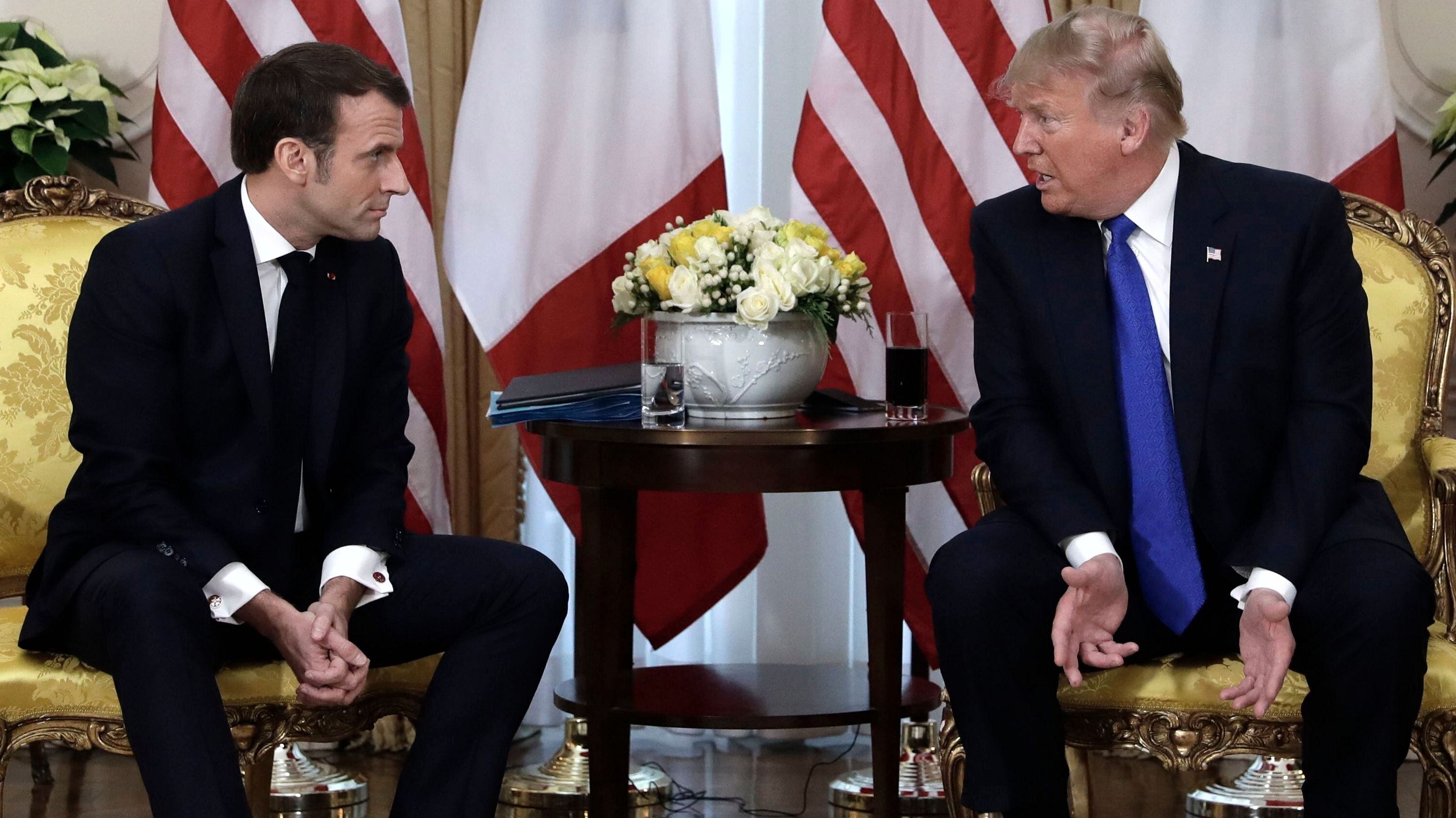
Markets plunged Tuesday morning after President Trump seemed to raise the stakes in U.S. trade relations with both France and China.
During the NATO summit in London, he doubled-down on threats to tax French goods in retaliation for the country's taxes on U.S. tech and also suggested the China trade deal may be delayed until after the 2020 election.
U.S. Trade Representative Robert E. Lighthizer announced that the administration is considering imposing $2.4 billion in tariffs on France in retaliation for its digital tax, which investigators found would harm American technology companies. The U.S. would target cheese, Champagne, handbags, and more with tariffs of up to 100 percent.
"The American companies — the tech companies — they're not my favorite people because they are not for me," Trump said to reporters while sitting next to French President Emmanuel Macron at a NATO meeting this morning. "We want to tax them [U.S. tech companies], that's not for someone else to tax."
Macron said he believed "we can settle this situation with President Trump."
"I'm not in love with those companies. If anybody is going to take advantage of our companies, it's going to be us," Trump said during the meeting that covered the British election, the U.S. impeachment inquiry, and Trump's support of Turkish President Recep Tayyip Erdoğan.
The two leaders spoke Tuesday at a summit meeting to mark the 70th anniversary of NATO — an alliance both have targeted in the past. Macron recently said NATO was experiencing "brain death," which Trump said was a "very, very nasty," and "insulting statement," though he once called NATO "obsolete."
Before the market even opened, futures were clearly taking a hit after Trump said there is "no deadline" on a trade deal with China. The S&P 500, Nasdaq, and the Dow were down more than 1 percent this morning.
"In some ways, I like the idea of waiting until after the election for the China deal," Trump said before the two-day NATO summit started this morning in London.U.S. tariffs on Chinese goods are set to rise on December 15 if a Phase 1 deal is not reached. Last month the administration indicated such a deal was close to being finalized, but after Trump signed off on legislation imposing sanctions on those who violate human rights in Hong Kong, it seemed the deal was off.
Wealthfront’s CFO Alan Iberman talks the $2.05B IPO and the major moment for robo banking as the company bets on AI, automation, and “self-driving money."
A rare magnum of Dom Pérignon Vintage 1961 champagne that was specially produced for the 1981 wedding of Prince Charles and Lady Diana has failed to sell during an auction. Danish auction house Bruun Rasmussen handled the bidding Thursday. The auction's house website lists the bottle as not sold. It was expected to fetch up to around $93,000. It is one of 12 bottles made to celebrate the royal wedding. Little was revealed about the seller. The auction house says the bids did not receive the desired minimum price.
The New York Times and President Donald Trump are fighting again. The news outlet said Wednesday it won't be deterred by Trump's “false and inflammatory language” from writing about the 79-year-old president's health. The Times has done a handful of stories on that topic recently, including an opinion column that said Trump is “starting to give President Joe Biden vibes.” In a Truth Social post, Trump said it might be treasonous for outlets like the Times to do “FAKE” reports about his health and "we should do something about it.” The Republican president already has a pending lawsuit against the newspaper for its past reports on his finances.
OpenAI has appointed Slack CEO Denise Dresser as its first chief of revenue. Dresser will oversee global revenue strategy and help businesses integrate AI into daily operations. OpenAI CEO Sam Altman recently emphasized improving ChatGPT, which now has over 800 million weekly users. Despite its success, OpenAI faces competition from companies like Google and concerns about profitability. The company earns money from premium ChatGPT subscriptions but hasn't ventured into advertising. Altman had recently announced delays in developing new products like AI agents and a personal assistant.
President Donald Trump says he will allow Nvidia to sell its H200 computer chip used in the development of artificial intelligence to “approved customers” in China. Trump said Monday on his social media site that he had informed China’s leader Xi Jinping and “President Xi responded positively!” There had been concerns about allowing advanced computer chips into China as it could help them to compete against the U.S. in building out AI capabilities. But there has also been a desire to develop the AI ecosystem with American companies such as chipmaker Nvidia.


