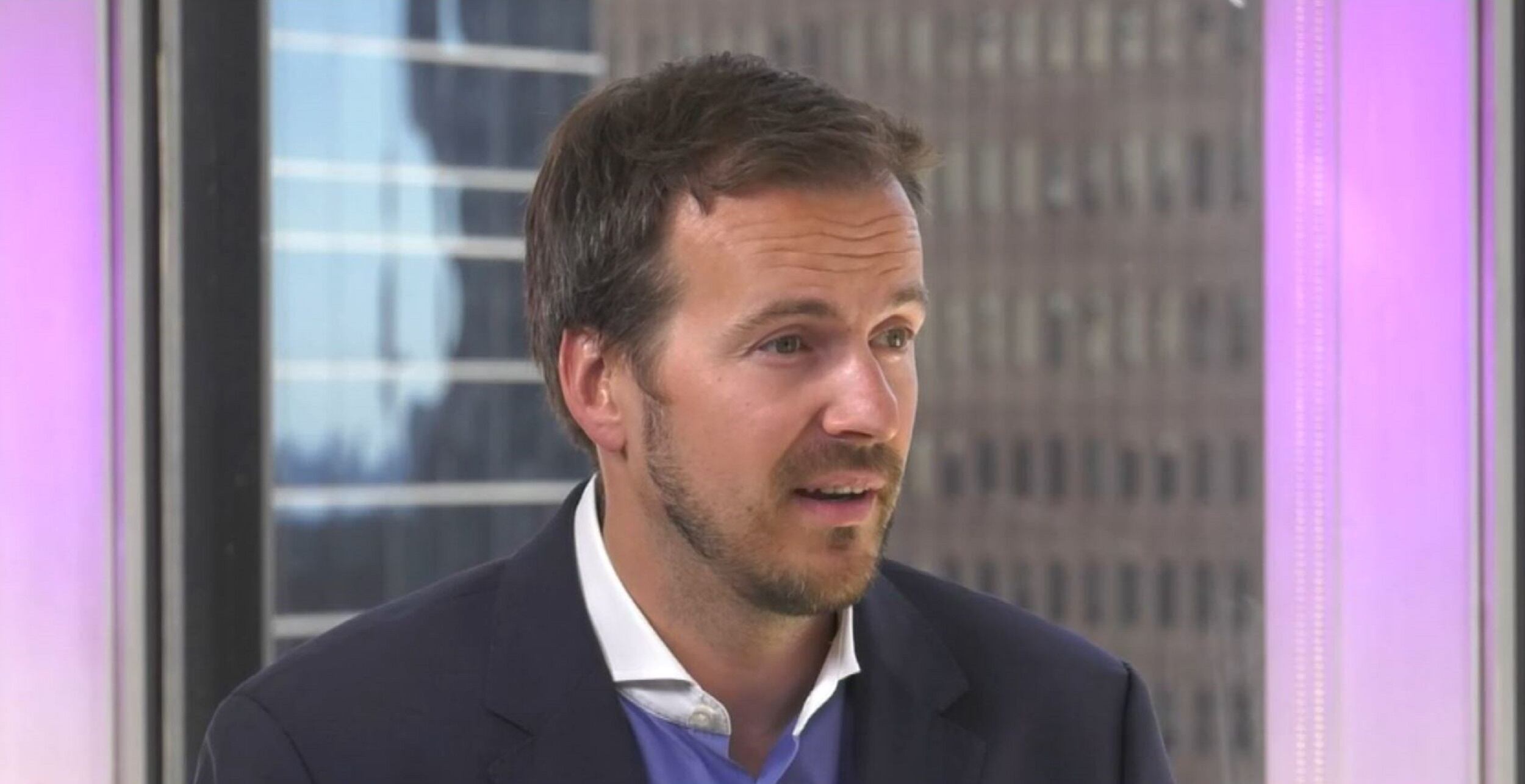
TransferWise, the London-based money-transfer service, is expanding its borderless debit cards and bank accounts while cryptocurrencies — now being joined by Facebook's new digital token Libra — appear to inch toward the same goal: a flexible, global means of exchange.
"I think that a big shortcoming with everything we've seen up to now is that people [can] figure out the crypto-side of things, but when it comes to real life and you want to pay for a coffee, then — sadly — you can't do that with any of the existing crypto solutions," TransferWise CEO Taavet Hinrikus told Cheddar Wednesday. "You really need to build a solution which is global, and integrated with local networks and local ways of payment in every country."
On the heels of the TransferWise’s latest round of fundraising in May — when it raised nearly $300 million, bringing its total valuation to $3.5 billion — the company is making its so-called "borderless" debit card and associated bank account available to U.S. customers.
When asked about potential plans for cryptocurrency, Hinrikus said TransferWise could become a place for consumers to buy in the future.
On whether the company could one day partner with Facebook's Libra project, the executive said: "everything is possible."
"I think it's very exciting what Facebook is doing, and I think that project has the potential to be really disruptive. We welcome that people would have more choice and more ways to use better financial services," Hinrikus added.
As for the new "borderless" debit card, it is set up to work with more than 40 currencies. The company says it will provide consumers a lower-cost way to spend abroad.
"So if you go traveling, and you use your typical bank cards, you will have your foreign transaction fee, and the exchange rate for your bank. It's going to be a very bad one compared to the mid-market exchange rate," the executive explained.
TransferWise says that with its debit card, customers would pay for the real exchange rate when switching between currencies, as well as a low fee.
The debit card was made available last year in Europe, where, Hinrikis said, the service has seen more than 15 million transactions and more than $10 billion worth of deposits.
"We realized there is a need for a companion bank account for dealing with your international matters," said Hinrikus. "We realize there's a bunch more we can do."
"We have a growing class of digital nomads who don't define themselves by one country they're living in. For them, the borderless accounts are going to be a fantastic way to live on a beach in Bali and get paid by customers in Europe or Australia," he added.


