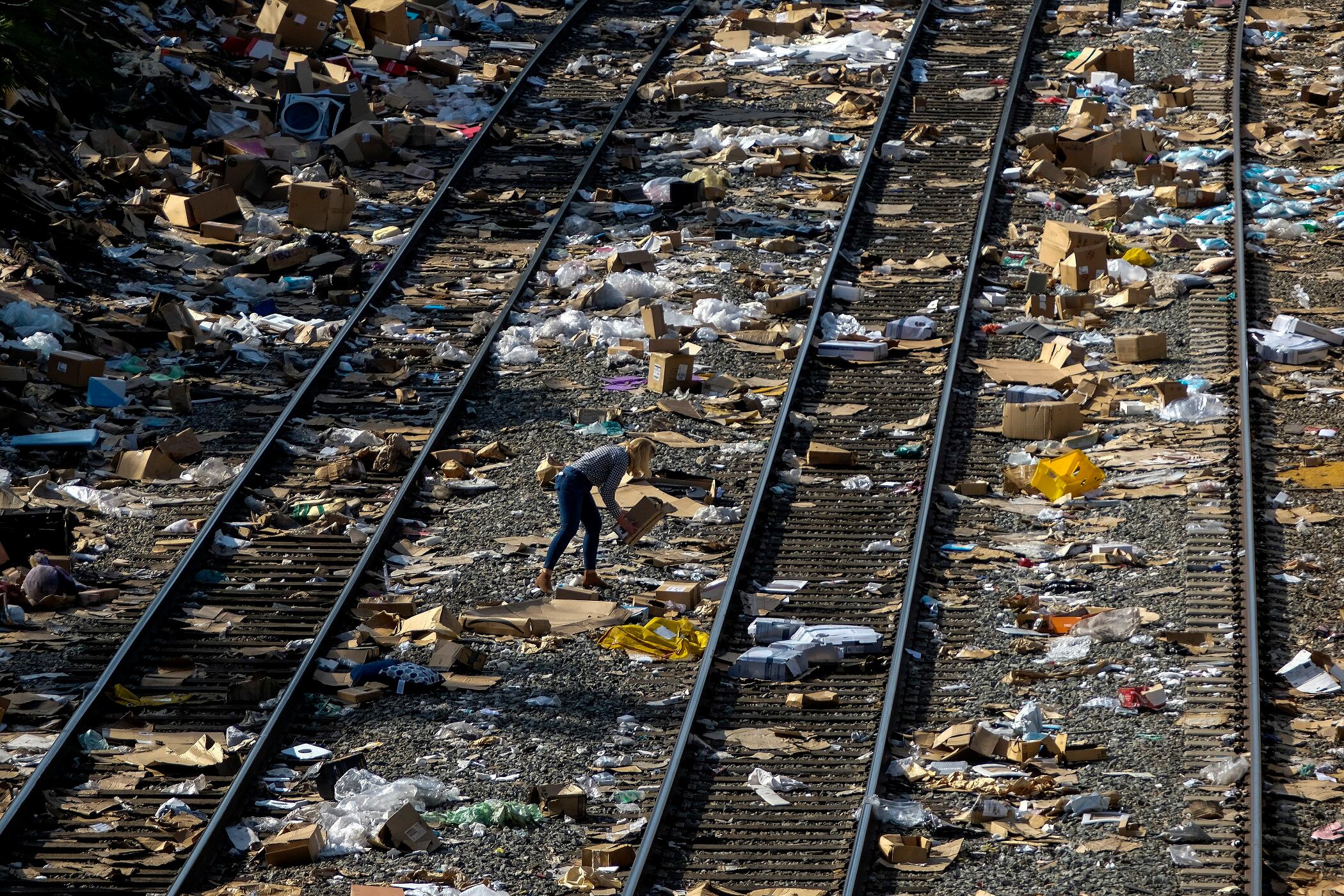
A member of the media picks up a shredded box at a section of the Union Pacific train tracks in downtown Los Angeles, Friday, Jan. 14, 2022. Thieves have been raiding cargo containers aboard trains nearing downtown Los Angeles for months, leaving the tracks blanketed with discarded packages. The sea of debris left behind included items that the thieves apparently didn't think were valuable enough to take, CBSLA reported Thursday. (AP Photo/Ringo H.W. Chiu)
Crews made railroad repairs in Los Angeles Monday after a train derailed near the location where thieves have been raiding cargo containers, leaving the tracks littered with emptied boxes of packaged good sent by retailers.
It wasn't immediately clear if the derailment that happened Saturday was caused by the debris left behind by thieves in the Lincoln Heights area near downtown Los Angeles. Union Pacific said the cause of the derailment was under investigation.
The derailment caused 17 train cars to go off the tracks, Union Pacific said in a statement. No injuries were reported.
Cargo containers aboard trains have been targeted by thieves for months, authorities said. The stolen packages are from retailers including Amazon, REI and others, the CBSLA television newscast reported last Thursday.
Union Pacific said in a statement to CBSLA that the railroad was concerned about increased cargo thefts in California.
“We have increased the number of Union Pacific special agents on patrol, and we have utilized and explored additional technologies to help us combat this criminal activity. We also will continue to work with our local law enforcement partners and elected leaders,” the railroad company said.
Amazon said it was directing inquiries to police. The United Parcel Service declined to comment on investigations into the cargo thefts but said the company was cooperating with authorities.
Some small grocery stores and neighborhood convenience stores are eager for the U.S. government shutdown to end and for their customers to start receiving federal food aid again. Late last month, the Trump administration froze funding for the SNAP benefits that about 42 million Americans use to buy groceries. The U.S. Department of Agriculture says about 74% of the assistance was spent last year at superstores like Walmart and supermarkets like Kroger. Around 14% went to smaller stores that are more accessible to SNAP beneficiaries. A former director of the United Nations World Food Program says SNAP is not only a social safety net for families but a local economic engine that supports neighborhood businesses.
Andy Baehr, Head of Product at CoinDesk Indices, breaks down crypto’s Black Friday crash, Bitcoin dipping under $100K, and what’s driving the market rout.
Billionaire Warren Buffett warned shareholders Monday that many companies will fare better than his Berkshire Hathaway in the decades ahead as Father Time catches up
Chris Marquette of POLITICO breaks down how the FAA is cutting flights and facing a critical shortage of air‑traffic controllers amid the government shutdown.
Dr. Manuele Aufiero, CEO & Co‑Founder of Sizable En a groundbreaking undersea energy‑storage technology powering the global shift to clean, scalable power.
Paul Fipps, President of Global Customer Operations at ServiceNow, breaks down the company’s earnings beat, 5‑for‑1 stock split and booming enterprise AI demand