From Wall Street to Silicon Valley, these are the top stories that moved markets and had investors, business leaders, and entrepreneurs talking this week on Cheddar.
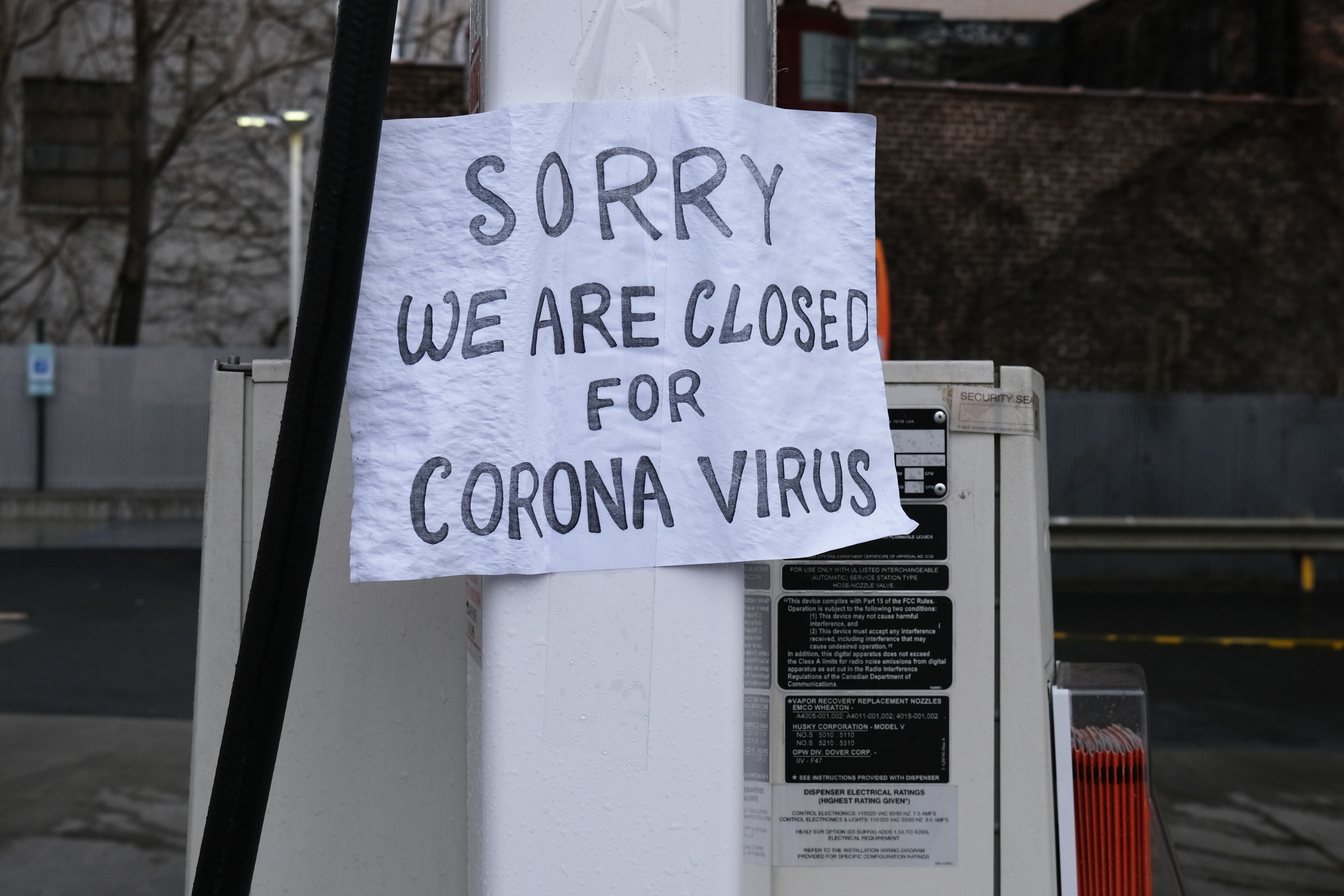
LABOR MARKET COLLAPSE: The single most important economic story this week was the increasing speed at which the American job market is collapsing amid the closures, quarantines and social-distancing guidelines that have expanded across the country. The weekly jobless claims data on Thursday showed 6.6 million people filed for unemployment benefits last week, up from 3.3 million the week before and 10 times the prior record from 1982. At least 10 million people lost their jobs since mid-March. The March jobs report was equally catastrophic, even as it didn't show the full extent of the losses. According to the Labor Dept., payrolls decreased by 701,000 in March ー more than half of those losses came from the service industry ー and the unemployment rate shot up nearly a full point, to 4.4 percent from 3.5 percent. The record streak of 113 straight job gains that started at the end of the Great Recession is now over, and economists believe this may be only the beginning of a much deeper downturn.
AIRLINES IN CRISIS: The situation is not much better for the airline industry. The growing consensus among executives at U.S. carriers is that there isn't going to be a quick snap back to pre-coronavirus travel levels. American Airlines essentially threw in the towel on the normally crucial summer travel season, slashing overseas service by 60 percent through August. United Airlines says its losing $100 million in revenue every day, and the company's president says no one should assume a "V" shaped recovery once the pandemic passes. British Airways is "suspending" 30,000 employees and even shut down a runway at London Heathrow, one of the busiest airports in the world. Boeing, the American plane manufacturer already dealing with a generational crisis with the 737 Max, is offering voluntary buyouts to all 161,000 employees as it seeks to avoid having to take a bailout from the federal government.
AUTO SALES EVAPORATE: With spring upon us, the auto industry is typically preparing for its busiest sales season of the year. This spring will be different. The industry began reporting Q1 sales figures on April 1, and they were downright terrible. GM sales for the first three months of 2020 were down seven percent; Fiat Chrysler saw a 10 percent decline. European luxury brands didn't fare any better: BMW down 15 percent, while Volkswagen ー parent to Audi and Porsche ー dropped by 13 percent. And those numbers were heavily influenced by March when sales dried up just about everywhere. There's a silver lining for consumers in the market for a new ride who also have some measure of job security: many automakers are offering deep incentives, from months-long no-interest payment deferrals to lower rates and longer loan periods.
TALE OF TWO RETAIL INDUSTRIES: A trend that we've followed and reported on closely at Cheddar is considerably accelerating during this pandemic. Retailers with strong omnichannel business models are managing relatively well ー some better than others ー while the rest are not. Macy's was dropped by the S&P 500 after it saw its market cap go from $6 billion to $1.5 billion in a matter of weeks. The country's largest department store chain is furloughing the vast majority of its 125,000 store employees as sales have cratered. Kohl's, Gap, JCPenney and L Brands' Victoria's Secret announced similar measures. Others, like Lululemon, say they will pay all workers through May regardless of whether stores reopen.
IT'S AMAZON'S WORLD: There is no better example of how the pandemic has accelerated the changes to the retail industry than Amazon. The company's core e-commerce business is firing on all cylinders ー to the detriment of its frontline employees, in some cases ー as more people depend on the vast and dependable fulfillment and delivery operations. Amazon outperformed the S&P 500 in March on that spike in demand. The company's streaming services and products are acting as the cherry on top. Still, Amazon's growth machine, AWS, remains at risk of a prolonged economic contraction due to its exposure to such a vast swath of businesses. But for now, the existential risk to Amazon is the same one faced by so many: keeping its employees from getting sick. Dozens of Amazon facilities are grappling with COVID-19 outbreaks; that came to a head this week when some workers walked off the job at the warehouse in Staten Island, N.Y., complaining of inadequate working conditions, as well as one near Detroit, Michigan. Workers at Amazon-owned Whole Foods also organized a sick-out to protest their lack of protections. While the pandemic has been the event that shows the value of the Amazon business model, if it wasn't obviously already, it also reveals the value of the labor that happens behind the scenes at one of the world's most valuable companies.