Low interest financing, sweet lease deals, price cuts and free charging boosted Tesla’s global deliveries in the third quarter, the first increase this year for the electric vehicle maker.
The Austin, Texas, company said Wednesday that it delivered 462,890 vehicles from July through September, bolstered by loans as low as 1.99%, and $299 monthly leases on the Model 3, its least expensive vehicle. It delivered 435,059 vehicles during the same period last year.
The figures for July through September came in slightly higher than analyst estimates of 462,000 for the period, according to data provider FactSet.
However, shares of Tesla Inc. dropped sharply in morning trading, down nearly 4%.
The deliveries were “good and a step in the right direction,” wrote Dan Ives of Wedbush, but that there would be pressure on the company's stock because investors had been hoping for even better.
“Overall, this is a clear improvement from the first half and we believe getting in the range of 1.8 million for the year is still the key and important bogey,” Ives said.
Tesla has struggled much of the year to sell its aging model lineup as growth in electric vehicle sales in the U.S. and Europe slowed due to concerns with range, price and the ability to charge on trips.
Falling sales early in the year led to once-unheard of discounts for the automaker, cutting into its industry leading profit margins. Analysts estimated that Tesla’s average vehicle sales price was $42,500 for the third quarter, the lowest price in four years.
The sales decline likely will pull down third quarter earnings when they are announced on Oct. 23.
Tesla’s sales decline comes as competition is increasing from legacy and startup automakers, which are trying to nibble away at the company’s market share.
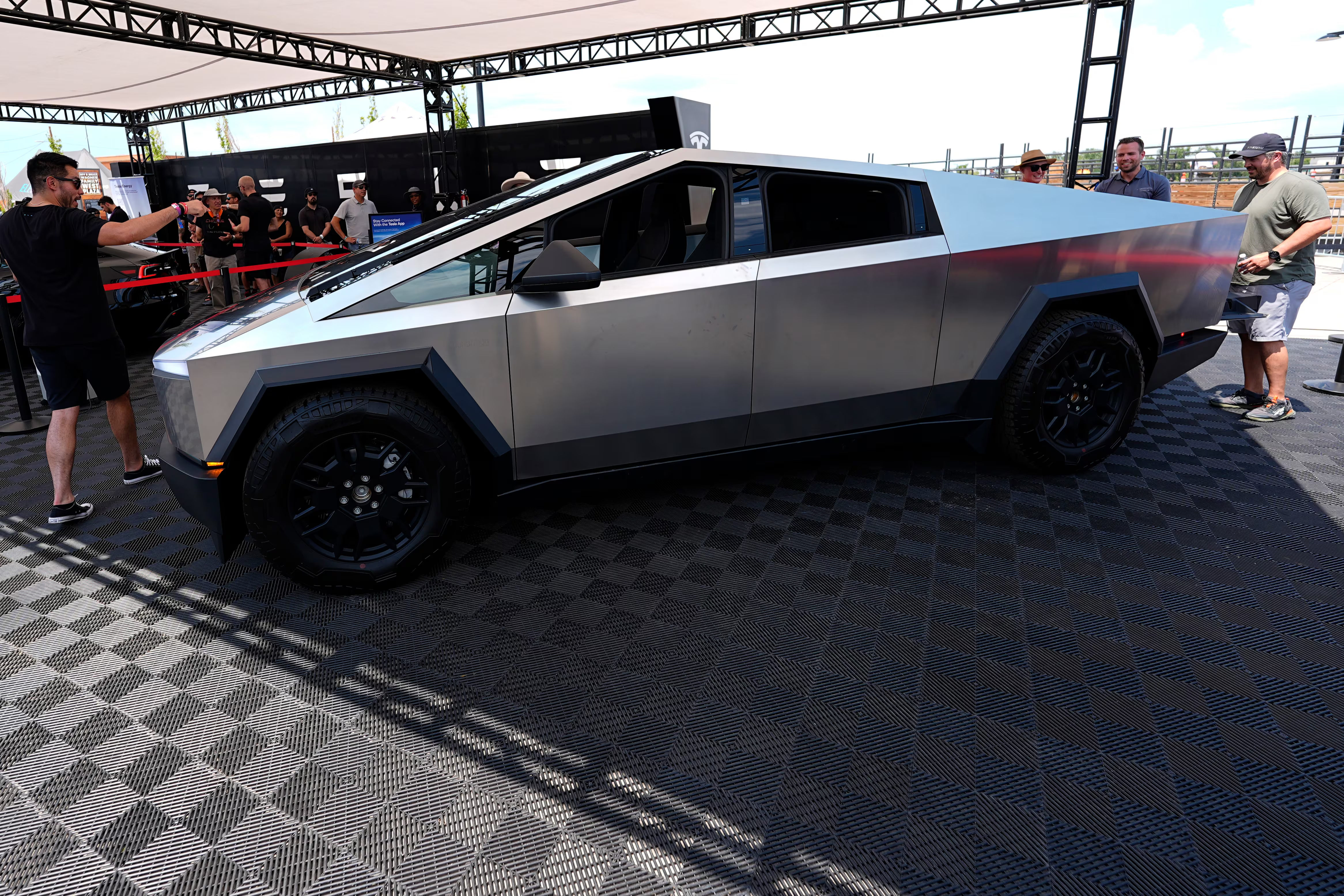
Nearly all of Tesla’s sales came from the smaller and less-expensive Models 3 and Y, with the company selling only 22,915 of its more expensive models that include X and S, as well as the new Cybertruck.
Wedbush analyst Dan Ives wrote in a note to investors Tuesday that third-quarter sales would bring a rebound as China sales continue to increase and price and demand stabilizes.” As China continues to heat up on the demand story for Tesla with favorable leasing/financing terms and pent-up demand in the region, we are confident that we will see a significant growth figure in the region,” he wrote.
Europe will continue to be slow with macroeconomic pressures, and U.S. demand should stabilize, Ives wrote.
But BNP Paribas Exane said in an investor note that long term expectations of the market are somewhat high for Tesla. The company said its sales estimates for 2026 and 2027 “remain 10% to 15% below the street, respectively.”
Tesla is scheduled to unveil a purpose built robotaxi at an event next week.
Spain's government has fined Airbnb 64 million euros or $75 million for advertising unlicensed tourist rentals. The consumer rights ministry announced the fine on Monday. The ministry stated that many listings lacked proper license numbers or included incorrect information. The move is part of Spain's ongoing efforts to regulate short-term rental companies amid a housing affordability crisis especially in popular urban areas. The ministry ordered Airbnb in May to remove around 65,000 listings for similar violations. The government's consumer rights minister emphasized the impact on families struggling with housing. Airbnb said it plans to challenge the fine in court.
The Islamic State group and other militant organizations are experimenting with artificial intelligence as a tool to boost recruitment and refine their operations. National security experts say that just as businesses, governments and individuals have embraced AI, extremist groups also will look to harness the power of AI. That means aiming to improve their cyberattacks, breaking into sensitive networks and creating deepfakes that spread confusion and fear. Leaders in Washington have responded with calls to investigate how militant groups are using AI and seek ways to encourage tech companies to share more about how their products are being potentially misused.
President Donald Trump has signed an executive order to block states from regulating artificial intelligence. He argues that heavy regulations could stifle the industry, especially given competition from China. Trump says the U.S. needs a unified approach to AI regulation to avoid complications from state-by-state rules. The order directs the administration to draw up a list of problematic regulations for the Attorney General to challenge. States with laws could lose access to broadband funding, according to the text of the order. Some states have already passed AI laws focusing on transparency and limiting data collection.
Waymo's self-driving taxis have been in the spotlight for both negative and positive reasons. This week, the automated ride-hailing taxis went viral after a San Francisco woman gave birth inside a Waymo taxi while on her way to the hospital. A Waymo spokesperson on Wednesday confirmed the unusual delivery. It said the company's rider support team detected unusual activity inside the vehicle and alerted 911. The taxi arrived safely at the hospital before emergency services. Waymo's popularity is growing despite heightened scrutiny following an illegal U-turn and the death of a San Francisco cat. The company, owned by Alphabet, says it is proud to serve riders of all ages.
OpenAI has appointed Slack CEO Denise Dresser as its first chief of revenue. Dresser will oversee global revenue strategy and help businesses integrate AI into daily operations. OpenAI CEO Sam Altman recently emphasized improving ChatGPT, which now has over 800 million weekly users. Despite its success, OpenAI faces competition from companies like Google and concerns about profitability. The company earns money from premium ChatGPT subscriptions but hasn't ventured into advertising. Altman had recently announced delays in developing new products like AI agents and a personal assistant.
President Donald Trump says he will allow Nvidia to sell its H200 computer chip used in the development of artificial intelligence to “approved customers” in China. Trump said Monday on his social media site that he had informed China’s leader Xi Jinping and “President Xi responded positively!” There had been concerns about allowing advanced computer chips into China as it could help them to compete against the U.S. in building out AI capabilities. But there has also been a desire to develop the AI ecosystem with American companies such as chipmaker Nvidia.
Load More

