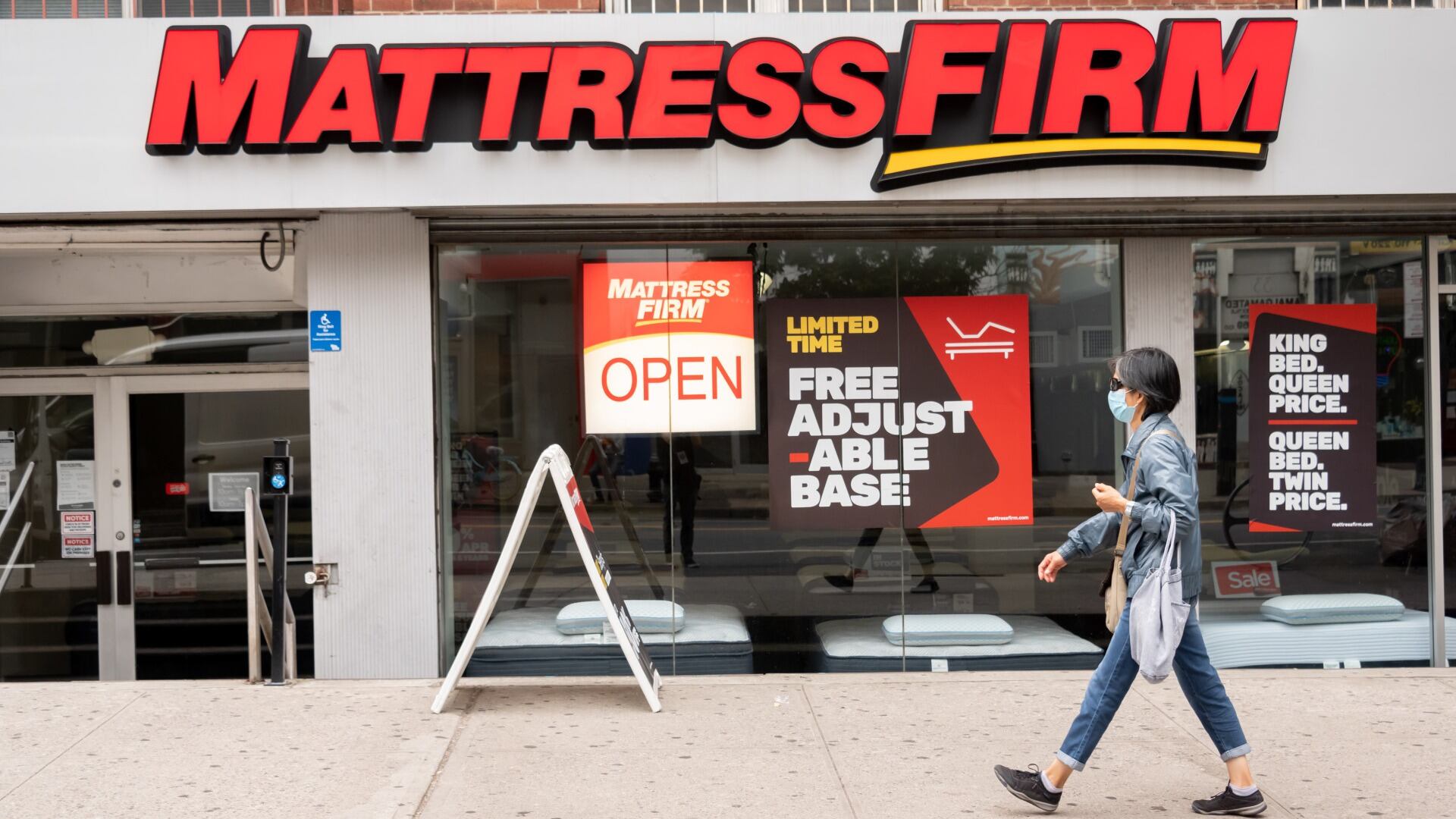
A person wears a face mask outside Mattress Firm store near Union Square as the city continues Phase 4 of re-opening following restrictions imposed to slow the spread of coronavirus on September 24, 2020 in New York City. The fourth phase allows outdoor arts and entertainment, sporting events without fans and media production. (Photo by Noam Galai/Getty Images)
By Wyatte Grantham-Philips
Bedding provider Tempur Sealy has agreed to acquire Mattress Firm in a cash-and stock-transaction valued at about $4 billion, the companies said Tuesday.
Mattress Firm operates more than 2,300 brick-and-mortar retail locations and an e-commerce platfom. After the Tempur Sealy acquistion is complete, the two companies will have a total of some 3,000 retail stores, 30 e-commerce platforms, 71 manufacturing facilities and four research and development facilities worldwide.
“This combination will accelerate our growth trajectory and enhance operating cash flow,” Tempur Sealy Chairman and CEO Scott Thompson said in a statement. “Mattress Firm has been a valued retail partner for more than 35 years, and we look forward to welcoming their talented workforce of more than 8,100 employees to the Tempur Sealy family.”
Mattress Firm CEO John Eck added that the transaction will increase the companies' ability "to better address consumers’ needs and drive growth.”
In the transaction, Tempur Sealy is expected to pay about $2.7 billion in cash and $1.3 billion in stock to Mattress Firm, which is privately held. That reflects the issuance of 34.2 million common shares, based on Monday's closing share price of $37.62.
The companies expect to complete the transaction in the second half of 2024. After the acquistion is complete, Mattress Firm is set to operate as a separate business unit within Tempur Sealy.
On a per-share basis, the Kentucky-based mattress maker said it had a profit of 48 cents. Earnings, adjusted for one-time gains and costs, were 53 cents per share.
YouTube will offer creators a way to rejoin the streaming platform if they were banned for violating COVID-19 and election misinformation policies that are no longer in effect.
Lukas Alpert of MarketWatch explores how networks, brands, and ad buyers absorb the shockwaves when late‑night show hosts are suddenly cut — and brought back.
A new poll finds U.S. adults are more likely than they were a year ago to think immigrants in the country legally benefit the economy. That comes as President Donald Trump's administration imposes new restrictions targeting legal pathways into the country. The Associated Press-NORC Center for Public Affairs Research survey finds Americans are more likely than they were in March 2024 to say it’s a “major benefit” that people who come to the U.S. legally contribute to the economy and help American companies get the expertise of skilled workers. At the same time, perceptions of illegal immigration haven’t shifted meaningfully. Americans still see fewer benefits from people who come to the U.S. illegally.
Shares of Tylenol maker Kenvue are bouncing back sharply before the opening bell a day after President Donald Trump promoted unproven and in some cases discredited ties between Tylenol, vaccines and autism. Trump told pregnant women not to use the painkiller around a dozen times during the White House news conference Monday. The drugmaker tumbled 7.5%. Shares have regained most of those losses early Tuesday in premarket trading.
Scott Trench, host of the BiggerPockets Money Podcast, explores how recent rate cuts, high borrowing costs, and mortgage rates are reshaping U.S. real estate.
A look into how disruption, AI, and global economic trends are transforming the modern supply chain with Jeremy Jansen, Head of Supply Chain at Wells Fargo.