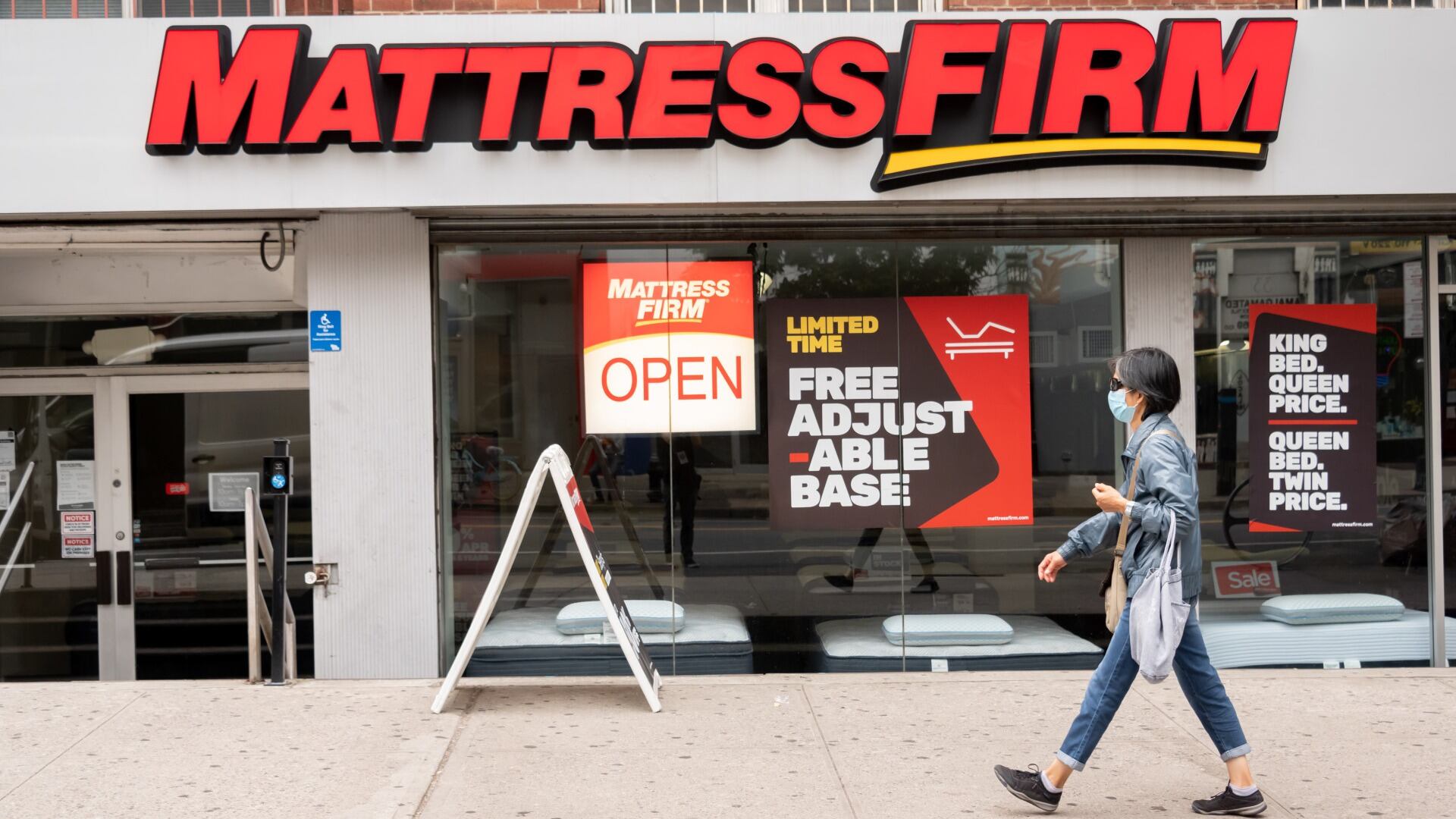
A person wears a face mask outside Mattress Firm store near Union Square as the city continues Phase 4 of re-opening following restrictions imposed to slow the spread of coronavirus on September 24, 2020 in New York City. The fourth phase allows outdoor arts and entertainment, sporting events without fans and media production. (Photo by Noam Galai/Getty Images)
By Wyatte Grantham-Philips
Bedding provider Tempur Sealy has agreed to acquire Mattress Firm in a cash-and stock-transaction valued at about $4 billion, the companies said Tuesday.
Mattress Firm operates more than 2,300 brick-and-mortar retail locations and an e-commerce platfom. After the Tempur Sealy acquistion is complete, the two companies will have a total of some 3,000 retail stores, 30 e-commerce platforms, 71 manufacturing facilities and four research and development facilities worldwide.
“This combination will accelerate our growth trajectory and enhance operating cash flow,” Tempur Sealy Chairman and CEO Scott Thompson said in a statement. “Mattress Firm has been a valued retail partner for more than 35 years, and we look forward to welcoming their talented workforce of more than 8,100 employees to the Tempur Sealy family.”
Mattress Firm CEO John Eck added that the transaction will increase the companies' ability "to better address consumers’ needs and drive growth.”
In the transaction, Tempur Sealy is expected to pay about $2.7 billion in cash and $1.3 billion in stock to Mattress Firm, which is privately held. That reflects the issuance of 34.2 million common shares, based on Monday's closing share price of $37.62.
The companies expect to complete the transaction in the second half of 2024. After the acquistion is complete, Mattress Firm is set to operate as a separate business unit within Tempur Sealy.
On a per-share basis, the Kentucky-based mattress maker said it had a profit of 48 cents. Earnings, adjusted for one-time gains and costs, were 53 cents per share.
Former Cisco Systems CEO John Chambers learned all about technology’s volatile highs and lows as a veteran of the internet’s early boom days during the late 1990s and the ensuing meltdown that followed the mania. And now he is seeing potential signs of the cycle repeating with another transformative technology in artificial intelligence. Chambers is trying take some of the lessons he learned while riding a wave that turned Cisco into the world's most valuable company in 2000 before a crash hammered its stock price and apply them as an investor in AI startups. He recently discussed AI's promise and perils during an interview with The Associated Press.
Grove Collaborative’s CEO shares how the company is reinventing everyday goods with sustainability at the core and working toward a plastic-free future.
Atlanta Mayor Andre Dickens shares plans for affordable housing, community-led growth, and why private and public grocery stores could be key to food equity.
Tesla reported a surprise increase in sales in the third quarter as the electric car maker likely benefited from a rush by consumers to take advantage of a $7,500 credit before it expired on Sept. 30. The company reported Thursday that sales in the three months through September rose 7% compared to the same period a year ago. The gain follows two quarters of steep declines as people turned off by CEO Elon Musk’s foray into right-wing politics avoided buying his company’s cars and even protested at some dealerships. Sales rose to 497,099 vehicles, compared with 462,890 in the same period last year.
Tom’s Guide Editor-in-Chief Mark Spoonauer breaks down Apple & Amazon's latest product drops—what's hot, what's hype, and what really matters for users.
InnerPlant CEO Shely Aronov reveals how engineered crops like soybeans and corn emit signals when stressed—offering farmers early warnings to boost yields.