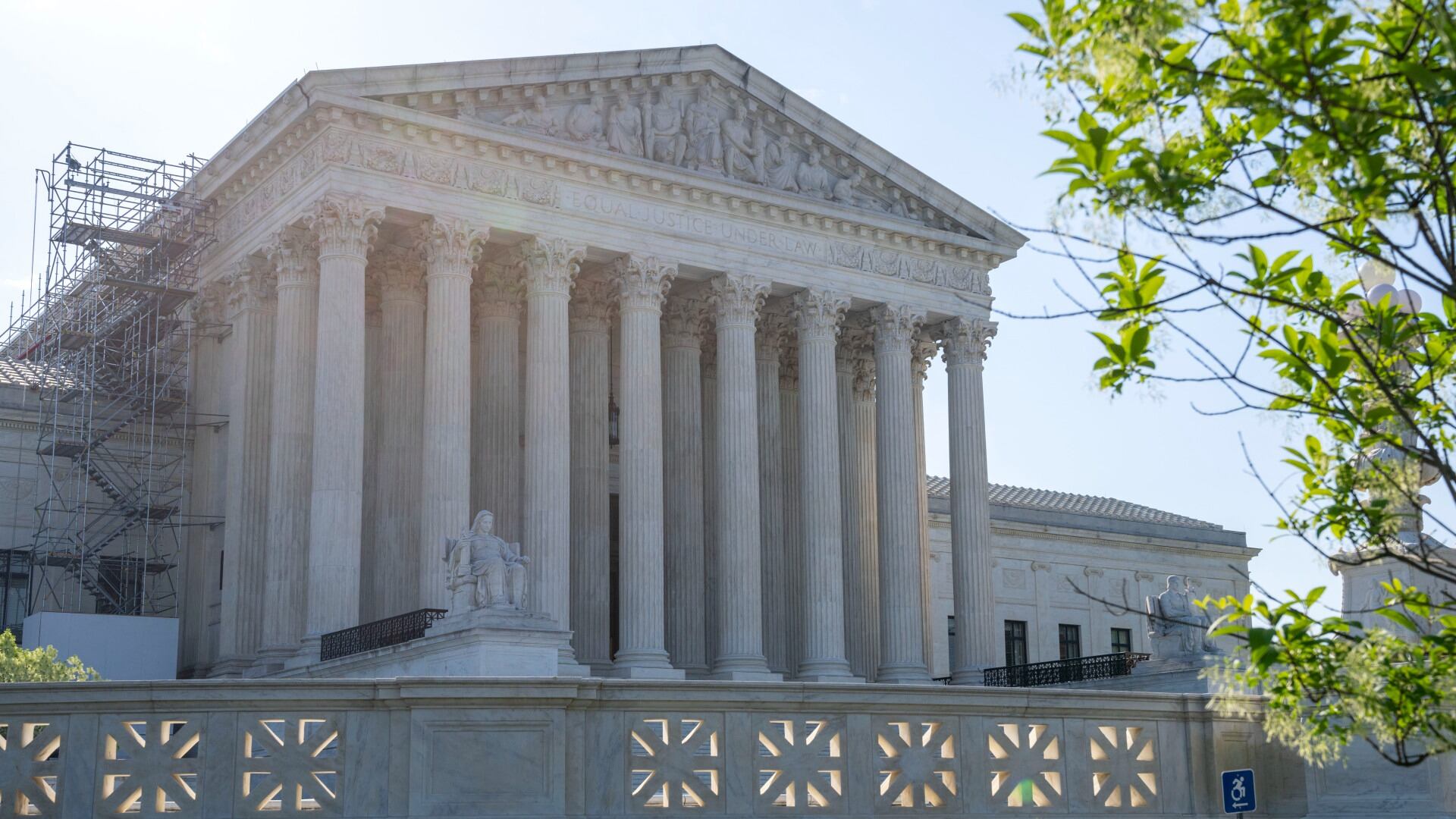
The Supreme Court is seen, Friday, April 21, 2023, ahead of an abortion pill decision in Washington. (AP Photo/Jacquelyn Martin)
The Supreme Court on Tuesday dismissed a case surrounding a Maine hotel that could have made it harder for people with disabilities to learn in advance whether a hotel's accommodations meet their needs.
Hotels and other business interests had urged the justices to limit the ability of so-called testers to file lawsuits against hotels that fail to disclose accessibility information on their websites and through other reservation services.
The information is required by a 2010 Justice Department rule. People who suffer discrimination can sue under the landmark Americans With Disabilities Act, signed into law in 1990.
The justices did not issue a decision on the substance of the case. Instead, they dismissed the case and threw out a lower court ruling in favor of tester lawsuits. The outcome leaves the issue unresolved nationally.
Federal courts in some parts of the country allow such lawsuits. In others, those suits are barred.
The case in front of the court involved whether Deborah Laufer, a woman with disabilities, has the right to sue a hotel in Maine that lacked the accessibility information on its website, despite having no plans to visit it.
In an effort to forestall an unfavorable ruling, Laufer withdrew her lawsuit against the hotel.
Americans are still spending, but rising anxiety over jobs, AI, housing and tariffs tells a different story. Kearney Consumer Institute’s Katie Thomas explains.
Disney is back in focus after Q3 earnings. Investors are watching streaming profits, theme parks and ESPN as the entertainment giant looks for its next catalyst
Healthcare policy is shifting fast, raising questions about drug prices, Medicare and access. Leap Health CEO Hani Elias explains what patients need to know.
The U.S. job market is cooling as hiring slows and employers turn cautious. LinkedIn’s Kory Kantenga breaks down jobs, wages, spending and AI’s impact.
AI is entering a new phase as enterprises move beyond experimentation and demand measurable returns. Appian CEO Matt Calkins discusses what comes next.
Commercial Metals CEO Peter Matt reveals how a $2.5B acquisition spree is transforming the 111-year-old steelmaker into a construction solutions powerhouse.
Angelo Zino, Senior Vice President and Technology Equity Research Analyst at CFRA, breaks down Big Tech earnings, AI spending, and what's next for the Mag 7.