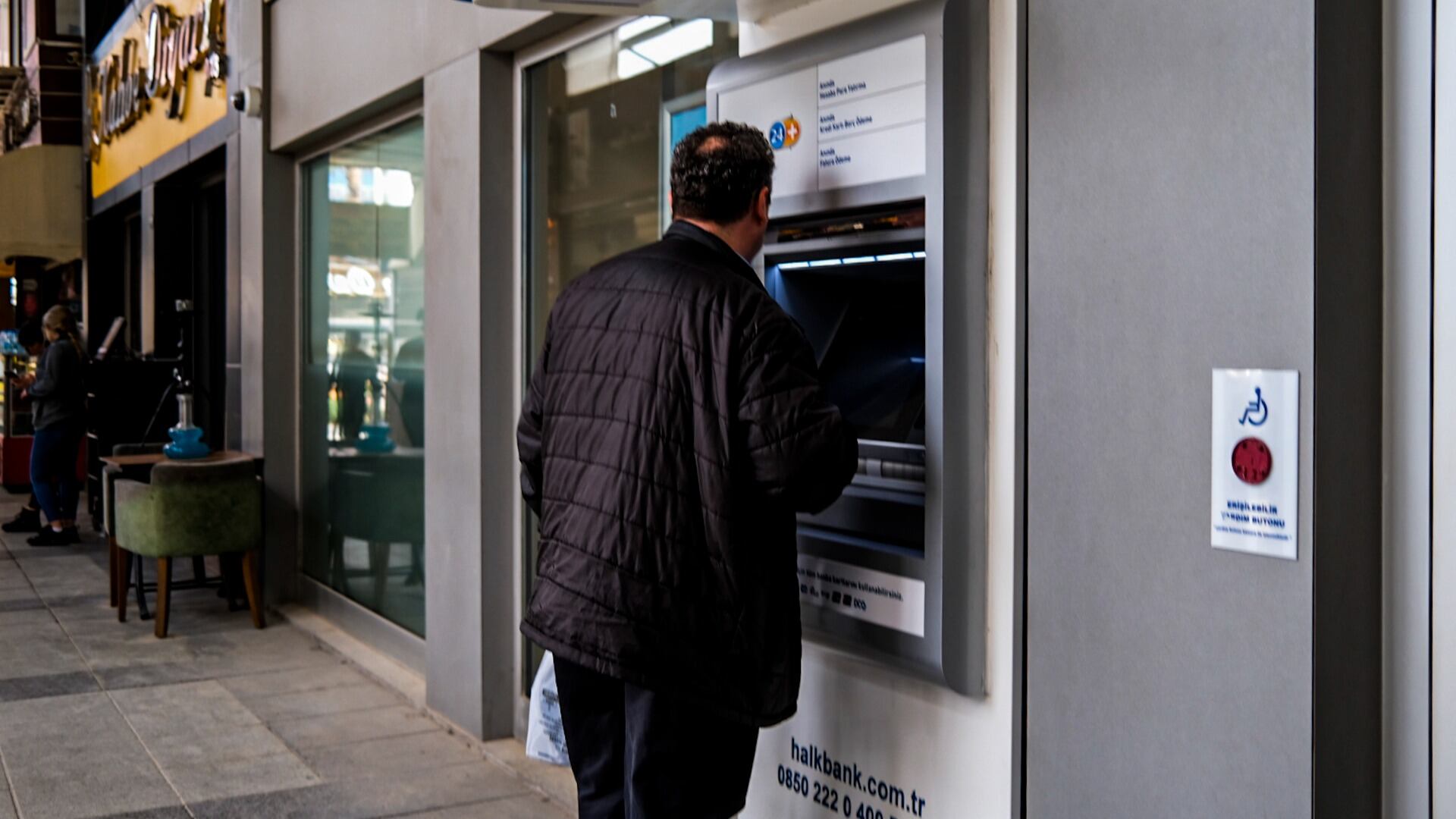
A man seen making a transaction at an ATM. (Photo by Murat Kocabas/SOPA Images/LightRocket via Getty Images)
Cash is becoming less relevant by the day as more people opt for digital payment methods resulting in a dip in ATM usage.
A study by research company Euromonitor International found that the number of available banking machines in the U.S. has dropped by more than 18,000 since 2019, a time when there was the highest number of them at any time in history.
The drop off is being linked directly to the gradual transition towards digital payment options, which accelerated during the COVID-19 pandemic.
"There was that scare that the virus was transmitted by paper, plus the trend of just buying everything online," said Kendrick Sands, consumer finance research manager at Euromonitor International, according to The Wall Street Journal.
The accessibility of digital payment platforms like Venmo, Cash App, and Zelle have also seemingly contributed to the decline in the use of cash. But for making small payments, the ATM Industry Association notes that cash is still the preferred method of payment on items that cost less than $25.
The decrease in ATM usage comes with its own set of issues, as large numbers of people still rely on cash. As fewer cash machines become available, access to funds for those groups will become more difficult.
Jamie Siminoff, Founder and Chief Inventor of Ring, explains the company’s new TAKE encryption standard and its push to put privacy and video data control first
Xavier Martinez, News Associate at The Wall Street Journal, breaks down Moderna’s mRNA ambitions, its pipeline beyond COVID-19 and the challenges ahead.
Dena Jalbert, CEO of Align Advisory Services, breaks down the M&A outlook for 2026 as AI costs, debt, valuations and economic uncertainty reshape deal-making.
LSEG Consumer Research Director Jharonne Martis breaks down retail earnings, the K-shaped consumer and what inflation and rising costs mean for spending.
Serve Robotics CEO Ali Kashani discusses expanding beyond Uber, adding new delivery partners and scaling autonomous robots as delivery moves into the mainstream
Citrotech CEO Wes Bolsen discusses how innovative building materials could prevent fires, slow their spread and reshape the future of fire-safe construction.