By Damian J. Troise and Alex Veiga
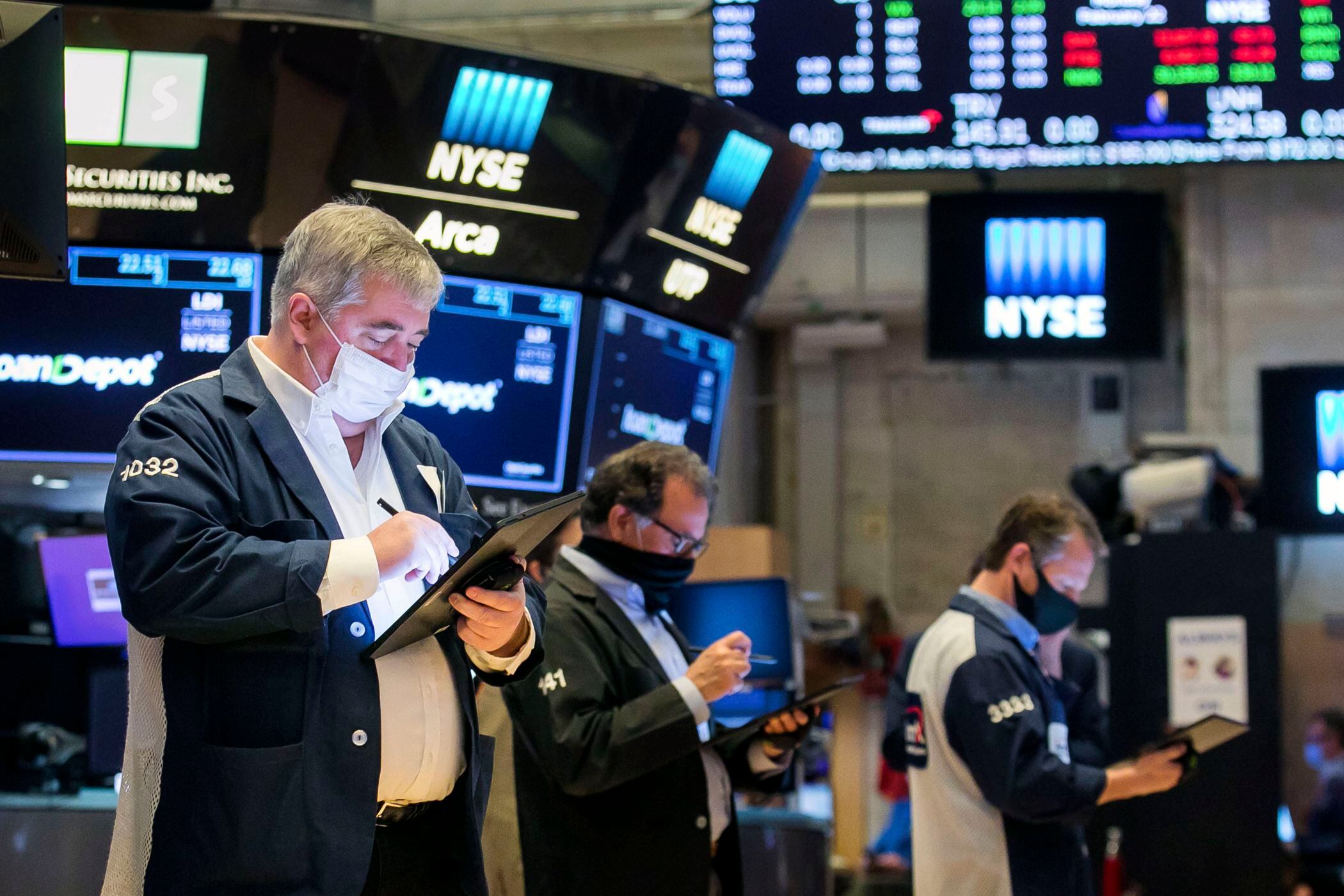
A sell-off in technology companies led stocks on Wall Street mostly lower Monday, adding to the market's losses from last week.
The S&P 500 fell 0.8%, extending its losses to a fifth straight day. The benchmark index was just about evenly split between winners and losers, but technology stocks and companies that rely on consumer spending bore the brunt of the selling. Apple fell 3%, Microsoft dropped 2.7%, Tesla slumped 8.5% and Amazon lost 2.1%.
The tech-heavy Nasdaq composite slid 2.5%, while the Dow Jones Industrial Average eked out a tiny gain, as solid gains by companies like Disney, Exxon Mobil and Chevron helped offset the drag by some of the Big Tech companies.
Stocks began shedding some of their gains last week after a strong start to February as rising interest rates and the potential for inflation down the road dampened some of Wall Street's enthusiasm, though the major stock indexes remain near their all-time highs.
“Equity investors are finally paying attention to the bond market,” said Mike Zigmont, director of trading and research at Harvest Volatility Management. “With yields climbing, there are a lot of jitters in the equity space.”
The S&P 500 fell 30.21 points to 3,876.50. The Dow gained 27.37 points, or 0.1%, to 31,521.69. The Nasdaq lost 341.41 points to 13,533.05. The Russell 2000 index of smaller companies gave up 15.62 points, or 0.7%, to 2,251.07.
Investors remain focused on the future of global economies badly hit by COVID-19 and the potential for more stimulus to fix them. The U.S. House of Representatives is likely to vote on President Joe Biden’s proposed stimulus package by the end of the week. It would include $1,400 checks to most Americans, additional payments for children, and billions of dollars in aid to state and local governments as well as additional aid to businesses impacted by the pandemic.
But the large amount of stimulus being pumped into the economy has given some investors pause as worries of inflation have reentered the market after being nonexistent for more than a decade. Yields on U.S. Treasury bonds and notes have risen in the last several weeks as investors have predicted more inflation would come with the economic recovery.
“There are some risks out there,” said Gary Schlossberg, global strategist at Wells Fargo Investment Institute. “The issue is are we just normalizing back to where we were before the pandemic or are we talking about a sea change.”
The yield on the 10-year Treasury rose to 1.36% from 1.34% late Friday and has been rising steadily throughout the year. The higher yields have helped lift banks, which rely on higher yields to charge more lucrative interest rates on loans. Morgan Stanley rose 1.8%.
Technology stocks accounted for the biggest share of the selling. The sector, which powered much of the market's gains in 2020, posted its fifth straight loss. That pullback helped drag down the Nasdaq, while the Dow, which isn't as heavily weighted with tech stocks, rose.
Tech stocks have enjoyed big gains throughout the pandemic, as investors bet that consumers spending more time at home would increasingly rely on mobile devices, PCs, video streaming and other technology products and services. But as the number of new coronavirus cases has declined recently after a sharp spike late last year and more people get vaccinated, investors are beginning to snap up stocks in areas of the market that are expected to do better in a post-pandemic economy.
“They parked in technology as a temporary place for their capital while the pandemic raged, and now they're looking to go back to their pre-COVID asset allocation," Zigmont said.
Airlines, which have been battered by the virus pandemic, rose after Deutsche Bank upgraded its view on the sector and the potential for recovery as COVID-19 cases fall and vaccination rates increase. American Airlines jumped 9.4%, while Delta rose 4.5% and United Airlines gained 3.5%.
Traders continued to bid up shares in energy companies, which are getting a boost from higher energy prices. The sector have risen four out of the last five days. Exxon Mobil rose 3.7%.
The price of crude U.S. crude oil rose 3.8% to $61.49 a barrel. It's now up 27% for the year.
Brent crude, the international standard, rose 3.7% to $65.24 a barrel, and is up 26% this year. Goldman Sachs predicted in a research note that the price of Brent crude would reach $70 by the second quarter.
The price of Bitcoin, which moved above $50,000 for the first time early last week, dropped 6.2% to $53,765 Monday, according to the currency brokerage Coinbase. The slide followed a tweet late Friday by Elon Musk in which the Tesla CEO said the price of Bitcoin and another cryptocurrency, Etherium, “seem high.” Earlier this month, Tesla announced that it was buying $1.5 billion in Bitcoin as part of a new investment strategy, and that it would soon be accepting Bitcoin as payment for its cars.
Updated on February 22, 2021, at 5:06 p.m. ET.