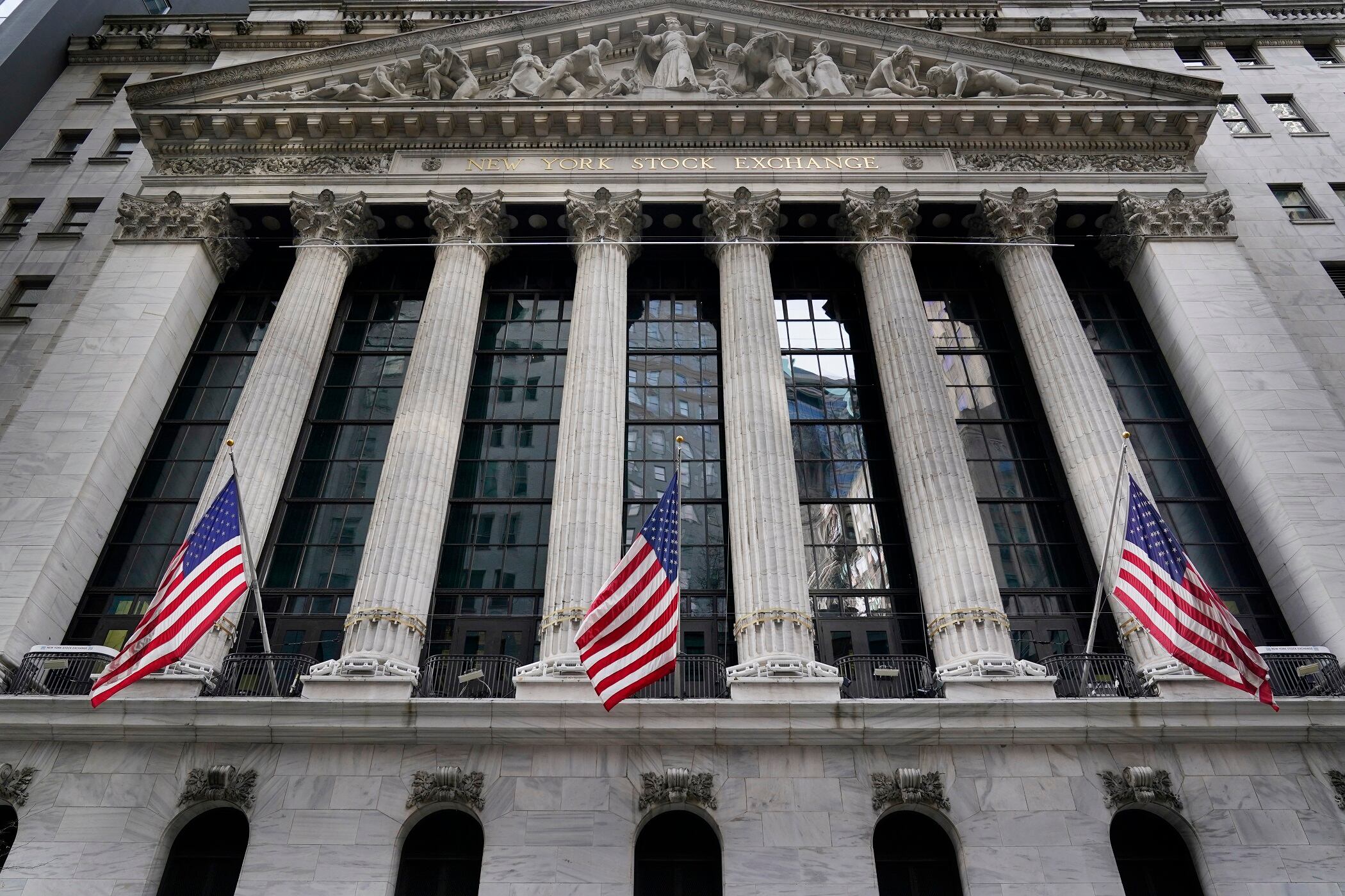
Stocks are off to a solid start on Wall Street Tuesday as investors continue to wager that the new variant of the COVID-19 virus won’t pose a big threat to the economy. The S&P 500 rose 1.4% in the first few minutes of trading, adding to its gains from a day earlier. The tech-heavy Nasdaq rose 2%, and small-company stocks also posted gains. Safe-play sectors like utilities lagged the rest of the market. Treasury yields rose and crude oil prices climbed about 3%. European markets were also solidly higher, and Asian markets closed higher overnight.

THIS IS A BREAKING NEWS UPDATE. AP’s earlier story follows below.

BEIJING (AP) — Global stock markets followed Wall Street higher Tuesday as anxiety about the coronavirus's latest variant eased and China reported stronger November trade figures than expected.

London and Frankfurt opened higher. Shanghai, Tokyo and Hong Kong advanced. Oil prices rose more than $1 a barrel for a second day.

Wall Street futures were higher after the chief White House medical adviser said Monday the omicron variant might be less dangerous. That might allow travel and business restrictions to ease.

Reports from South Africa, where omicron first was spotted, that hospitals haven't been overwhelmed “is fueling some optimism” among traders who sold earlier, said Yeap Jun Rong of IG in a report.

In early trading, the FTSE 100 in London gained 1% to 7,302.61 and Frankfurt's DAX advanced 1.6% to 15,623.97. The CAC 40 in Paris added 1.7% to 6,982.63.

On Wall Street, the S&P 500 future was up 1% and that for the Dow Jones Industrial Average advanced 0.8%.

On Monday, the S&P 500 rose 1.2% while the Dow added 1.9%. The Nasdaq composite gained less than 0.1%.

In Asia, the Shanghai Composite Index rose 0.2% to 3,595.09 after November imports surged 31.7% over a year earlier in a sign domestic demand might be strengthening.

The Nikkei 225 in Tokyo gained 1.9% to 28,455.60 and Hong Kong's Hang Seng added 2.6% to 23,983.66.

The Kospi in Seoul advanced 0.6% to 2,991.72 and Sydney's S&P-ASX 200 gained 1% to 7,313.90.

India's Sensex rose 2% to 57,871.21. New Zealand and Southeast Asian markets gained.

On Wall Street, more than 85% of stocks in the S&P 500 rose Monday, led by technology and banks.

Airlines, cruise lines and other travel companies that stand to gain from avoiding more anti-coronavirus controls advanced after Dr. Anthony Fauci said early indications suggested omicron may be less dangerous than the earlier delta variant.

It will still take a few weeks to learn whether omicron is more contagious, causes more severe illness or evades immunity.

Investors also are factoring mixed U.S. jobs data and the Federal Reserve's plan to accelerate its withdrawal of stimulus to cool inflation pressures.

The U.S. government is due to report November consumer inflation on Friday.

In energy markets, benchmark U.S. crude rose $1.58 to $71.07 per barrel in electronic trading on the New York Mercantile Exchange. The contract jumped $3.23 on Monday to $69.49. Brent crude, the price basis for international oils, added $1.41 to $74.49 per barrel in London. It surged $3.20 the previous session to $73.08 per barrel.

The dollar rose to 113.70 yen from Monday's 113.49 yen. The euro declined to $1.1266 from $1.1278.


Share:
More In Business
New York Times, after Trump post, says it won’t be deterred from writing about his health
The New York Times and President Donald Trump are fighting again. The news outlet said Wednesday it won't be deterred by Trump's “false and inflammatory language” from writing about the 79-year-old president's health. The Times has done a handful of stories on that topic recently, including an opinion column that said Trump is “starting to give President Joe Biden vibes.” In a Truth Social post, Trump said it might be treasonous for outlets like the Times to do “FAKE” reports about his health and "we should do something about it.” The Republican president already has a pending lawsuit against the newspaper for its past reports on his finances.
OpenAI names Slack CEO Dresser as first chief of revenue
OpenAI has appointed Slack CEO Denise Dresser as its first chief of revenue. Dresser will oversee global revenue strategy and help businesses integrate AI into daily operations. OpenAI CEO Sam Altman recently emphasized improving ChatGPT, which now has over 800 million weekly users. Despite its success, OpenAI faces competition from companies like Google and concerns about profitability. The company earns money from premium ChatGPT subscriptions but hasn't ventured into advertising. Altman had recently announced delays in developing new products like AI agents and a personal assistant.
Trump approves sale of more advanced Nvidia computer chips used in AI to China
President Donald Trump says he will allow Nvidia to sell its H200 computer chip used in the development of artificial intelligence to “approved customers” in China. Trump said Monday on his social media site that he had informed China’s leader Xi Jinping and “President Xi responded positively!” There had been concerns about allowing advanced computer chips into China as it could help them to compete against the U.S. in building out AI capabilities. But there has also been a desire to develop the AI ecosystem with American companies such as chipmaker Nvidia.
Trump says Netflix deal to buy Warner Bros. ‘could be a problem’ because of size of market share
President Donald Trump says a deal struck by Netflix last week to buy Warner Bros. Discovery “could be a problem” because of the size of the combined market share. The Republican president says he will be involved in the decision about whether federal regulators should approve the deal. Trump commented Sunday when he was asked about the deal as he walked the red carpet at the Kennedy Center Honors. The $72 billion deal would bring together two of the biggest players in television and film and potentially reshape the entertainment industry.
What to know about changes to Disney parks’ disability policies
Disney's changes to a program for disabled visitors are facing challenges in federal court and through a shareholder proposal. The Disability Access Service program, which allows disabled visitors to skip long lines, was overhauled last year. Disney now mostly limits the program to those with developmental disabilities like autism who have difficulty waiting in lines. The changes have sparked criticism from some disability advocates. A shareholder proposal submitted by disability advocates calls for an independent review of Disney's disability policies. Disney plans to block this proposal, claiming it's misleading. It's the latest struggle by Disney to accommodate disabled visitors while stopping past abuses by some theme park guests.
Load More


