DAMIAN J. TROISE and STAN CHOE AP Business Writers
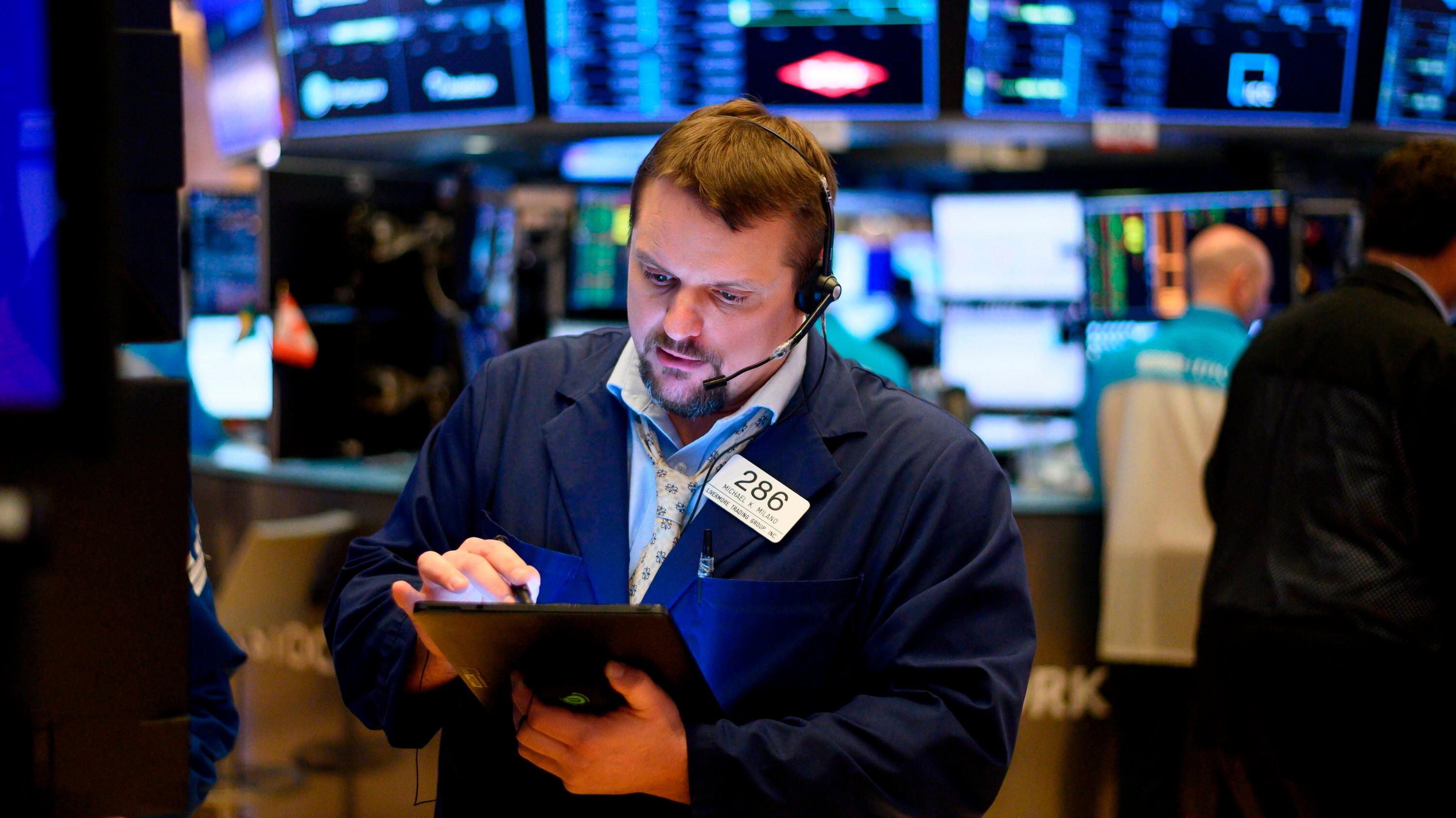
Investors are dumping stocks again Thursday as fears spread that the growing coronavirus outbreak will weigh down the global economy. More big-name companies are warning they'll be affected and countries are taking increasingly drastic measures to contain the virus.
The S&P 500 index is now 10 percent below the record high it set last week and it's headed for its worst week since October 2008. If the S&P closes that low it would mark what market watchers call a "correction," a normal phenomenon that analysts have said was long overdue in this bull market, which is the longest in history.
Microsoft and Budweiser maker InBev became the latest to warn investors about the virus' potential hit to their finances.
Bond yields continued sliding as investors shifted money into lower-risk assets. The yield on the 10-year Treasury fell further into record low territory, to 1.28 percent from 1.31 percent late Wednesday. Gold prices edged higher.
The market recovered some of the ground it lost in the early going, and the S&P 500 was down 2.4 percent as of 11:45 a.m. Eastern time. after being down as much as 3.5 percent earlier.
The Dow Jones Industrial Average lost 599 points, or 2.2 percent, to 26,367. It was down as much as 960 points earlier. The Nasdaq slid 2.5 percent.
American Airlines fell 5.2 percent as airlines continue to feel pain from disrupted travel plans and suspended routes.
The virus has now infected more than 82,000 people globally and is worrying governments with its rapid spread beyond the epicenter of China.
In California, health officials say a new coronavirus case could be the first in the U.S. that has no known connection to travel abroad or another known case, a possible sign the virus is spreading in a community.
Japan will close schools nationwide to help control the spread of the new virus. Saudi Arabia banned foreign pilgrims from entering the kingdom to visit Islam's holiest sites.
Italy has become the center of the outbreak in Europe, with the spread threatening the financial and industrial centers of that nation.
The price of crude oil fell 4.7 percent. The price has been falling sharply as investors anticipate that demand for energy will wane as the economy slows.
At their heart, stock prices rise and fall with the profits that companies make. And Wall Street's expectations for profit growth are sliding away. Apple and Microsoft, two of the world's biggest companies, have already said their sales this quarter will feel the economic effects of the virus.
Goldman Sachs on Thursday said earnings for companies in the S&P 500 index might not grow at all this year, after predicting earlier that they would grow 5.5 percent. Strategist David Kostin also cut his growth forecast for earnings next year.
Besides a sharply weaker Chinese economy in the first quarter of this year, he sees lower demand for U.S. exporters, disruptions to supply chains and general uncertainty eating away at earnings growth.
Such cuts are even more impactful now because stocks are already trading at high levels relative to their earnings, raising the risk. Before the virus worries exploded, investors had been pushing stocks higher on expectations that strong profit growth was set to resume for companies.
The S&P 500 was recently trading at its most expensive level, relative to its expected earnings per share, since the dot-com bubble was deflating in 2002, according to FactSet. If profit growth doesn't ramp up this year, that makes a highly priced stock market even more vulnerable.
Goldman Sach's Kostin said the S&P 500 could fall to 2,900 in the near term, which would be a nearly 7 percent drop from Wednesday's close, before rebounding to 3,400 by the end of the year.
Traders are growing increasingly certain that the Federal Reserve will be forced to cut interest rates to protect the economy, and soon. They're pricing in a better than two-in-three probability of a cut at the Fed's next meeting in March. Just a day before, they were calling for only a one-in-three chance.
A handful of companies have managed to gain ground in the latest rout of stocks. Medical teleconferencing company Teladoc surged 19.8 percent and 3M, which counts surgical masks among its many products, rose 2.8 percent.