In this image taken from NASA video, NASA astronauts Kate Rubins, top, and Victor Glover work outside the International Space Station Sunday, Feb. 28, 2021. Thespacewalking astronauts ventured out Sunday to install support frames for new, high-efficiency solar panels arriving at the International Space Station later this year. (NASA via AP)
By Marcia Dunn
Spacewalking astronauts ventured out Sunday to install support frames for new, high-efficiency solar panels arriving at the International Space Station later this year.
NASA's Kate Rubins and Victor Glover put the first set of mounting brackets and struts together, then bolted them into place next to the station's oldest and most degraded solar wings. But the work took longer than expected, and they barely got started on the second set before calling it quits.
Rubins will finish the job during a second spacewalk later this week.
The spacewalkers had to lug out the hundreds of pounds of mounting brackets and struts in 8-foot (2.5-meter) duffle-style bags. The equipment was so big and awkward that it had to be taken apart like furniture, just to get through the hatch.
Some of the attachment locations required extra turns of the power drill and still weren't snug enough, as indicated by black lines. The astronauts had to use a ratchet wrench to deal with the more stubborn bolts, which slowed them down. At one point, they were two hours behind.
“Whoever painted this black line painted outside the lines a little bit," Glover said at one particularly troublesome spot.
“We’ll work on our kindergarten skills over here,” Mission Control replied, urging him to move on.
With more people and experiments flying on the space station, more power will be needed to keep everything running, according to NASA. The six new solar panels — to be delivered in pairs by SpaceX over the coming year or so — should boost the station’s electrical capability by as much as 30%.
Rubins and Glover tackled the struts for the first two solar panels, due to launch in June. Their spacewalk ended up lasting seven hours, a bit longer than planned.
“Really appreciate your hard work. I know there were a lot of challenges,” Mission Control radioed.
The eight solar panels up there now are 12 to 20 years old — most of them past their design lifetime and deteriorating. Each panel is 112 feet (34 meters) long by 39 feet (12 meters) wide. Tip to tip counting the center framework, each pair stretches 240 feet (73 meters), longer than a Boeing 777′s wingspan.
Boeing is supplying the new roll-up panels, about half the size of the old ones but just as powerful thanks to the latest solar cell technology. They’ll be placed at an angle above the old ones, which will continue to operate.
A prototype was tested at the space station in 2017.
Rubins' helmet featured a new high-definition camera that provided stunning views, particularly those showing the vivid blue Earth 270 miles (435 kilometers) below. “Pretty fantastic," observed Mission Control.
Sunday’s spacewalk was the third for infectious disease specialist Rubins and Navy pilot Glover — both of whom could end up flying to the moon.
They’re among 18 astronauts newly assigned to NASA’s Artemis moon-landing program. The next moonwalkers will come from this group.
Last week, Vice President Kamala Harris put in a congratulatory call to Glover, the first African American astronaut to live full time at the space station. NASA released the video exchange Saturday.
“The history making that you are doing, we are so proud of you,” Harris said. Like other firsts, Glover replied, it won't be the last. “We want to make sure that we can continue to do new things,” he said.
Rubins will float back out Friday with Japanese astronaut Soichi Noguchi to wrap up the solar panel prep work, and to vent and relocate ammonia coolant hoses.
Glover and Noguchi were among four astronauts arriving via SpaceX in November. Rubins launched from Kazakhstan in October alongside two Russians. They’re all scheduled to return to Earth this spring.
___
The Associated Press Health and Science Department receives support from the Howard Hughes Medical Institute’s Department of Science Education. The AP is solely responsible for all content.
Catching you up on what you need to know on April 26, 2022, with Elon Musk’s purchase of Twitter for $44 billion, Russia warning of a possible threat of World War III, the FDA approving a COVID treatment for children under 12, and more.
Plastic pollution is a problem that experts say is only getting worse. One organization is looking to change that. Activists want to save the beauty of our oceans, with the beauty of art. Brad Parks, conservation education director of the Washed Ashore project, joins Cheddar News to discuss.
The federal mask mandate for planes and other public transportation has been grounded. A federal judge in Florida struck down the nationwide requirement saying it exceeds health officials' authority. Dr. Sampson Davis, emergency medicine physician, joins Cheddar News to discuss.
UPSIDE foods, a company that makes cultivated meat products, recently raised $400 million in a Series C round.
UPSIDE says it's developing a way to grow real meat, poultry, and seafood, without the need to raise animals for human consumption. It's a process that gets the attention of some big-name backers, including Bill Gates and Richard Branson. Dr. Uma Valeti, Founder and CEO of UPSIDE Foods, joins Cheddar News' Closing Bell to discuss.
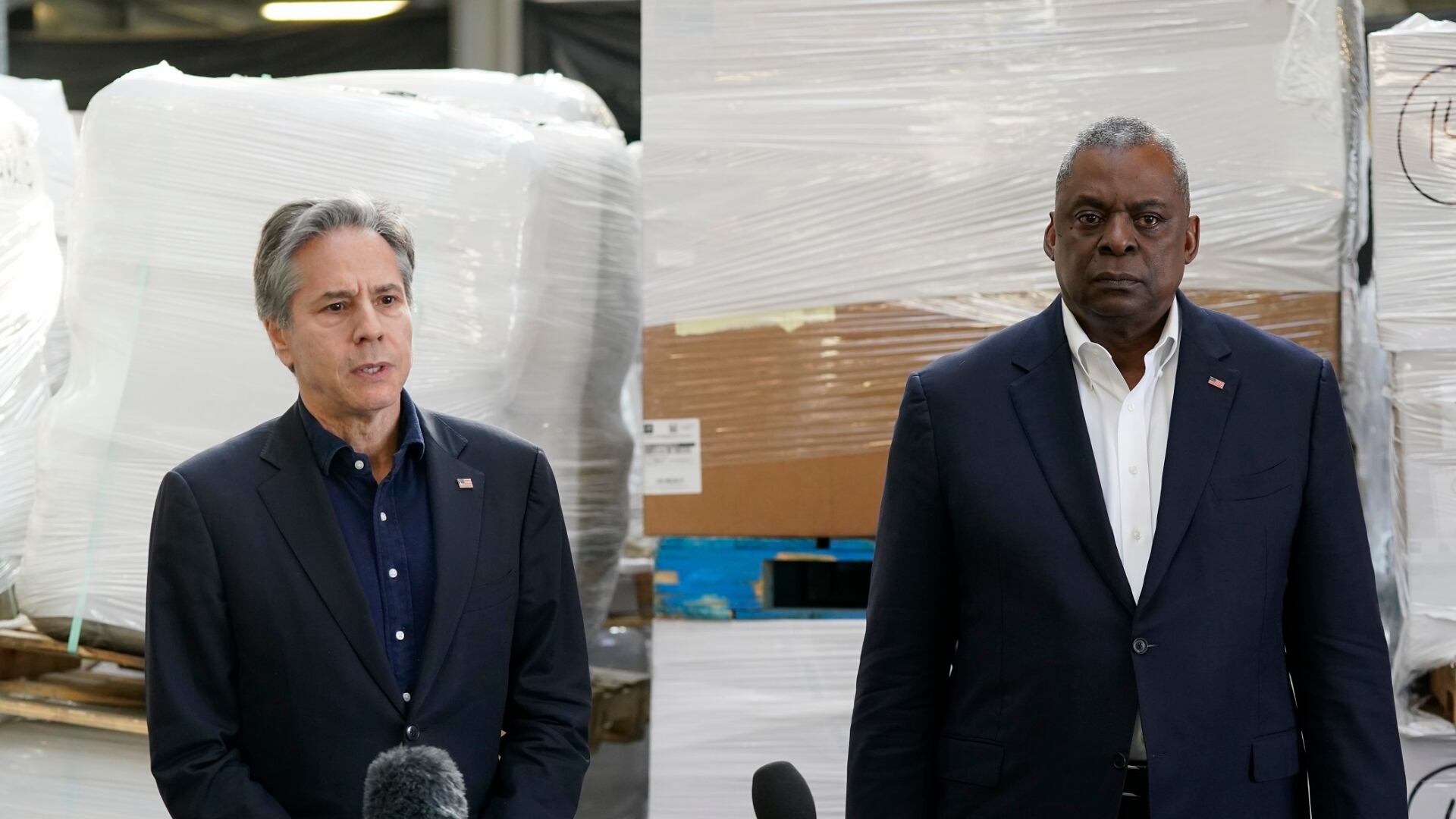
Catching you up on what you need to know on April 25, 2022, with Secretary of State Blinken and Defense Secretary Austin visiting Ukraine, Emmanuel Macron is reelected as president of France, Twitter is talking to Elon Musk about his purchase bid, and more.
An increasing number of countries are recognizing "Rights of Nature", a legal movement that says ecosystems and species have basic rights to exist and flourish. Grant Wilson, executive director at Earth Law Center joins Cheddar News to explain what the movement is aiming to achieve.
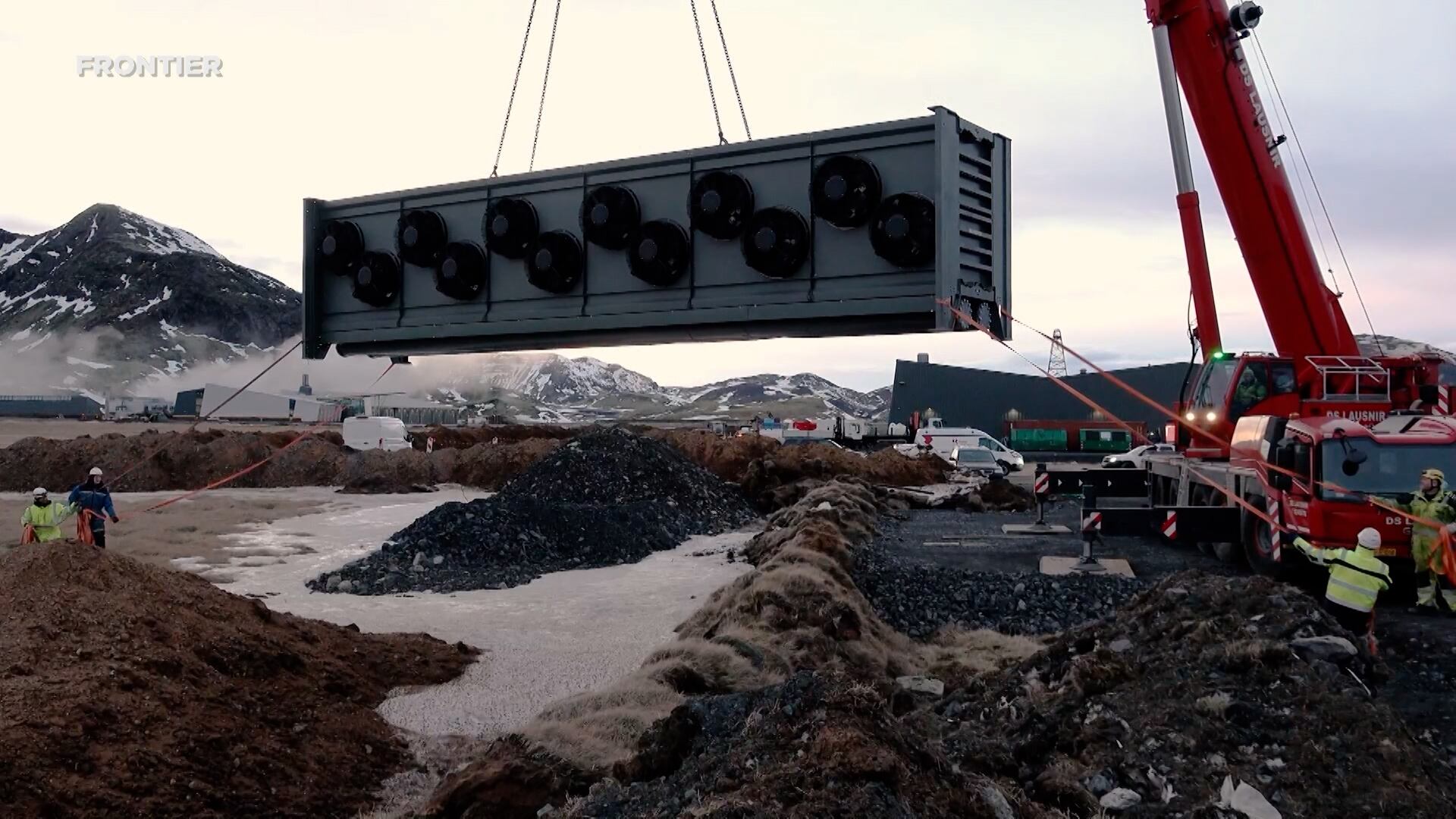
Removing carbon from our atmosphere has become a goal for scientists and entrepreneurs around the world, and while many have begun to develop promising technology solutions, a few big names in tech, including Stripe, Alphabet, Shopify, Meta and McKinsey, are committing nearly $1 billion dollars to fund carbon removal technology through 2030 through a new initiative called Frontier, an advanced market commitment to incentive following through on development. Hannah Bebbington, the head of strategy for Frontier, joined Cheddar News to discuss. "What Frontier aims to do is help get this market on track by sending that strong demand signal such that we can scale up capacity really significantly in the next couple of years," she said.
Autumn Peltier, an indigenous water activist, joined Cheddar News to talk about the lack of access to clean water among indigenous communities in Canada. “I say the government to hold themselves accountable for the promises that they make because Canada and indigenous people have a long history of broken promises and they still continue to this day to keep breaking promises with the nation's people," she said. "Less talk and more action is very much expected from me."
Jonah Goldman, the managing director at Bill Gates-founded Breakthrough Energy, joined Cheddar News to talk about the promising growth in the climate change-conscious investments the organization has made over the years. ”I mean when we're looking at some of the hard to abate technologies and cement and steel and aviation fuel, all of those have promising pathways that weren't there again just a few years ago," he said. "We invest across all of the technology areas that are driving emissions, greenhouse gas emissions and there really are exciting products and technologies coming out in almost every one of those sectors.”
Robert Bonnie, farm production and conservation undersecretary for the USDA, spoke to Cheddar about climate-smart strategies to help farmers reduce carbon emissions from agriculture. "We share the costs of installing those practices on their lands in ways that will protect the climate and maintain agricultural productivity, and we're also partnering with farmers to draw in private investment in greenhouse gas emissions reductions provided by agriculture and forestry," he said. The hope is to get farmers and ranchers to produce climate-smart commodities to lessen the impact of climate change.