In this image taken from NASA video, NASA astronauts Kate Rubins, top, and Victor Glover work outside the International Space Station Sunday, Feb. 28, 2021. Thespacewalking astronauts ventured out Sunday to install support frames for new, high-efficiency solar panels arriving at the International Space Station later this year. (NASA via AP)
By Marcia Dunn
Spacewalking astronauts ventured out Sunday to install support frames for new, high-efficiency solar panels arriving at the International Space Station later this year.
NASA's Kate Rubins and Victor Glover put the first set of mounting brackets and struts together, then bolted them into place next to the station's oldest and most degraded solar wings. But the work took longer than expected, and they barely got started on the second set before calling it quits.
Rubins will finish the job during a second spacewalk later this week.
The spacewalkers had to lug out the hundreds of pounds of mounting brackets and struts in 8-foot (2.5-meter) duffle-style bags. The equipment was so big and awkward that it had to be taken apart like furniture, just to get through the hatch.
Some of the attachment locations required extra turns of the power drill and still weren't snug enough, as indicated by black lines. The astronauts had to use a ratchet wrench to deal with the more stubborn bolts, which slowed them down. At one point, they were two hours behind.
“Whoever painted this black line painted outside the lines a little bit," Glover said at one particularly troublesome spot.
“We’ll work on our kindergarten skills over here,” Mission Control replied, urging him to move on.
With more people and experiments flying on the space station, more power will be needed to keep everything running, according to NASA. The six new solar panels — to be delivered in pairs by SpaceX over the coming year or so — should boost the station’s electrical capability by as much as 30%.
Rubins and Glover tackled the struts for the first two solar panels, due to launch in June. Their spacewalk ended up lasting seven hours, a bit longer than planned.
“Really appreciate your hard work. I know there were a lot of challenges,” Mission Control radioed.
The eight solar panels up there now are 12 to 20 years old — most of them past their design lifetime and deteriorating. Each panel is 112 feet (34 meters) long by 39 feet (12 meters) wide. Tip to tip counting the center framework, each pair stretches 240 feet (73 meters), longer than a Boeing 777′s wingspan.
Boeing is supplying the new roll-up panels, about half the size of the old ones but just as powerful thanks to the latest solar cell technology. They’ll be placed at an angle above the old ones, which will continue to operate.
A prototype was tested at the space station in 2017.
Rubins' helmet featured a new high-definition camera that provided stunning views, particularly those showing the vivid blue Earth 270 miles (435 kilometers) below. “Pretty fantastic," observed Mission Control.
Sunday’s spacewalk was the third for infectious disease specialist Rubins and Navy pilot Glover — both of whom could end up flying to the moon.
They’re among 18 astronauts newly assigned to NASA’s Artemis moon-landing program. The next moonwalkers will come from this group.
Last week, Vice President Kamala Harris put in a congratulatory call to Glover, the first African American astronaut to live full time at the space station. NASA released the video exchange Saturday.
“The history making that you are doing, we are so proud of you,” Harris said. Like other firsts, Glover replied, it won't be the last. “We want to make sure that we can continue to do new things,” he said.
Rubins will float back out Friday with Japanese astronaut Soichi Noguchi to wrap up the solar panel prep work, and to vent and relocate ammonia coolant hoses.
Glover and Noguchi were among four astronauts arriving via SpaceX in November. Rubins launched from Kazakhstan in October alongside two Russians. They’re all scheduled to return to Earth this spring.
___
The Associated Press Health and Science Department receives support from the Howard Hughes Medical Institute’s Department of Science Education. The AP is solely responsible for all content.
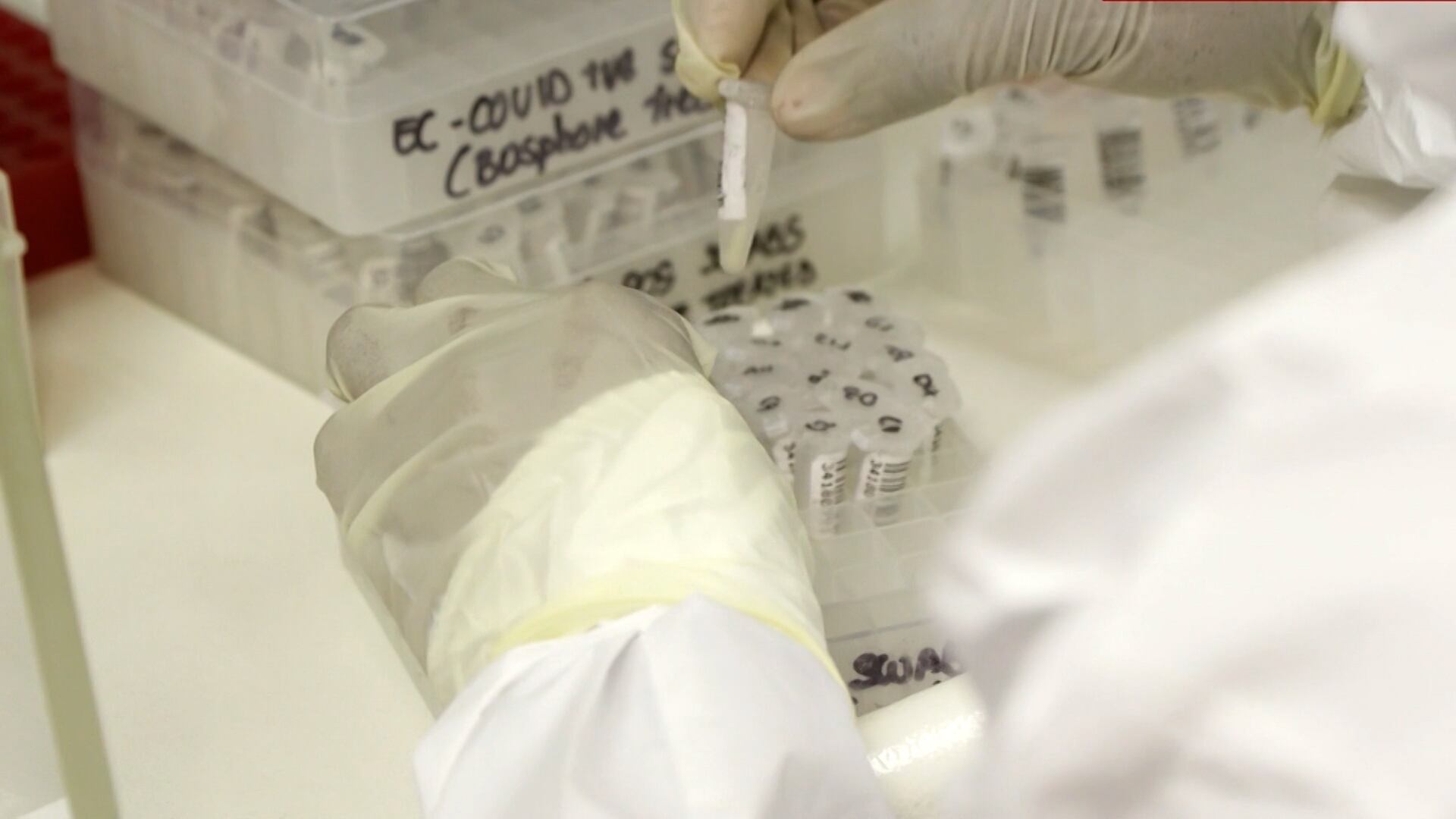
Carlo and Baker cover the latest developments with the Omicron variant, and break down what we know and what we still don't. Plus, a relatively tame Black Friday, and more.
Dr. Amesh Adalja, an infectious disease specialist and senior scholar at Johns Hopkins Center for Health Security, joined Cheddar to discuss the nations joining in on a travel ban against several African nations after South Africa reported the emergence of the omicron variant of COVID-19 currently worrying health experts. Adalja also added his own voice to the World Health Organization's objection to the travel ban at this time. "When you do a travel ban, you basically waste a lot of resources implementing the travel ban, you give people a false sense of security when the virus is likely already outside of the area of the travel ban, and then you punish countries like South Africa." He noted that South Africa should be praised for its transparency and not punished with restrictions, an act he thinks will lead to a chilling effect among other nations sharing data freely.
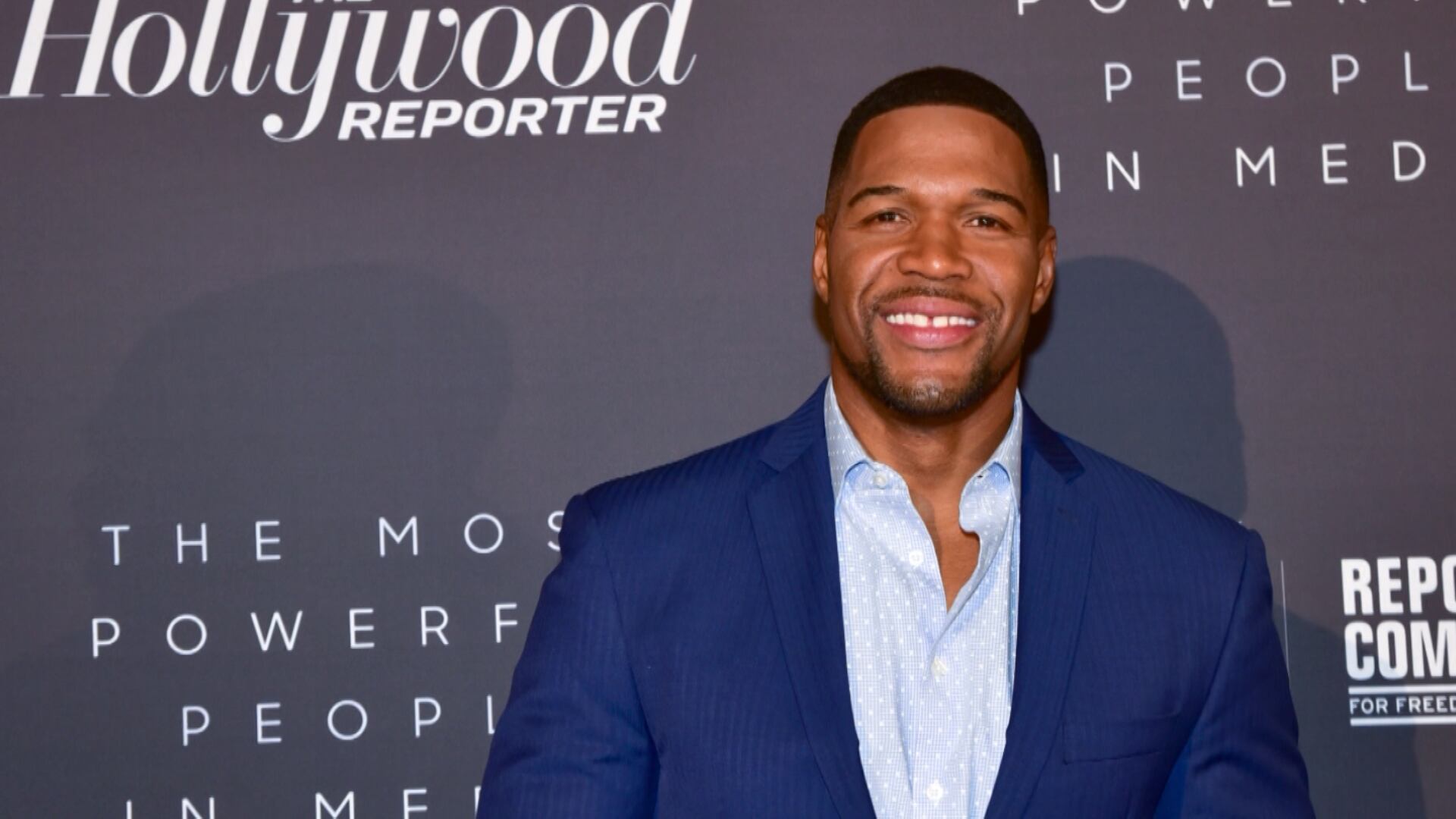
Blue Origin is gearing up for its next launch, set to blast off on December 9th. Michael Strahan is one of the six crew members who will snag a seat on the the New Shepard rocket. Jim Cantrell, CEO and co-founder at Phantom Space, joins Cheddar News to discuss.
Donald Pettey, Program Manager for Strategic Initiatives for MassDOT, and Mohammed Siddiqui, Vice President of Public Relations at Ko-Solar, join Cheddar Climate, where they discuss their plan to test highway barriers that absorb sound and solar energy, with construction expected to begin in the first half of 2022.
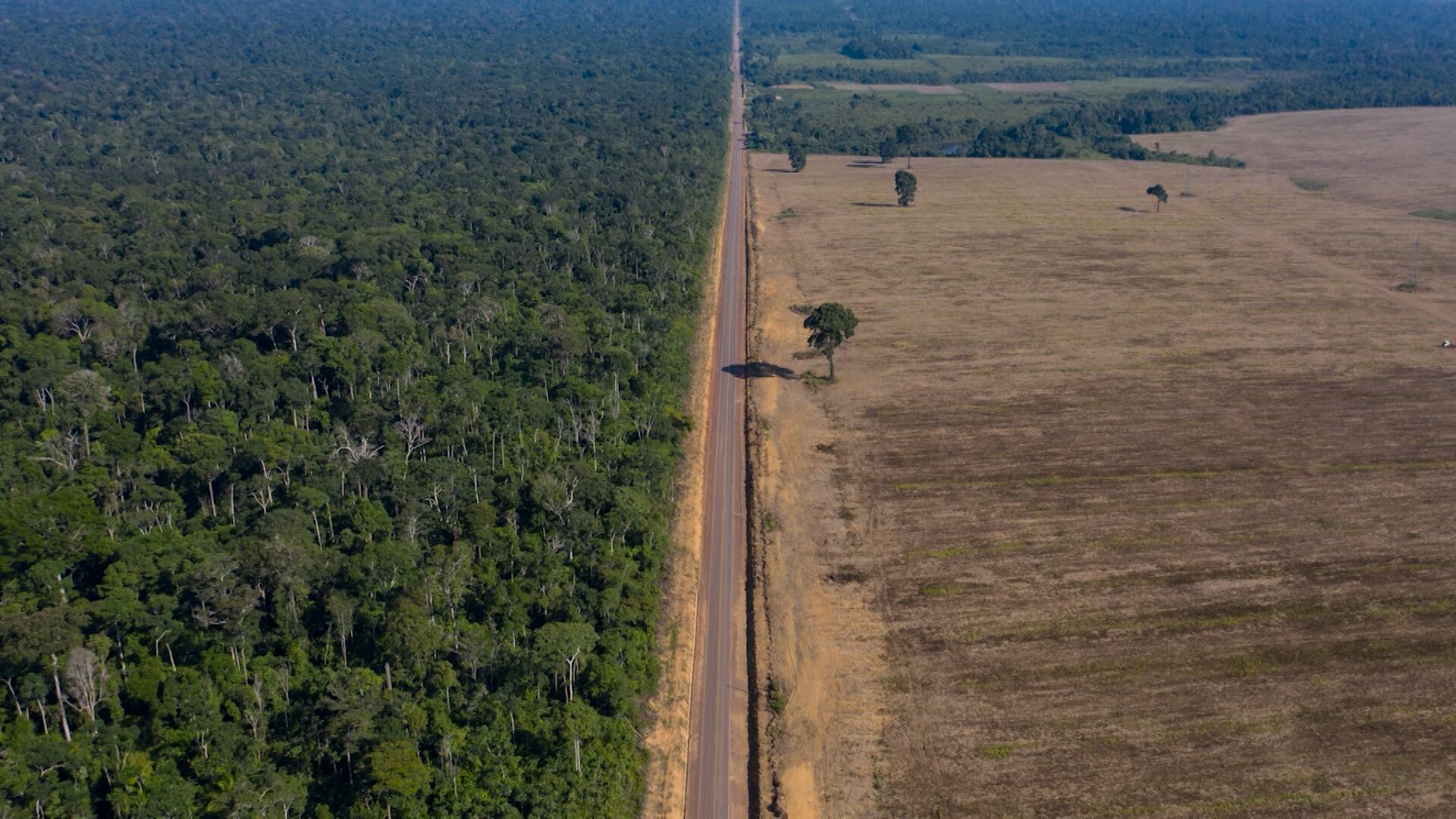
Over 100 world leaders signed on to a pledge at the United Nations COP26 climate meeting with the aim of ending and reversing deforestation by 2030. Leaders agreed to conserve forests and ecosystems, support developing countries on deforestation prevention, and more. Rod Taylor, Global Forests Director at the World Resources Institute, joins Cheddar Climate to discuss the pledge, whether it will have a significant impact, whether 2030 is a suitable deadline, and how we can verify if forests are actually being protected.
President Joe Biden's "Build Back Better" bill could mean cheaper electric bicycles and scooters as the nation attempts to shift away from gas-powered cars. Noa Banayan, the director of federal affairs at PeopleForBikes, joined Cheddar's "Closing Bell" to provide some background on the E-Bike Act included in Biden's reconciliation bill that would provide tax credits for qualified purchases. "We want to make sure, from the bike industry's perspective, that this is a technology and a product that is available to the majority of Americans who want to lower their carbon footprint and get around town faster and do everything that they would normally do in a short car trip but by bike, because it's healthier, it's fast, it's efficient, you're not in traffic," she said.
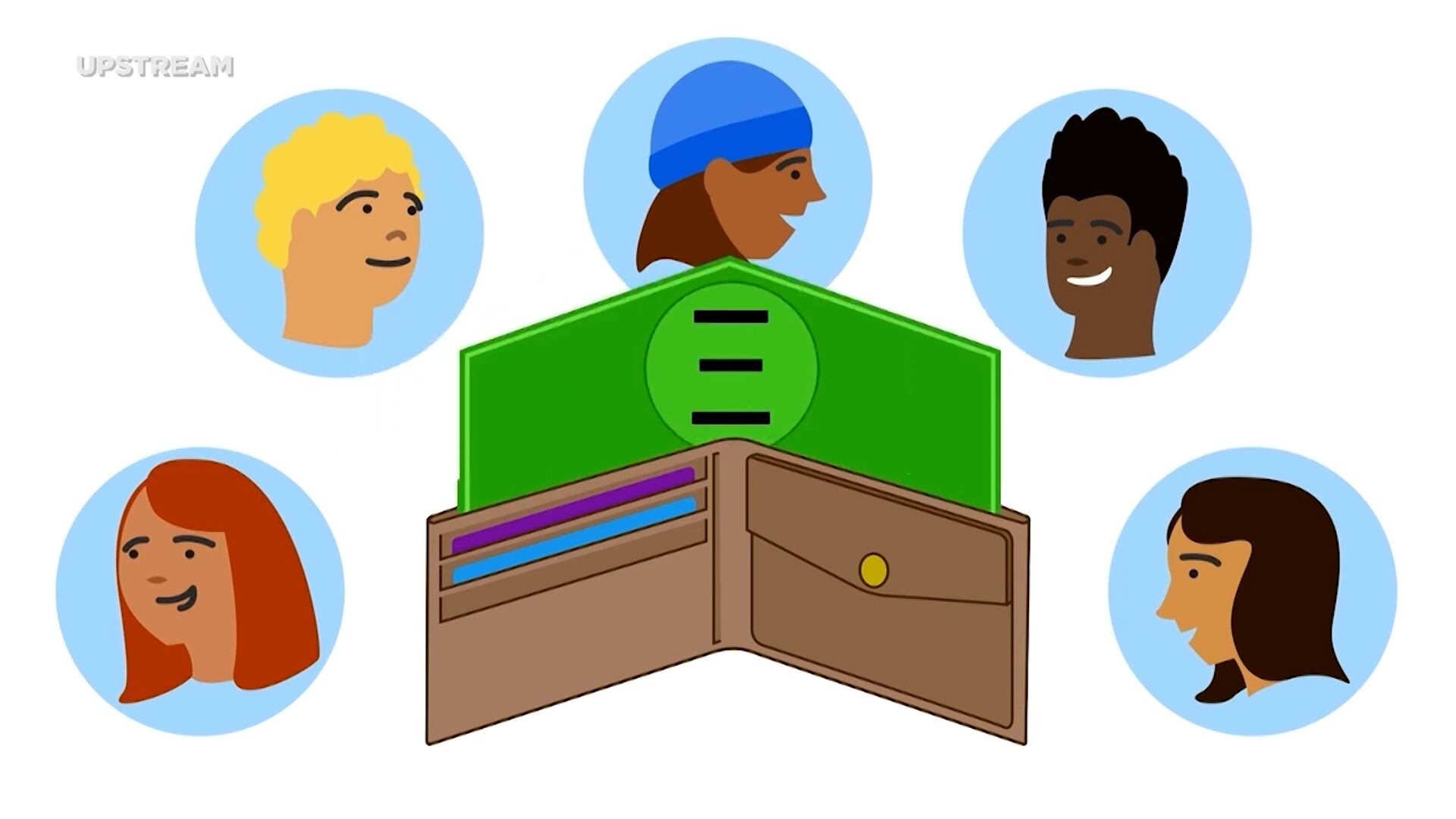
It's being called the next big trend in crypto. A decentralized autonomous organization, or DAO, is an internet community of different types of groups and businesses. The purpose is to allow people to commit funds to a specific cause in a safe way. Now, one social platform is creating a do-it-yourself kit for those who want to step into the space. Upstream Collective just launched the beta mode of its platform with the goal of putting all facets of running a DAO in one place. Alex Taub, co-founder and CEO of Upstream, joins Cheddar News to discuss.
A NASA spacecraft that will deliberately crash into an asteroid is preparing to launch this week. The goal of the DART mission, or the Double Asteroid Redirection Test, is to hit the smaller of the two asteroids, Dimorphos, with the spacecraft at about 15,000 miles per hour and see how the impact changes the asteroid’s trajectory. Joey Roulette, space reporter at The New York Times, joins Cheddar News to talk more about it.
NFL Hall of Famer and "Good Morning America" host Michael Strahan will be able to add space travel to his list of accomplishments as he prepares to launch into orbit with the next Blue Origin mission.