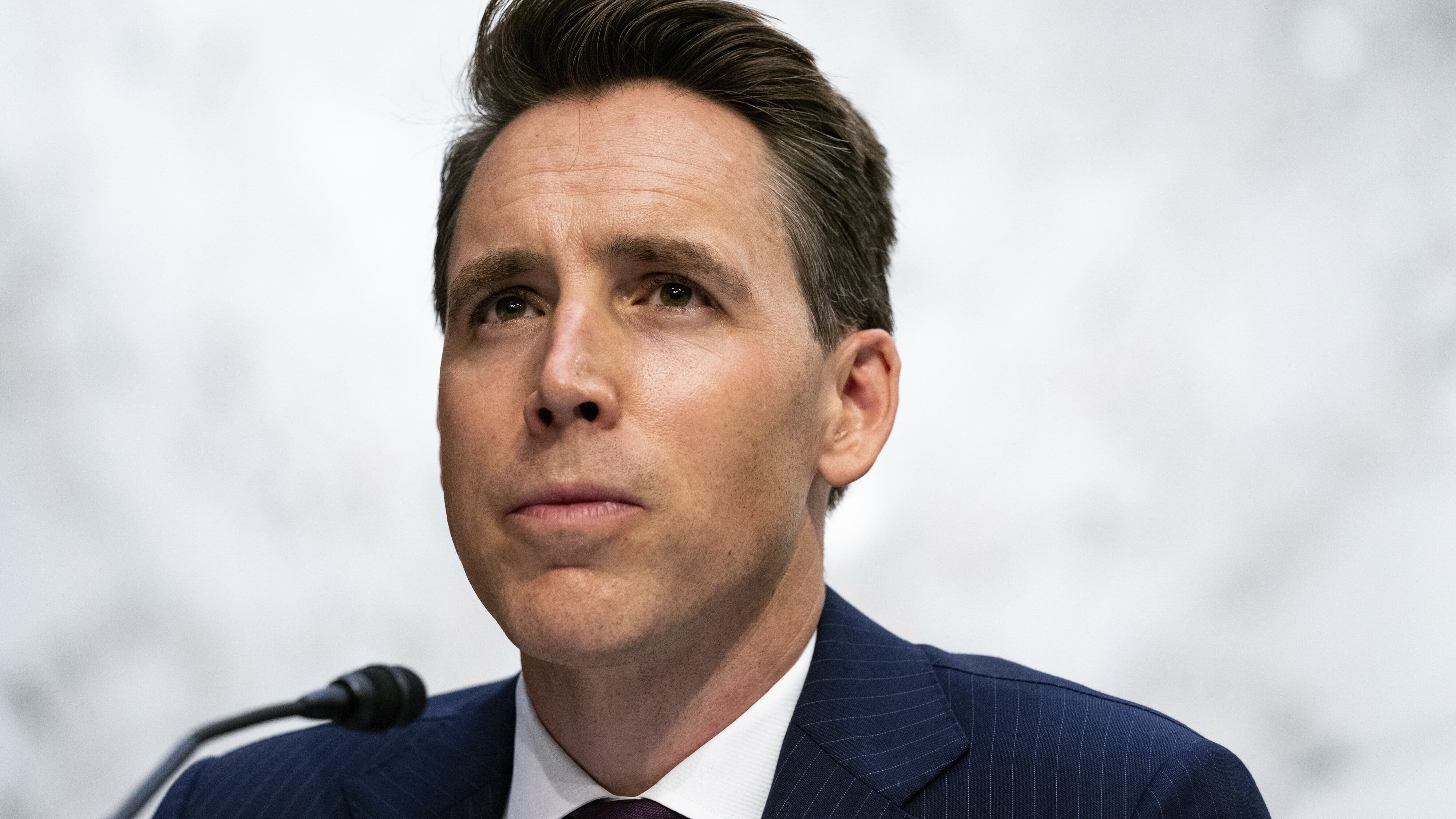
In this file photo, Sen. Josh Hawley, R-Mo., listens during a confirmation hearing for Supreme Court nominee Amy Coney Barrett before the Senate Judiciary Committee, Tuesday, Oct. 13, 2020, on Capitol Hill in Washington. (Anna Moneymaker/The New York Times via AP, Pool, File)
U.S. Senator Josh Hawley (R-Mo.), a vocal critic of big tech, said the antitrust lawsuit filed on Tuesday by the Department of Justice against Google has the potential to become the biggest strike against monopoly power since the Microsoft case settled in 2001.
"This new case will be the most significant antitrust case in a generation and certainly since the Microsoft case, and I think it has the potential to be bigger than the Microsoft case because Google is a more powerful platform, a more powerful company than Microsoft was," Hawley told Cheddar's J.D. Durkin on Tuesday.
He agrees with critics of the Microsoft case that it should have gone further, but maintains that it still helped spur the startup boom of the early 2000s.
"People often say, well, it really wasn't that successful, but actually if you look at the surge in tech startups that occurred during and immediately after the Microsoft case, I think you can see that taking on Microsoft had a significant pro-competition, pro-innovation effect," he said.
The senator also stressed that this is a critical moment for antitrust law in the U.S.
"Let's just be honest here, the stakes are high for the Department of Justice," he said. "They need to prosecute this case to the fullest extent of their abilities, and they need to get a win. They need to show that antitrust law still has an important part to play in the 21st century economy, and I believe they'll do that."
Lawmakers probing the cause of last month’s deadly Maui wildfire did not get many answers during Thursday's congressional hearing on the role the electrical grid played in the disaster.
President Joe Biden announced Wednesday that federal disaster assistance is available for Louisiana, which is working to slow a mass inflow of salt water creeping up the Mississippi River and threatening drinking water supplies in the southern part of the state.
A new law in California will raise the minimum wage for fast food workers to $20 per hour next year, an acknowledgment from the state's Democratic leaders that most of the often overlooked workforce are the primary earners for their low-income households.
From Sunday, workers at the main United States base in Antarctica will no longer be able to walk into a bar and order a beer, after the U.S. federal agency that oversees the research program decided to stop serving alcohol.
House Republicans launched a formal impeachment hearing Thursday against President Joe Biden, promising to “provide accountability” as they probe the family finances and business dealings of his son Hunter and make their case to the public, colleagues and a skeptical Senate.
The FBI and other government agencies should be required to get court approval before reviewing the communications of U.S. citizens collected through a secretive foreign surveillance program, a sharply divided privacy oversight board recommended on Thursday.
The federal government is just days away from a shutdown that will disrupt many services, squeeze workers and roil politics as Republicans in the House, fueled by hard-right demands, force a confrontation over federal spending.
The Biden administration is finalizing a new rule that would cut federal funding for colleges that leave graduates with low pay and high debt after graduating.