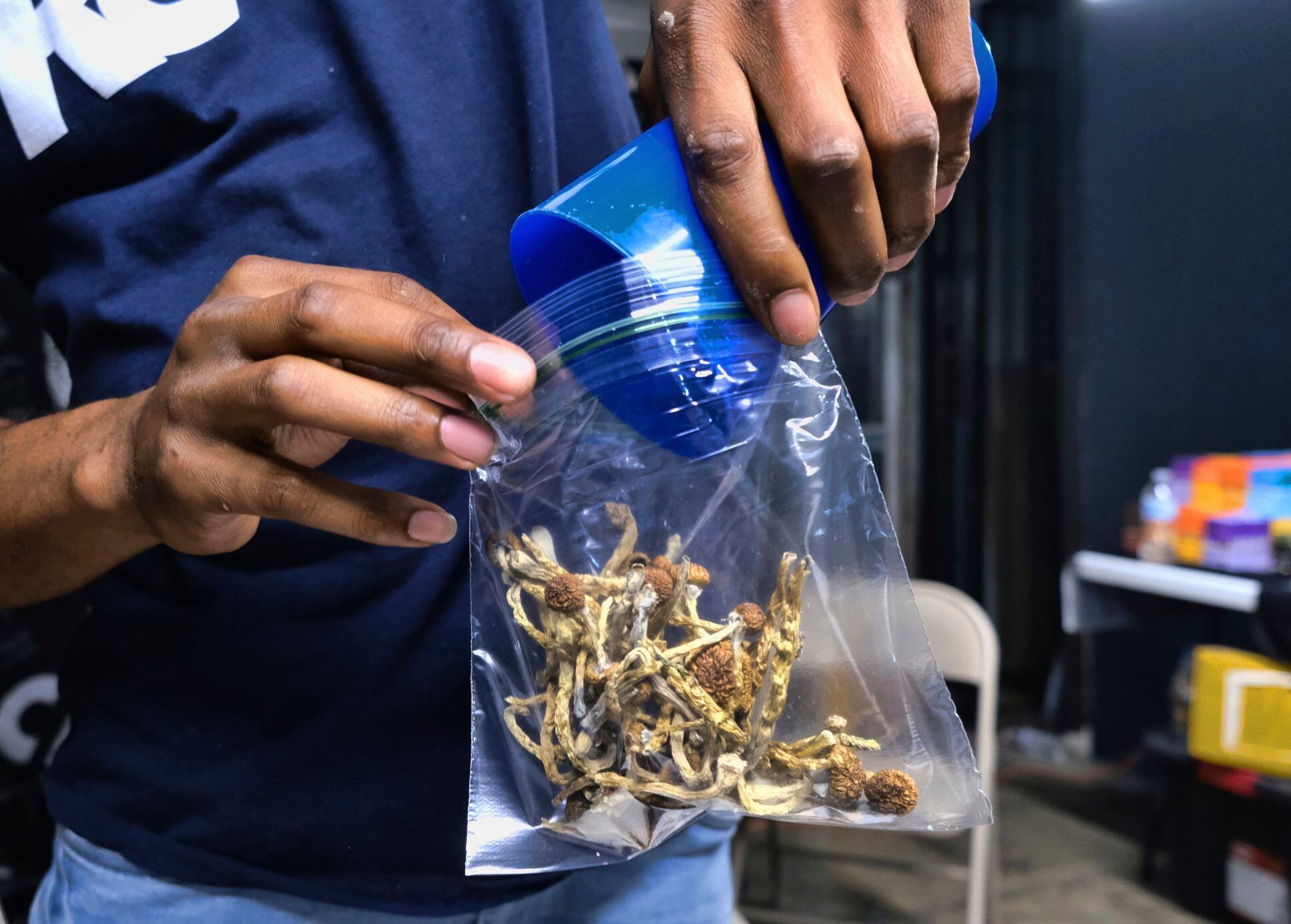
From local decriminalization pushes in the Western U.S. to a surge in new research, the psychedelic renaissance has very much arrived — just ask the investors, entrepreneurs, researchers, and psychedelic enthusiasts who attended Green Market Summit's sold out psychedelic investing event last Friday.
Over the course of an afternoon in Manhattan, about a dozen prominent figures in the new psychedelic movement discussed research opportunities, the investment landscape, and the dos and don'ts of new psychedelics before a rapt audience, some of whom had traveled from as far as Portland, Oregon, and Canada to attend.
Amid all the hype and excitement, the messaging was clear: the future of the psychedelic industry likely won't look much like cannabis.
"I think this as an industry has bigger opportunity than the early days of cannabis," said JR Rahn, founder of buzzy Silicon Valley startup MindMed.
MindMed landed $6 million in September from high profile investors like Shark Tank's Kevin O'Leary and former Canopy Growth CEO Bruce Linton, Business Insider reported, to research the effectiveness on opioid addiction of a compound taken from psychedelic plant Iboga.
But just as missteps from prominent psychedelic activists like Timothy Leary, derailed, however unintentionally, research efforts on psychedelics in the 1960s and 1970s, Rahn and fellow panelists were all too aware of the tenuous situation of the psychedelic industry.
"I don't want to see this space turn from a psychedelic renaissance to a psychedelic apocalypse again," Rahn warned.
Many of the panelists detailed a future in which psychedelic drugs are appreciated for their tremendous medicinal potential — whether for combating addiction, mitigating depression, or even for addressing Alzheimer's Disease. But in this vision of the future, these drugs are subject to clinical trials, regulated by agencies like the Food and Drug Administration, and sold as pharmaceutical drugs and for doctor assisted therapies — not sold in dispensaries.
"Let's not talk about this like it's another green rush," Lauren Rudick, co-founder of the cannabis practice at boutique law firm Hiller, PC, said during a panel on psychedelic markets.
She argued that although a higher barrier of entry to the psychedelic industry would slow growth, it would also serve to preemptively weed out some of the "charlatans" that flocked to the cannabis industry, paving a smoother path forward for the industry.
"Psychedelics are a long-term play, but focus on the research and the money will follow," she added.
It's in this crucial way that many investors and entrepreneurs envision the future of psychedelics differing from that of the cannabis industry.
Of course, some also hope for a system that permits healthy individuals to use psychedelics. The progress of local level decriminalization efforts for entheogenic mushrooms in states like California and Oregon, and in cities like Denver, Colorado, indicate that there's a possibility some jurisdictions may treat psychedelics similarly to cannabis.
"I like the idea of giving people a choice of a more holistic and natural approach that allows them to participate whether they are sick or not. One of the things we are excited by … is the expansive potential of psychedelics," said Field Trip Ventures founder Ronan Levy during a panel entitled "The Parallels Between Cannabis & Psychedelics."
A serial entrepreneur, Levy moved into psychedelics amid a successful career in cannabis, having founded several companies and sold one, CanvasRx, to cannabis giant Aurora Cannabis ($ACB) in 2016. His new, psychedelic venture, Field Trip, is planning to launch a network of psychedelic supported psychotherapy clinics, starting with ketamine clinics for depression treatment in Toronto, New York, and Los Angeles as early as later this year. The company also has ambitions for psilocybin and other psychedelics.
Joining Levy on the panel was Green Sky Strategy's Brian Quigley, a big tobacco and consumer packaged goods veteran who is starting a psychedelic- and adaptogenic-focused company. He agreed with Levy's take — conditionally — cautioning that the psychedelic industry needs a more unified approach to legalization than the cannabis industry had.
"I do think on a state-by-state approach, there are lessons to be learned from the cannabis experience. To the extent that states start to go, having a broader voice for the entire industry to guide legalization is something that cannabis did not get right," Quigley said.
Although the day's discussions underscored many of the challenges inherent to conducting research on and building businesses around schedule 1 substances, there was no shortage of optimism about the future of the space. And it was just that buzz that prompted Debra Borchardt, Green Market Media CEO and editor-in-chief, to organize the summit. She said she knows a trend when she sees one.
"We are really in the first inning. From drug trials to genetic testing, the industry is just getting started," Borchardt said.
Green Market Summit's Economics of Psychedelic Investing conference may be just the start of Borchardt's psychedelic ambitions. Borchardt, who founded Green Market Media, the company behind cannabis business news site Green Market Report, branched into events in 2018. She said she expects to host three intimate, cannabis-focused events in 2020, but on Friday teased that she might just plan another psychedelic investor day, due to popular demand.