By Lisa Mascaro, Anthony Izaguirre, and Christina A. Cassidey
Updated 2:05 pm ET
Pressed by senators, Postmaster General Louis DeJoy said Friday he was unaware of recent mail operation changes until they sparked a public uproar. But he also said he has no plans to restore mailboxes or high-speed sorting machines that have been removed.
His testimony raised fresh questions about how the Postal Service will ensure timely delivery of ballots for the November election.
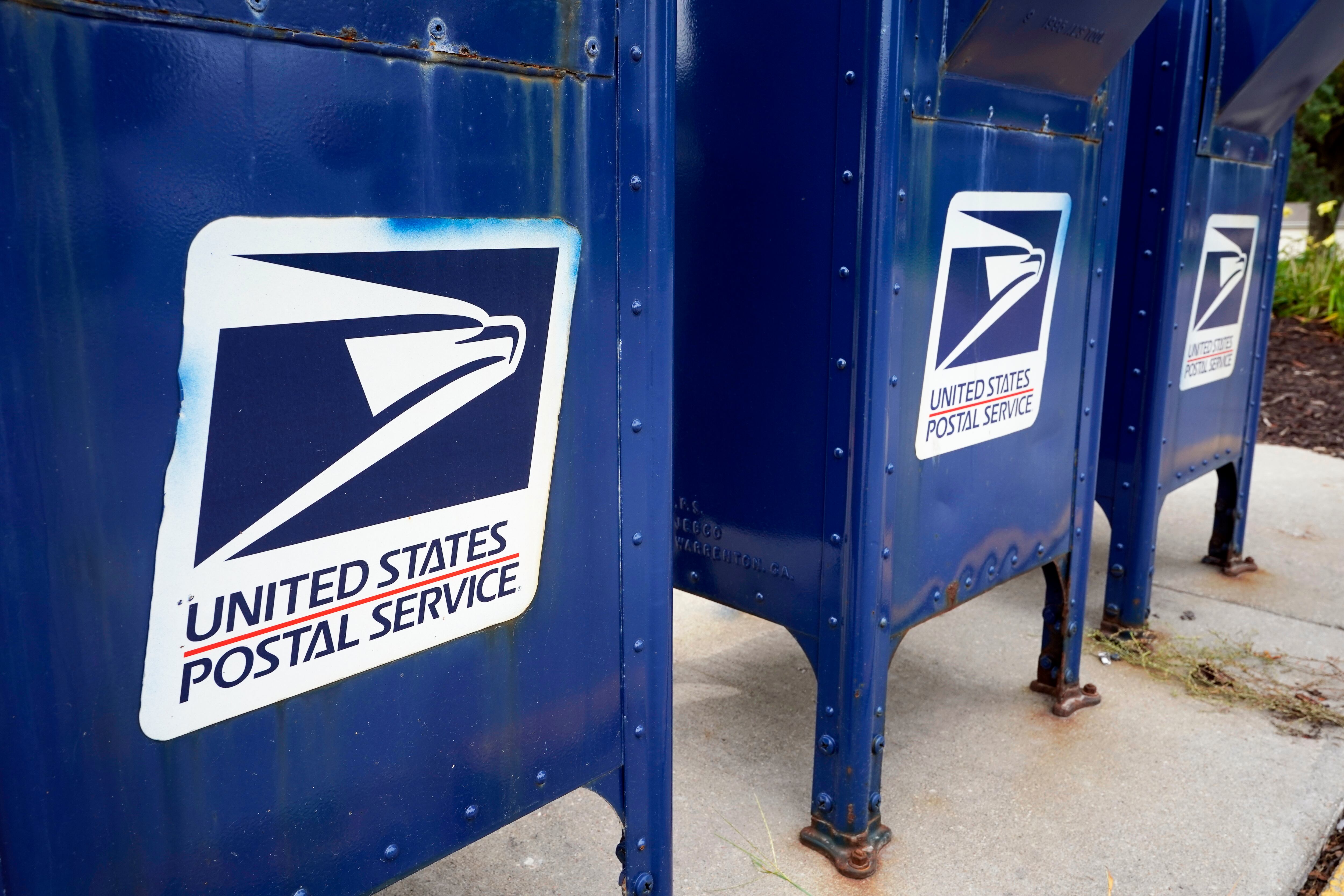
DeJoy told senators that election mail would be prioritized for delivery as in years past. But he said that blue curbside collection boxes and sorting equipment that have been removed are “not needed.”
DeJoy distanced himself from President Donald Trump's complaints about mail-in ballots that are expected to surge in the coronavirus pandemic, but he told senators could not yet provide a detailed plan about how he will ensure on-time election mail delivery.
He declared that the Postal Service “is fully capable and committed to delivering the nation’s election mail securely and on-time.” He said that was a “sacred duty” and his "No. 1 priority between now and Election Day.”
“I think the American people should be able to vote by mail,” DeJoy testified.
The new postmaster general, a Trump donor and ally who took the job in June, has faced a public outcry over changes and delivery delays. Democrats warn his cost-cutting initiatives are causing an upheaval that threatens the election.
They peppered him during a two-hour hearing with questions about the Trump administration’s push to starve the Postal Service of emergency funds to process ballots for November. Trump had said he wants to block agency funding to make it harder for the Postal Service to handle the expected surge of mail-in ballots during the COVID-19 crisis.
DeJoy said he has had few conversations with White House officials.
He said he had “no idea” equipment was being removed until the public outcry. Democrats asked DeJoy to explain the rationale behind the changes and pressed him on how, exactly, he would ensure election mail and ballots would arrive on time.
“Do you have a more detailed plan?” demanded Sen. Maggie Hassan, D-N.H., asking for it by Sunday.
“I don’t think we’ll have a complete plan by Sunday night,” DeJoy replied, acknowledging it was just being formed.
Grilled by Sen. Jacky Rosen, D-Nev., DeJoy acknowledged he did few studies of how the changes he was making would impact seniors, veterans and working families.
It was the first time DeJoy publicly answered questions since the delays,said and several senators said he has not been forthcoming with information to Congress.
However, Republican Sen. Ron Johnson, chairman of the Homeland Security and Governmental Affairs Committee, defended him and dismissed the Democratic claims of election “sabotage.”
“So this isn’t some devious plot on your part,” Johnson said.
Johnson, of Wisconsin, said public outcry over the mail smacked of “ginned up" effort to rally voters — a “political hit job."
The hearing was held remotely as Congress is on recess and lawmakers have been conducting much of their business during the coronavirus outbreak in virtual settings.
The outcry over mail delays and warnings of political interference have put the Postal Service at the center of the nation's tumultuous election year, with Americans rallying around one of the nation's oldest and more popular institutions.
With mounting pressure, DeJoy promised this week to postpone any further changes until after the election, saying he wanted to avoid even the perception of interference. Blue mailboxes were being removed, back-of-shop sorting equipment shutdown, and overtime hours kept in check.
But DeJoy told senators dramatic changes are coming to the Postal Service after the election, and he stood by a newly-imposed rule that limits late delivery trips, which several postal workers have said is a major cause of delivery delays.
Sen. Mitt Romney said the public’s concern is understandable, particularly given Trump’s efforts to stop universal mail-in ballots.
Meanwhile, attorneys general in Pennsylvania, California, Delaware, Maine, Massachusetts, North Carolina, and Washington, DC, filed a lawsuit on Friday to halt the changes. In all, some 20 states and several voting rights groups are now suing.
House Democrats are pushing ahead with a rare Saturday session to pass legislation that would prohibit the actions and send $25 billion to shore up postal operations.
Republicans say the money is unnecessary, and House Republicans in a memo to lawmakers called the legislation a “conspiracy theory” by Democrats to “spread fear and misinformation.”
Nevertheless, Senate Majority Leader Mitch McConnell is eyeing a $10 billion postal rescue as part of the next COVID-19 relief package. The White House has said it would be open to more postal funding as part of a broader bill.
The Postal Service has been struggling financially under a decline in mail volume, COVID-related costs and a rare and some say cumbersome congressional requirement to fund in advance its retiree health care benefits.
For many, the Postal Service provides a lifeline, delivering not just cards and letters but also prescription drugs, financial statements, and other items that are especially needed by mail during the pandemic.
The postal board of governors, appointed by Trump, selected DeJoy in May to take the job. A GOP donor, he previously owned a logistics business that was a longtime Postal Service contractor. He maintains significant financial stakes in companies that do business or compete with the agency, raising conflict of interest questions.
In a statement, the Postal Service said DeJoy has made all required financial disclosures but that he might have to divest some holdings if conflicts arise.
Treasury Secretary Steven Mnuchin, whose role in postal operations is being questioned by Senate Democrats, said in a letter to Senate Democratic leader Chuck Schumer that he had no hand in “recruiting or suggesting” DeJoy for the job.
David C. Williams, the former vice chairman of the U.S. Postal Service Board of Governors, on Thursday told lawmakers that he resigned from the board, in part, over DeJoy's selection, and because he believed the White House was taking extraordinary steps to turn the independent agency into a “political tool.”
___
Associated Press writer Bruce Schreiner in Frankfort, Kentucky, contributed to this report.
___
The Associated Press produced this coverage with support from the Carnegie Corporation of New York.