It turns out there are lots of sharp elbows in the plush toy business. Build-A-Bear and the makers of Squishmallows are facing off in federal court.
Kelly Toys and its Berkshire Hathaway -controlled parent company Jazwares have sued Build-A-Bear, saying its new “Skoosherz” toys copy the look and feel of their mega-popular Squishmallows products.
The Skoosherz line, which Build-A-Bear began selling last month, has the “same distinctive trade dress” of Squishmallows, the complaint filed Monday says, pointing to similarities in shape, face style, coloring and fabric.
“If a picture is worth a thousand words, comparing the Squishmallows original products to Build-a-Bear’s copycats speaks volumes,” Moez Kaba, an attorney representing Kelly Toys and Jazwares, said in a statement. The companies will “vigorously defend” their intellectual property rights, he added.
Jazwares is seeking unspecified damages and for Build-A-Bear to stop selling Skoosherz products.
But Build-A-Bear hit back with its own lawsuit Monday, claiming Skoosherz does not infringe on the Squishmallows makers' rights. It wants a declaratory judgement saying that the Squishmallow maker’s claimed trade dress rights are invalid and unenforceable.
The St. Louis-based retailer says Skoosherz products are based on its own original plush animals, “which have been sold for a number of years.” The lawsuit notes that products from other companies using features laid out in Jazwares' complaint were around long before Squishmallows were created.
“If each aspect of the claimed trade dress were in fact protected trade dress, it would be virtually impossible for competitors to create alternative designs," Build-A-Bear added. It said Squishmallows' own line has also evolved and is not always consistent.
Squishmallows were created in 2016 and have skyrocketed in popularity. According to market research firm Circana, the brand's 8-inch plush assortment was the top-selling toy in the U.S. last year.
The toys also have become an online sensation. Celebrities like Kim Kardashian and Lady Gaga, for example, have shared images of their collections on social media.
In a statement Tuesday, Jazwares accused Build-A-Bear of going to great lengths to capitalize on Squishmallows' success.
Jazwares' lawsuit, filed in the U.S. District Court for the Central District in California, added that Skoosherz's look, name and marketing has already confused consumers — causing potential losses in sales.
Build-A-Bear pushed back with its own complaint, which was filed in the federal Eastern District Court of Missouri. It said it does not seek to mislead consumers and that “there is in fact no actual confusion.”
Skoosherz' January launch was in anticipation for Valentine's Day, Build-A-Bear added.
Attorneys for Build-A-Bear and the company itself did not immediately respond to requests for further comment Tuesday.
This isn't the first legal battle over Squishmallows. In December, Kelly Toys also sued Chinese e-commerce giant Alibaba alleging that its online platforms were used to sell counterfeit Squishmallows.
Jazwares' parent is Alleghany Corp., an insurance giant controlled by Warren Buffett’s Berkshire Hathaway. Buffett did not immediately respond to a message about the lawsuits on Tuesday, but the billionaire's Omaha, Nebraska-based conglomerate typically leaves the handling of such litigation to its subsidiaries.
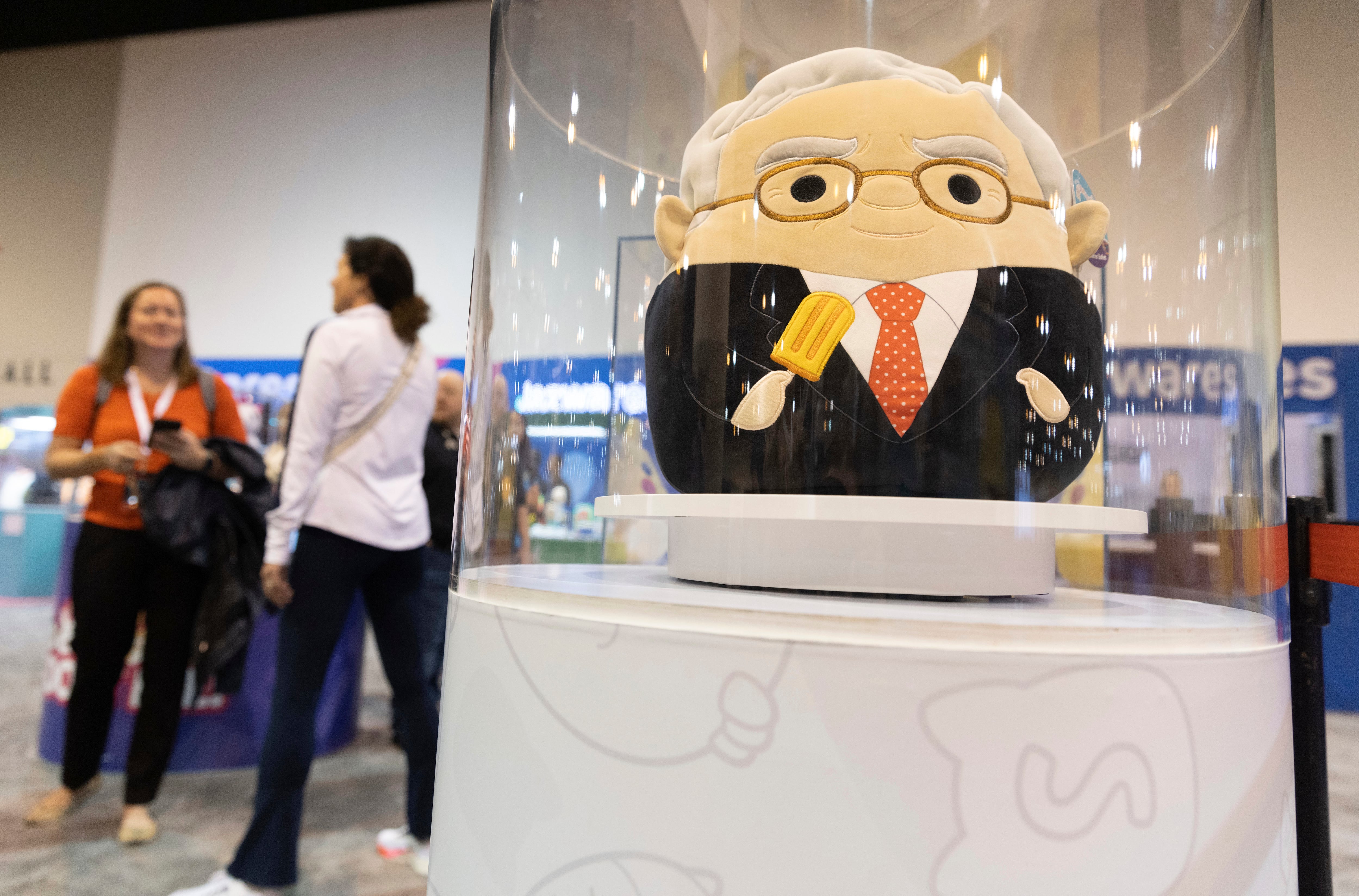
Jazwares actually offered plush Squishmallow versions of Buffett and the late Charlie Munger at Berkshire’s annual meeting last spring — and they were a hit with shareholders who were willing to wait in line for hours to buy them. It was the first time the plush products were offered to shareholders since Berkshire bought Alleghany in 2022 for $11.6 billion.