By Linda A. Johnson and Frank Jordans

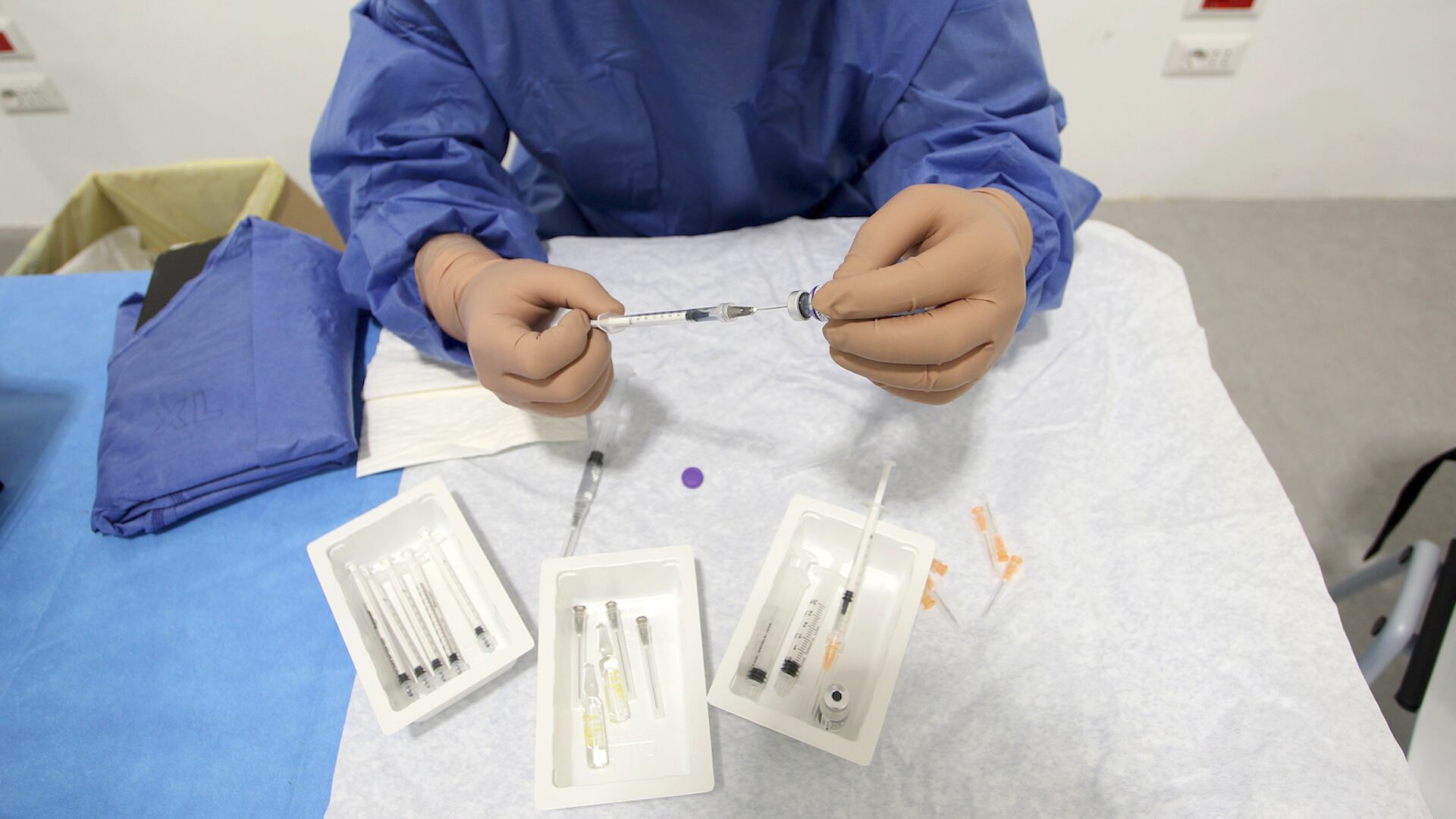
Pfizer said Wednesday that new test results show its coronavirus vaccine is 95% effective, is safe and also protects older people most at risk of dying — last data needed to seek emergency use of limited shot supplies even as the catastrophic outbreak worsens across the globe.

The announcement from Pfizer and its German partner BioNTech, just a week after they revealed the first promising preliminary results, comes as the team is preparing within days to formally ask U.S. regulators to allow emergency use of the vaccine.

They also have begun “rolling submissions” for the vaccine with regulators in Europe, the U.K. and Canada and soon will add this new data.

Pfizer and BioNTech had initially estimated the vaccine was more than 90% effective after 94 infections had been counted in a study that included 44,000 people. With the new announcement, the company now has accumulated 170 infections in the study -- and said only eight of them occurred in volunteers who got the actual vaccine rather than a dummy shot. One of those eight developed severe disease, the company said.

“This is an extraordinarily strong protection,” Dr. Ugur Sahin, BioNTech's CEO and co-founder, told The Associated Press.

The companies have not yet released detailed data on its study, and results have not been analyzed by independent experts. Also still to be determined are important questions such as how long protection lasts and whether people might need boosters.

But all eyes are on the progress of potential vaccines as the grim infection rate jumps in the U.S. and abroad as winter weather forces people indoors, in the close quarters that fuels viral spread.

Pfizer and BioNTech said the vaccine was more than 94% effective in adults over age 65, though it is not clear exactly how that was determined with only eight infections in the vaccinated group to analyze and no breakdown provided of those people’s ages.

Sahin said there were enough older adults enrolled in the study and among the placebo recipients who became infected that he is confident “this vaccine appears to work in the higher-risk population.”

Earlier this week Moderna, Inc. announced that its experimental vaccine appears to be 94.5% effective after an interim analysis of its late-stage study.

Similar results from two vaccines both made with a brand-new technology — using a snippet of the genetic code of the coronavirus to train the body to recognize if the real virus comes along — likely will add to experts' reassurance about the novel approach.

While initial supplies will be scarce and rationed, as the supply grows Sahin said the companies have a responsibility to help ensure access for lower-income countries as well.

Pfizer and BioNTech also say now have the required data on the vaccine’s safety needed to seek emergency authorization from the Food and Drug Administration.

The companies didn’t disclose safety details but said no serious vaccine side effects have been reported, with the most common problem being fatigue after the second vaccine dose, affecting about 4% of participants.

The study has enrolled nearly 44,000 people in the U.S. and five other countries. The trial will continue to collect safety and effectiveness data on volunteers for two more years.

Pfizer and BioNTech said they expect to produce up to 50 million vaccine doses globally in 2020 and up to 1.3 billion doses in 2021.

U.S. officials have said they hope to have about 20 million vaccine doses each from Moderna and Pfizer available for distribution in late December. The first shots are expected to be offered to vulnerable groups like medical and nursing home workers, and people with serious health conditions.

AP medical writer Lauran Neergaard contributed to this report.

The Associated Press Health and Science Department receives support from the Howard Hughes Medical Institute’s Department of Science Education. The AP is solely responsible for all content.

Share:
More In Science
What We Know About the Omicron Variant of COVID-19
Dr. Farhan Bhatti, a family physician and Michigan State lead for the Committee to Protect Health Care, joined Cheddar to discuss the newly discovered and highly transmissible omicron variant of COVID-19. Bhatti said it is too early to draw any conclusions about the new variant but there is concern that it could eventually mutate and develop a resistance to vaccines. "Time will tell, but for now, it looks like, still, the best thing that we can do to try to limit the spread of this disease is make sure everybody gets a vaccine and make sure everybody avoids large gatherings indoors and wears masks during the wintertime especially," he said.
Omicron Risk, Barbados Drops Queen & Jack Logs Off
Jill and Carlo cover the latest developments with the Omicron variant that are spooking markets once again. Twitter's @Jack is leaving, SCOTUS takes up abortion rights and the world has a brand new republic.
CDC: All U.S. Adults Eligible for Pfizer and Moderna Boosters
A CDC panel unanimously endorsed Moderna and Pfizer Covid-19 vaccine boosters for all U.S. adults. This comes after the FDA gave its own authorization for everyone 18 and older, scrapping previous eligibility factors like age and underlying conditions. Dr. Shereef Elnahal, President and CEO of University Hospital and former New Jersey Health Commissioner, joined Cheddar News to break down the development.
U.S. to Buy 10 Million Courses of Pfizer Covid Pill
The Biden Administration is set to buy 10 million courses of Pfizer's Covid pill if it gains emergency use authorization from the FDA. With this purchase, the U.S. will receive more than 13 million courses of antiviral pills aimed at treating Covid and reducing severe illness and death. Pfizer's pill has been shown to reduce risk of hospitalization and death by 89 percent, proving it could be a key tool in the fight against the pandemic. Dr. Soumi Eachempati, Co-Founder, CEO & CMO of Cleared4, joined Cheddar News to discuss.
New Covid Variant Sends Markets Falling as Investor Concerns Deepen
Friday saw big sell offs, with the Dow Jones posting its worst day since October 2020, falling 905 points, with the Nasdaq and S&P 500 each tumbling more than two percent as well. Much of that due to investor concerns over the new Covid-19 'Omicron' variant first detected in South Africa. Craig Erlam, senior market analyst at Oanda explains what investors should expect this week.
National Geographic's Dr. Sylvia Earle Talks the State of Our Oceans
The ocean is an important topic when it comes to the climate. It plays a vital role in shaping our environment, with rising sea levels causing a 35% increase in natural disasters around the world, affecting 1.7 billion people. Dr. Sylvia Earle has been called perhaps the greatest advocate our oceans have ever had, with Time magazine dubbing her its first 'hero of the planet' and the Library of Congress naming her a living legend. She is also the founder of Mission Blue, an organization that inspires action to explore and protect the ocean. Dr. Earle joined Cheddar Climate for more on the importance of caring for the ocean and its impact on climate change.
Omicron Variant Alarms Scientists Around The World
Scientists are racing to understand the Omicron variant of covid-19 and find out just how dangerous it really is. Omicron, dubbed a variant of concern by the WHO, was first detected in South Africa last week and has already spread to multiple countries, including the UK, Canada, Australia and more. Dr. Jonathan Javitt, CEO of Nrx and adjunct professor at Johns Hopkins School of Medicine, joined Cheddar to discuss what we know and don't know about this new variant.
Biggest Climate Change Investment In U.S. History
The House has officially passed the $1.75 trillion social policy and climate big. This new bill is expected to bring some huge investments into working towards fighting climate change. U.S. President of We Don't Have Time, Sweta Chakraborty, joined Cheddar to discuss more.
Load More