As the world's population swells to 9.2 billion people and developing nations meet demands for electrification, global demand for energy will soar by 25 percent by 2040, according to the 2019 World Oil Outlook published by OPEC on Tuesday.
And while renewables such as wind and solar are expected to see the fastest growth, oil and gas are nonetheless expected to meet more than half of the world's energy demand.
"What is clear is that the world will need a great deal more energy in the decades to come," OPEC Secretary-General Mohammad Sanusi Barkindo wrote in a foreword accompanying the report.
The projections are roughly in line with those released last year from the International Energy Agency, which is set to publish its latest World Energy Outlook later this month.
However, the predicted growth in demand amounts to only half of what the U.S. Energy Information Administration foresees; in its International Energy Outlook in September, the analysis agency said that energy demand will soar by as much as 50 percent through 2050.
Either scenario poses potential challenges for the global energy sector: Booming populations and the need to meet electricity demand are sure to pose an ongoing challenge to efforts to rein in greenhouse gas emissions by building renewable energy resources like solar and wind, which while increasingly or even already cost-competitive with oil, gas, and coal-fired power plants, don't provide around-the-clock power without expensive batteries.
"That's not a shock to see demand ramping up, especially as developing countries continue to see their markets move towards maturity – speaking especially about China, India, and other large population centers in Asia," Patrick DeHaan, head of petroleum analysis at GasBuddy, writes in an email to Cheddar.
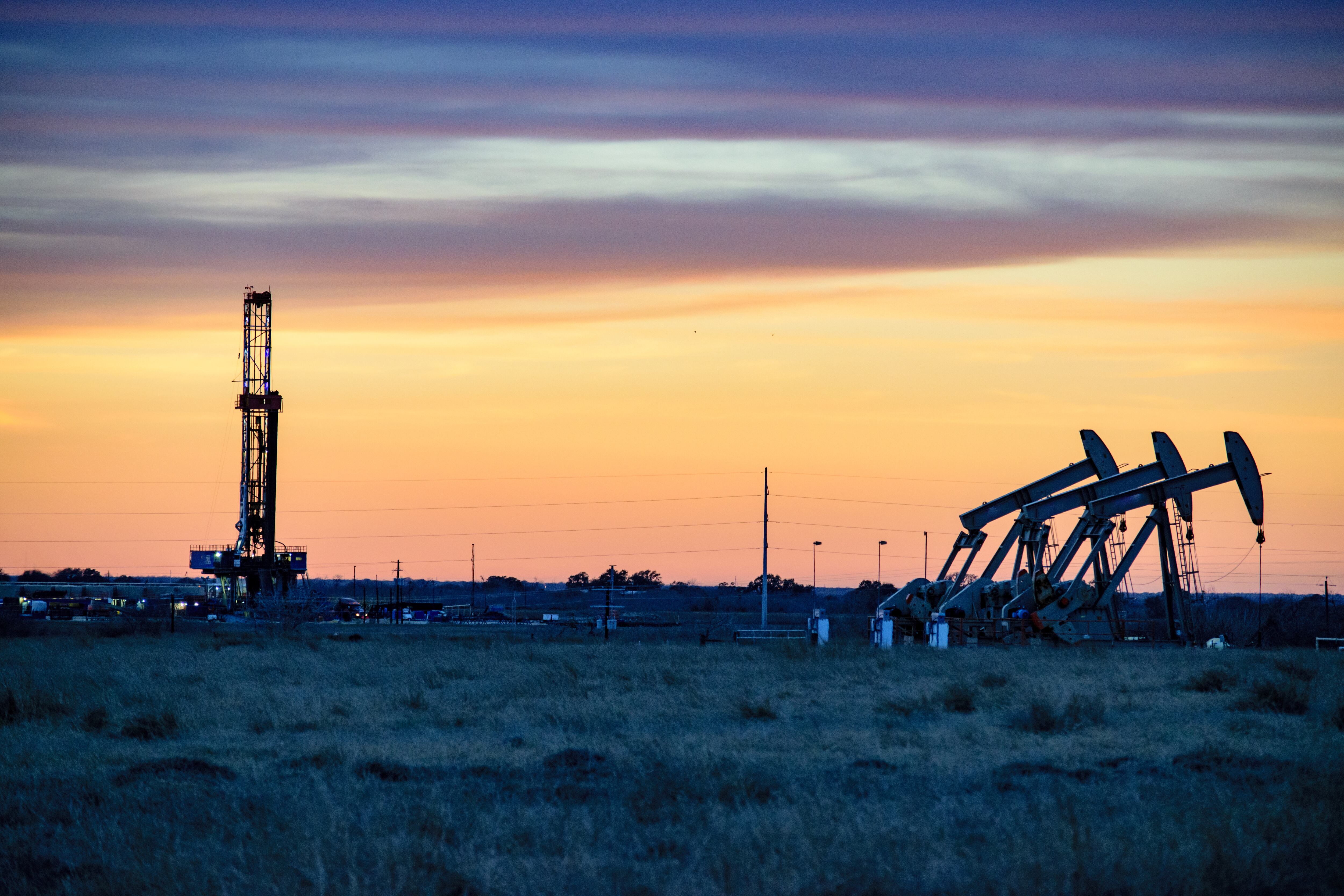
Increasing demand for oil may also strain production capacity: Booming shale oil production in the U.S. over the past 15 years – unleashed by hydraulic fracturing and horizontal drilling – presently supply 75 percent of the world's global supply growth. Meanwhile, so-called "conventional" oil wells outside the OPEC cartel have become increasingly difficult to discover and drill.
"There's really a question here whether the oil supply can just keep pounding along, and I'm not 100 percent sure," says Steven Kopits, managing director of Princeton Energy Advisors, a consulting firm. "It'll keep growing materially as long as U.S. shales are resilient. Once U.S. shales stop growing, all bets are off."
Prices of benchmark Brent crude oil, which dictates what U.S. drivers pay at the pump, have been remarkably steady since the start of the year, largely hovering around $60 per barrel, and climbing no higher than $75 per barrel, despite unrest and military confrontations between Iran, Saudi Arabia, and the U.S. that once would have sent prices soaring past $100 per barrel. Instead of focusing on threats to supply, analysts and investors have instead honed in on demand – namely whether the ongoing U.S.-China trade war or a potential recession might abruptly cut off demand. Amid such jitters, an agreement between OPEC nations – led by Saudi Arabia – and Russia, the world's third-largest producer of oil last year behind the U.S. and Riyadh, has helped keep prices from sinking even further.
The sustained low prices have punished some U.S. shale drillers, who face higher production costs than conventional drilling, although the sector has weathered the oil markets low prices far better than most experts anticipated. There were 691 oil rigs operating at the end of last week, down from 874 at the same time last year, according to the oil services firm Baker Hughes.
Analysts are now watching whether the drilling rigs forced offline by the current price environment – and the resulting decline in production – will cause prices to bump up in the months ahead.
"What has really saved our bacon so far is U.S. shales, which has so far proved far more resilient than anyone would have predicted 10 years ago," Kopits says. "The question is how long does that run? Right now we're in a little bit of a reset in the shale patch because prices have been relatively low and the shale industry right now is in a mini-recession – it has been for the last year. And either OPEC is going to produce more and keep prices lower, or they're going to let prices cruise up until U.S. shale comes back online."
If and when that happens, whether U.S. shale – and other producers around the world – can meet surging demand through the next several decades remains an open question. "How long shales can run," Kopits says, "how big they'll really be, no one really knows."