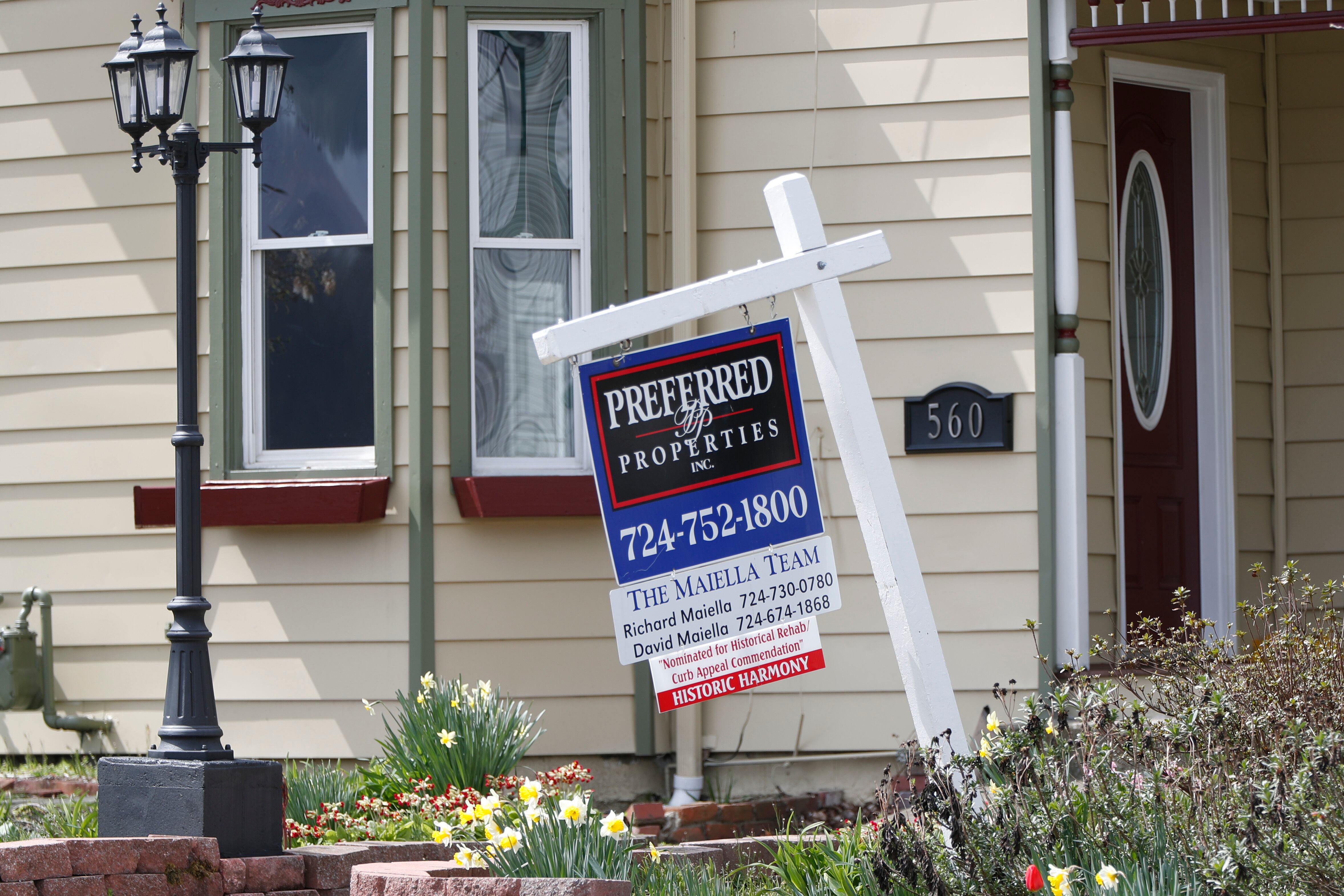
This April 16, 2020 photo shows a real estate company sign that marks a home for sale in Harmony, Pa. U.S. new home sales plunged 15.4% in March as the lockdowns that began in the middle of the month began to rattle the housing market. The Commerce Department reported Thursday, April 23, that sales of new single-family homes dropped to a seasonally ajdjusted annual rate of 627,000 last month after sales had fallen 4.6% in February. (AP Photo/Keith Srakocic)
By Martin Crutsinger
Updated 12:04 pm ET
Sales of new homes rose a surprisingly strong 16.6 percent in May with the reopening of major parts of the country potentially fueling activity in the housing market.
The Commerce Department reported Tuesday that sales of new single-family homes rose to a seasonally adjusted annual rate of 676,000 last month.
That was a much better performance than expected. Many economists had forecast that sales would fall in May.
The new home sales numbers come just one day after the U.S. reported a 9.7 percent plunge in May sales of existing homes to an annual rate of 3.91 million, the slowest pace in nearly a decade.
There are hopes that the housing slump that occurred with the virus shutdowns could be coming to an end, though the millions of jobs lost to the pandemic could impede any rebound.
Nancy Vanden Houten, lead U.S. economist with Oxford Economics, said she expected a modest recovery in sales in the coming months following the big declines in the first quarter but she still expects a decline overall this year.
"The slow recovery in the labor market will limit the upside of any rebound in the housing market," she said.
The median price of a new home rose 4.9 percent to $317,900 in May after falling by 8.7 percent in April, a drop that was attributed to heavy discounting by builders in the midst of the coronavirus shutdowns.
The big sales rebound left activity in May 12.7 percent higher than a year ago.
U.S. sports betting is booming as NFL and college football fuel massive activity. BetMGM CEO Adam Greenblatt breaks down trends, growth, and what’s next.
President Donald Trump says a deal struck by Netflix last week to buy Warner Bros. Discovery “could be a problem” because of the size of the combined market share. The Republican president says he will be involved in the decision about whether federal regulators should approve the deal. Trump commented Sunday when he was asked about the deal as he walked the red carpet at the Kennedy Center Honors. The $72 billion deal would bring together two of the biggest players in television and film and potentially reshape the entertainment industry.
Disney's changes to a program for disabled visitors are facing challenges in federal court and through a shareholder proposal. The Disability Access Service program, which allows disabled visitors to skip long lines, was overhauled last year. Disney now mostly limits the program to those with developmental disabilities like autism who have difficulty waiting in lines. The changes have sparked criticism from some disability advocates. A shareholder proposal submitted by disability advocates calls for an independent review of Disney's disability policies. Disney plans to block this proposal, claiming it's misleading. It's the latest struggle by Disney to accommodate disabled visitors while stopping past abuses by some theme park guests.
With a merger this big, creators, studios, and theaters all face uncertain futures. Here’s what experts are worried about and what good could come from it.
With disengagement rising and hybrid work shifting, 'Everybody Matters' author Bob Chapman explains why treating people well could define the future of work.
We sat down with Ali Furman, U.S. Consumer Markets Industry Leader at consulting firm PwC to ask what trends she garnered from the initial data this year.
Seth Schachner breaks down Zootopia 2’s record-smashing debut, holiday box office trends, early 2026 Oscar contenders, and what’s next for Netflix and WBD.