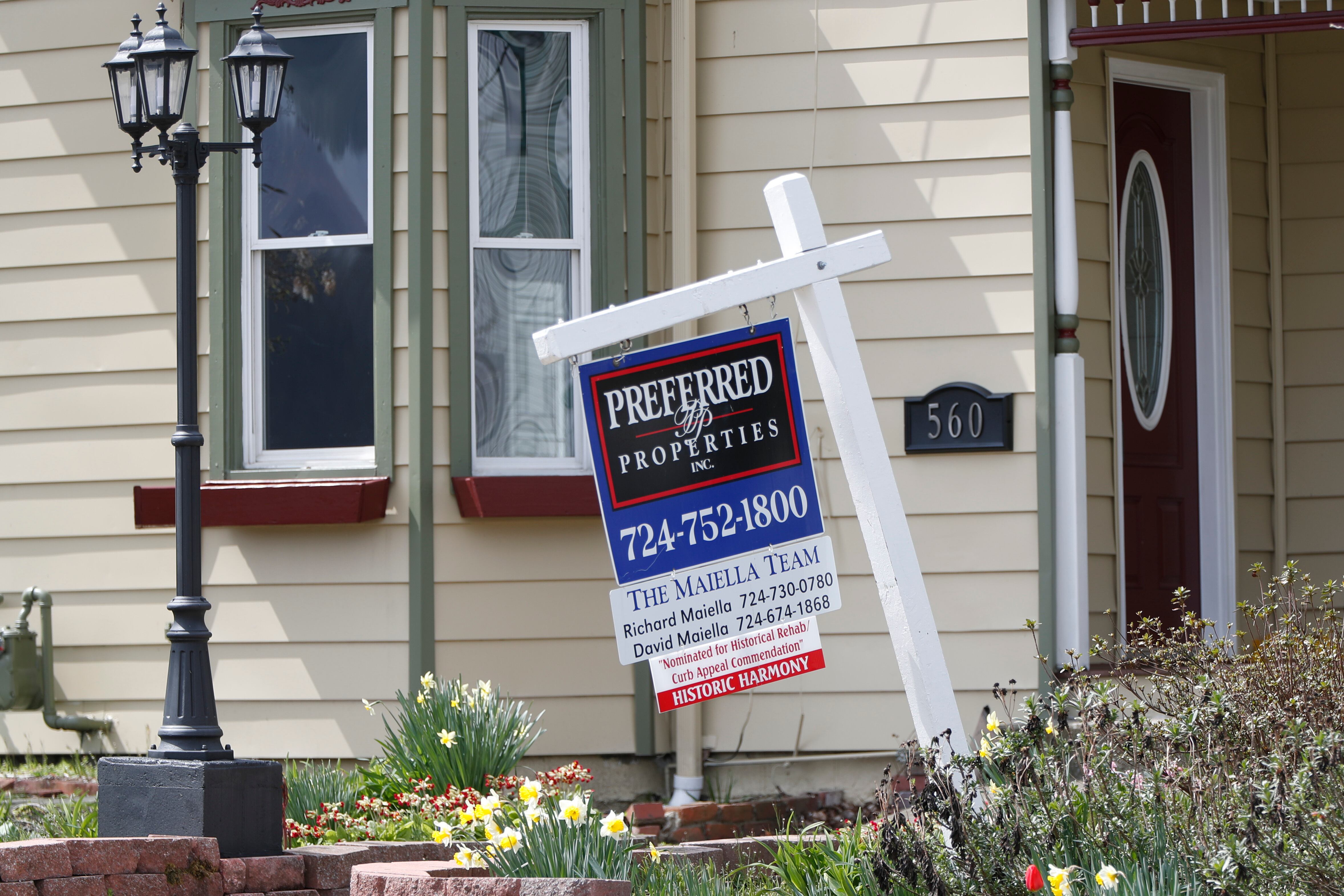
This April 16, 2020 photo shows a real estate company sign that marks a home for sale in Harmony, Pa. U.S. new home sales plunged 15.4% in March as the lockdowns that began in the middle of the month began to rattle the housing market. The Commerce Department reported Thursday, April 23, that sales of new single-family homes dropped to a seasonally ajdjusted annual rate of 627,000 last month after sales had fallen 4.6% in February. (AP Photo/Keith Srakocic)
Sales of new homes rose a sharp 13,8 percent in June, the second straight increase after two months when sales plunged as the country went into lockdown because of the coronavirus.
The Commerce Department reported Friday that the June gain pushed sales of new homes to a seasonally adjusted annual rate of 776,000, a better-than-expected performance. The increase follows a 19.4 percent jump in May.
The two months of sales gains followed two months of sharp declines in sales in March and April as much of the country went into lockdown.
A separate report Wednesday showed sales of previously owned homes surged 20.7 percent in June to a seasonally adjusted annual rate of 4.72 million. Even with the gain, which followed three months of declines, new home sales remain toughly 20 percent below pre-pandemic levels.
The median price of a new home sold in June increased to $329,200, up 5.6 percent from a year ago.
Economists are hoping for a further rebound in sales in the coming months but caution that this expectation depends heavily on the course of the coronavirus. A recent resurgence in cases has caused some states to roll back their reopening plans.
Sales are being helped by ultra-low mortgage rates which earlier this month dropped below 3 percent for a 30-year-fixed rate mortgage for the first time in nearly 50 years.
Economists believe low rates and changes in home preferences brought on by the pandemic will combine to support further sales gains this year.
"Home sales are being supported by households' shifting preference for bigger spaces as more and more people work from home as well as lower mortgage rates," said Rubeela Farooqi, chief U.S. economist at High Frequency Economics.
In June, sales were up in all parts of the country with the biggest gain coming in the Northeast, a surge of 89.7 percent. Sales rose 18 percent in the West, 10.5 percent in the Midwest, and 7.2 percent in the South.
YouTube will offer creators a way to rejoin the streaming platform if they were banned for violating COVID-19 and election misinformation policies that are no longer in effect.
Lukas Alpert of MarketWatch explores how networks, brands, and ad buyers absorb the shockwaves when late‑night show hosts are suddenly cut — and brought back.
A new poll finds U.S. adults are more likely than they were a year ago to think immigrants in the country legally benefit the economy. That comes as President Donald Trump's administration imposes new restrictions targeting legal pathways into the country. The Associated Press-NORC Center for Public Affairs Research survey finds Americans are more likely than they were in March 2024 to say it’s a “major benefit” that people who come to the U.S. legally contribute to the economy and help American companies get the expertise of skilled workers. At the same time, perceptions of illegal immigration haven’t shifted meaningfully. Americans still see fewer benefits from people who come to the U.S. illegally.
Shares of Tylenol maker Kenvue are bouncing back sharply before the opening bell a day after President Donald Trump promoted unproven and in some cases discredited ties between Tylenol, vaccines and autism. Trump told pregnant women not to use the painkiller around a dozen times during the White House news conference Monday. The drugmaker tumbled 7.5%. Shares have regained most of those losses early Tuesday in premarket trading.
Scott Trench, host of the BiggerPockets Money Podcast, explores how recent rate cuts, high borrowing costs, and mortgage rates are reshaping U.S. real estate.
A look into how disruption, AI, and global economic trends are transforming the modern supply chain with Jeremy Jansen, Head of Supply Chain at Wells Fargo.