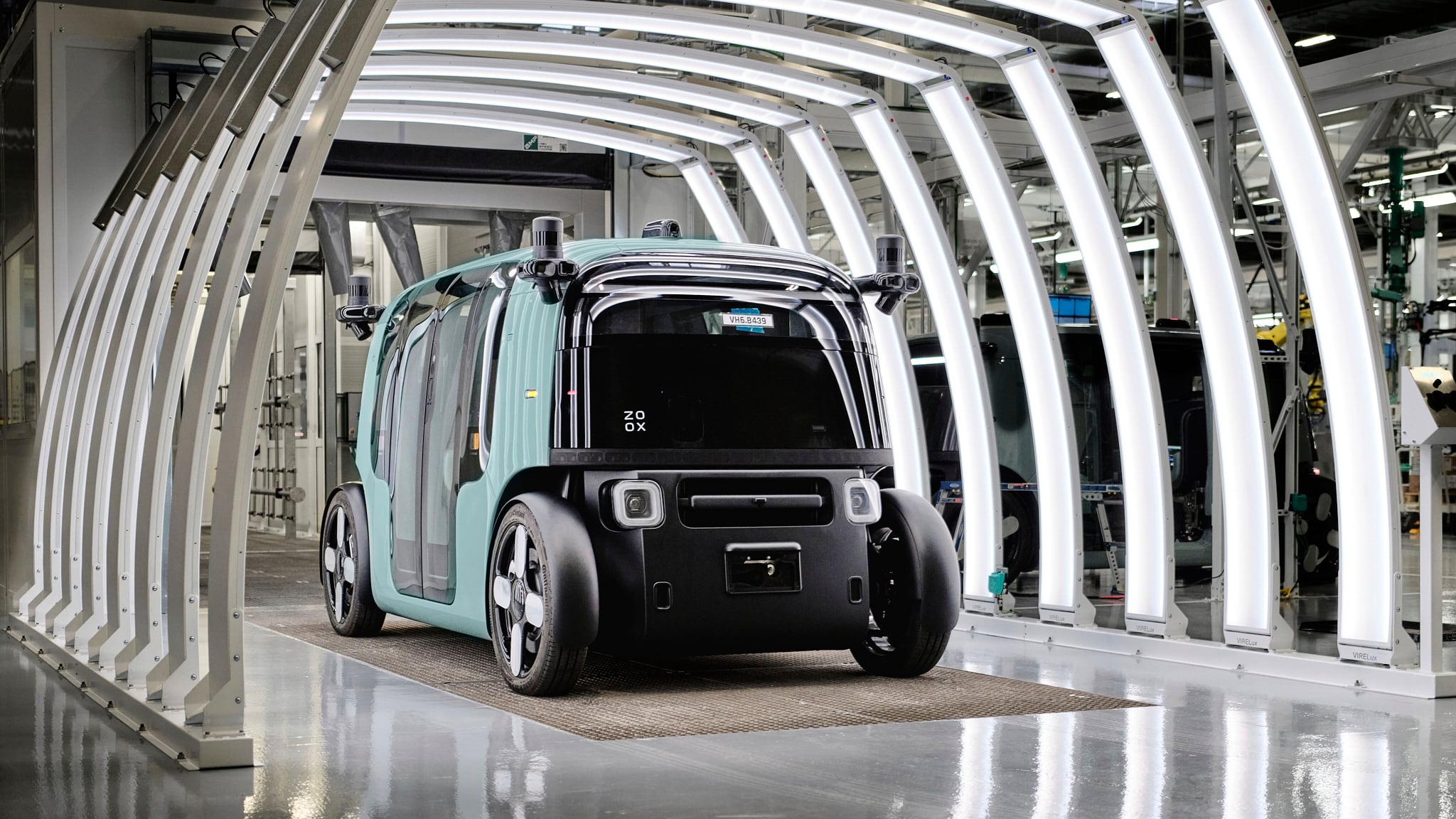
HAYWARD, Calif. (AP) — Amazon is gearing up to make as many as 10,000 robotaxis annually at a sprawling plant near Silicon Valley as it prepares to challenge self-driving cab leader Waymo. Tesla CEO Elon Musk is also vying to join the autonomous race.
The 220,000-square-foot (20,440-square-meters) robotaxi factory announced Wednesday heralds a new phase in Amazon’s push into a technological frontier that began taking shape in 2009, when Waymo was launched as a secret project within Google.
Amazon began eyeing the market five years ago when it shelled out $1.2 billion for self-driving startup Zoox, which will be the brand behind a robotaxi service that plans to begin transporting customers in Las Vegas late this year before expanding into San Francisco next year.
Zoox, conceived in 2014, will be trying to catch up to Waymo, which began operating robotaxis in Phoenix nearly five years ago then charging for rides in San Francisco in 2023 before expanding into Los Angeles and Austin, Texas. Waymo says it has already more than 10 million paid rides while other would-be rivals such as Amazon and Tesla are still fine-tuning their self-driving technology while tackling other challenges, such how to ramp up their fleet.
Amazon feels like it has addressed that issue with Zoox’s manufacturing plant that spans across the equivalent of three-and-a-half football fields located in Hayward, California — about 17 miles (27 kilometers) north of a factory where Tesla makes some of the electric vehicles that Musk believes will eventually be able to operate without a driver behind the wheel.
Since moving into the former bus manufacturing factory in 2023, Zoox has transformed it into a high-tech facility where its boxy, gondola-like vehicles are put together and tested along a 21-station assembly line. For now, Zoox is only making one robotaxi per day, but by next year hopes to be churning them out at the rate of three vehicles per hour.
By 2027, Zoox hopes to making 10,000 robotaxis annually in Hayward for a fleet that it hopes to take into other major markets, including Miami, Los Angeles and Atlanta. Although Zoox will be assembling its robotaxis in the U.S., about half of the parts are imported from outside the country, according to company officials. Waymo is also planning to expand into Atlanta and Miami and on Wednesday took the first step toward bringing its robotaxis in the most populous U.S. city with the disclosure of an application to begin testing its vehicles in New York.
“It’s an exciting time to be heading on this journey,” Zoox CEO Aicha Evans said during a Tuesday tour of the robotaxi factory that she co-hosted with Jesse Levinson, the company’s co-founder and chief technology officer.
Although Zoox will be lagging well behind, it believes it can lure passengers with vehicles that look more like carriages that cars with seating for up to four passengers. Waymo, in contrast, builds its self-driving technology on to cars made by other major automakers, making its robotaxi look similar to vehicles steered by humans. Zoox isn’t even bothering to put a steering wheel in its robotaxis.
As it continues to test its robotaxis in Las Vegas, Zoox recently struck a partnership to give rides to guests of Reorts World. It’s also still testing its robotaxis in San Francisco, where Waymo already has turned driverless cars into an everyday site in a city that has been renowned for cable cars since the 1870s. While testing in San Francisco last month, a minor collision between a Zoox robotaxi and a person riding an electric scooter last month prompted the company to issue a voluntary recall to update its self-driving technology. No injuries were reported in the incident.
Tesla is still angling to compete against Waymo too, although it remains unclear when Musk will fuflil his long-running promise to build the world’s largest robotaxi service. Musk still hasn’t given up on the goal, though his current ambitions are more modest than they were in 2019. when he predicted Tesla would be running a fleet of 1 million robotaxis by now. He is currently aiming for a limited rollout of Tesla robotaxis in Austin this Sunday, although that date could change because Musk is “being super paranoid about safety.”
Zoox, in contrast, is planning to operate 500 to 1,000 of its robotaxis in small to medium-sized markets and about 2,000 robotaxis in major cities where it eventually operates, according to Evans. The company thinks each robotaxi produced in its Hayward plan should be on the road for about five years, or about 500,000 miles