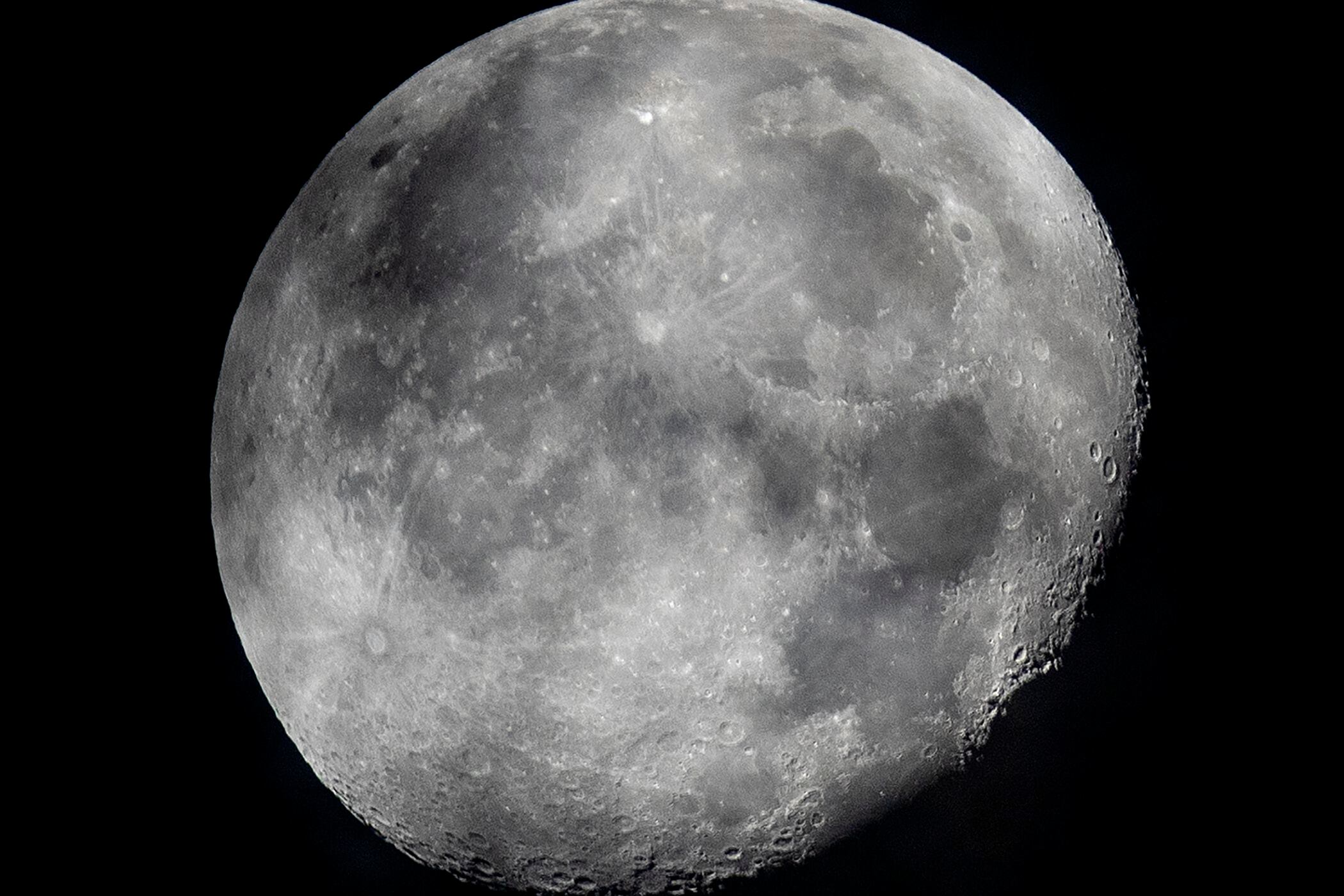
The waning moon is seen at the sky over Frankfurt, Germany, early Monday, Oct. 5, 2020. (AP Photo/Michael Probst)
By Marcia Dunn
The moon’s shadowed, frigid nooks and crannies may hold frozen water in more places and in larger quantities than previously suspected, good news for astronauts at future lunar bases who could tap into these resources for drinking and making rocket fuel, scientists reported Monday.
While previous observations have indicated millions of tons of ice in the permanently shadowed craters of the moon’s poles, a pair of studies in the journal Nature Astronomy take the availability of lunar surface water to a new level.
More than 15,400 square miles (40,000 square kilometers) of lunar terrain have the capability to trap water in the form of ice, according to a team led by the University of Colorado’s Paul Hayne. That’s 20% more area than previous estimates, he said.
These ice-rich areas are near the moon’s north and south poles. Temperatures are so low in these so-called cold traps — minus 261 degrees Fahrenheit (minus 163 degrees Celsius) — that they could hold onto the water for millions or even billions of years.
“We believe this will help expand the possible landing sites for future lunar missions seeking water, opening up real estate previously considered ‘off limits’ for being bone dry,” Hayne said in an email to The Associated Press.
Using data from NASA’s Lunar Reconnaissance Orbiter, the researchers identified cold traps as small as a few yards (meters) across and as wide as 18 miles (30 kilometers) and more and used computer models to get all the way down to micrometers in size.
“Since the little ones are too small to see from orbit, despite being vastly more numerous, we can’t yet identify ice inside them,” Hayne said. “Once we’re on the surface, we will do that experiment.”
For a second study, scientists used NASA's airborne infrared observatory Sofia to conclusively identify water molecules on the sunlit portions of the moon, just outside the polar regions. Most of these molecules are likely stored in the voids between moon dust and other particles or locked inside glassy volcanic material.
Scientists believe all this water on the moon came from comets, asteroids, interplanetary dust, solar wind, or even lunar volcanic eruptions. They'll have a better idea of the sources “if we can get down on the surface and analyze samples of the ice,” Hayne said.
The lead researcher, Casey Honniball, a postdoctoral fellow at NASA’s Goddard Space Flight Center, said at a news conference that she wanted to make it clear the Sofia study had not found puddles on the moon. Rather, the identified hydrogen and oxygen molecules are so far apart, they are neither in liquid or solid form, she noted.
NASA is under White House direction to put astronauts back on the moon by 2024. The space agency wants its new Artemis moon-landing program to be sustainable, unlike the Apollo program a half-century ago.
___
The Associated Press Health and Science Department receives support from the Howard Hughes Medical Institute’s Department of Science Education. The AP is solely responsible for all content.
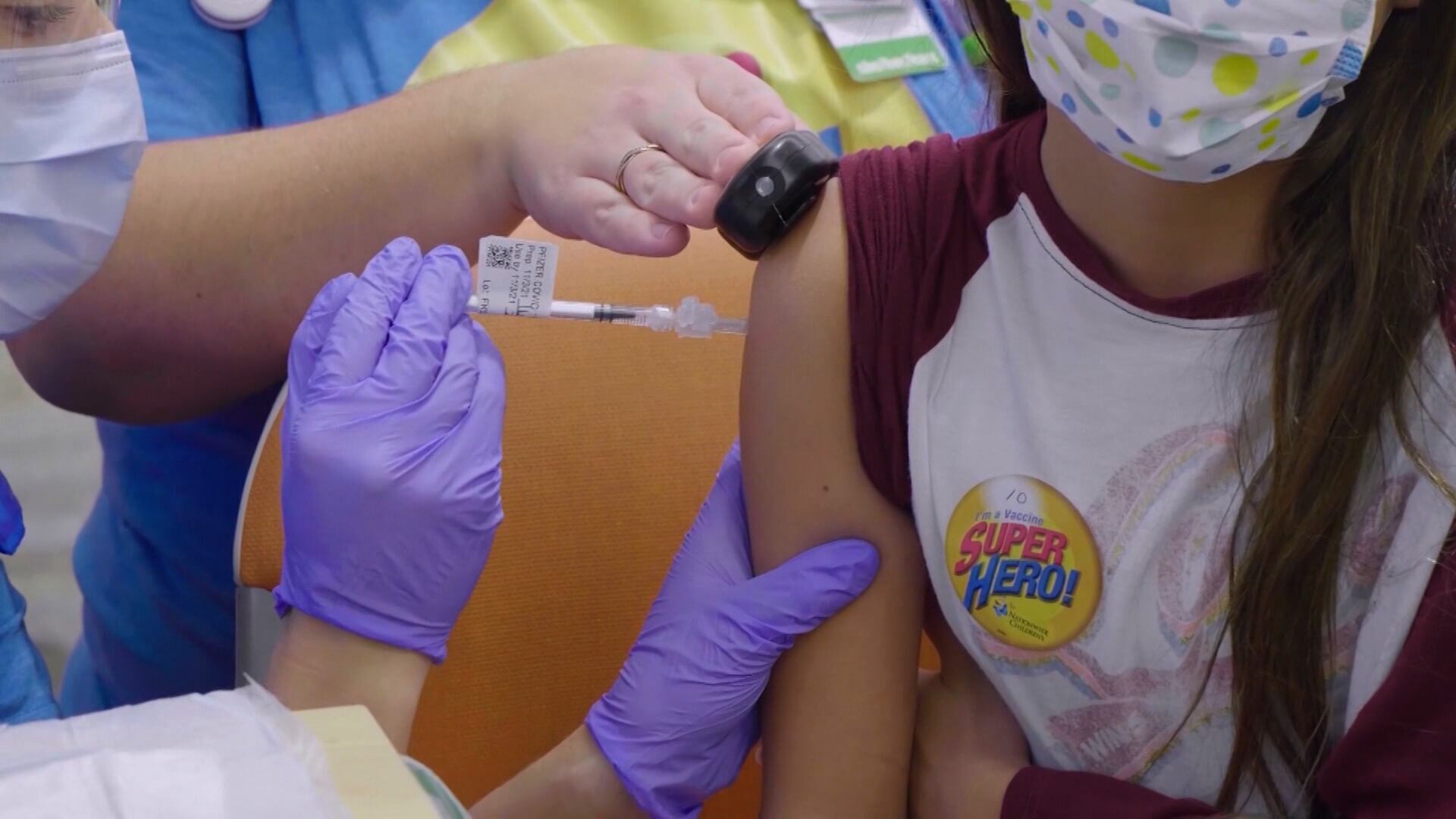
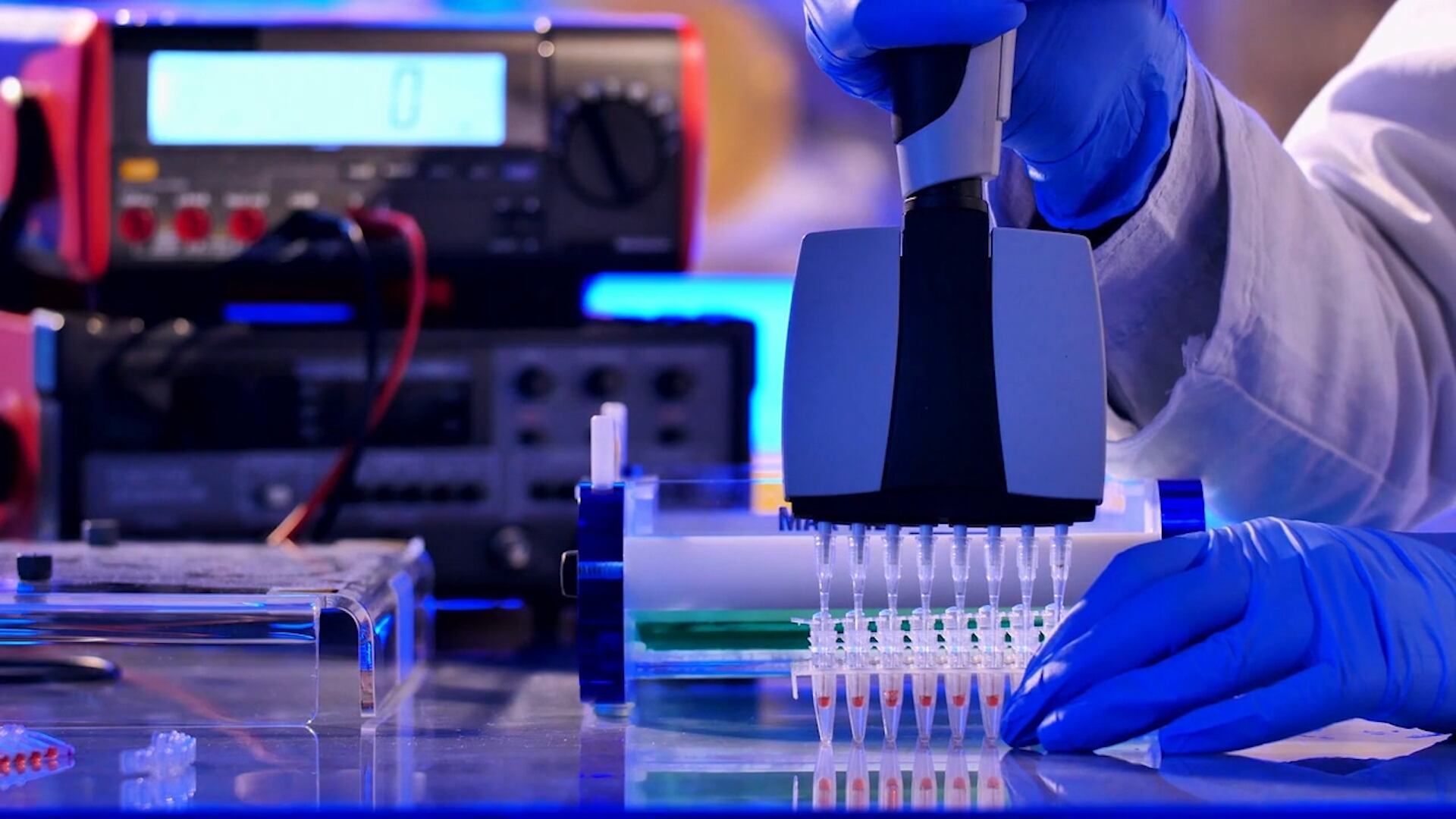
With a rising number of COVID-19 cases due to the omicron variant, the FDA is making big moves. First, Pfizer's COVID-19 booster has been authorized for those ages 12 to 15. The agency also reduced the amount of time to wait between receiving a second vaccine dose and booster from six months to five. Finally, a third primary series dose of Pfizer's shot is approved for immunocompromised children five to 11 years old. Professor Peter Pitts joins Cheddar News to discuss.
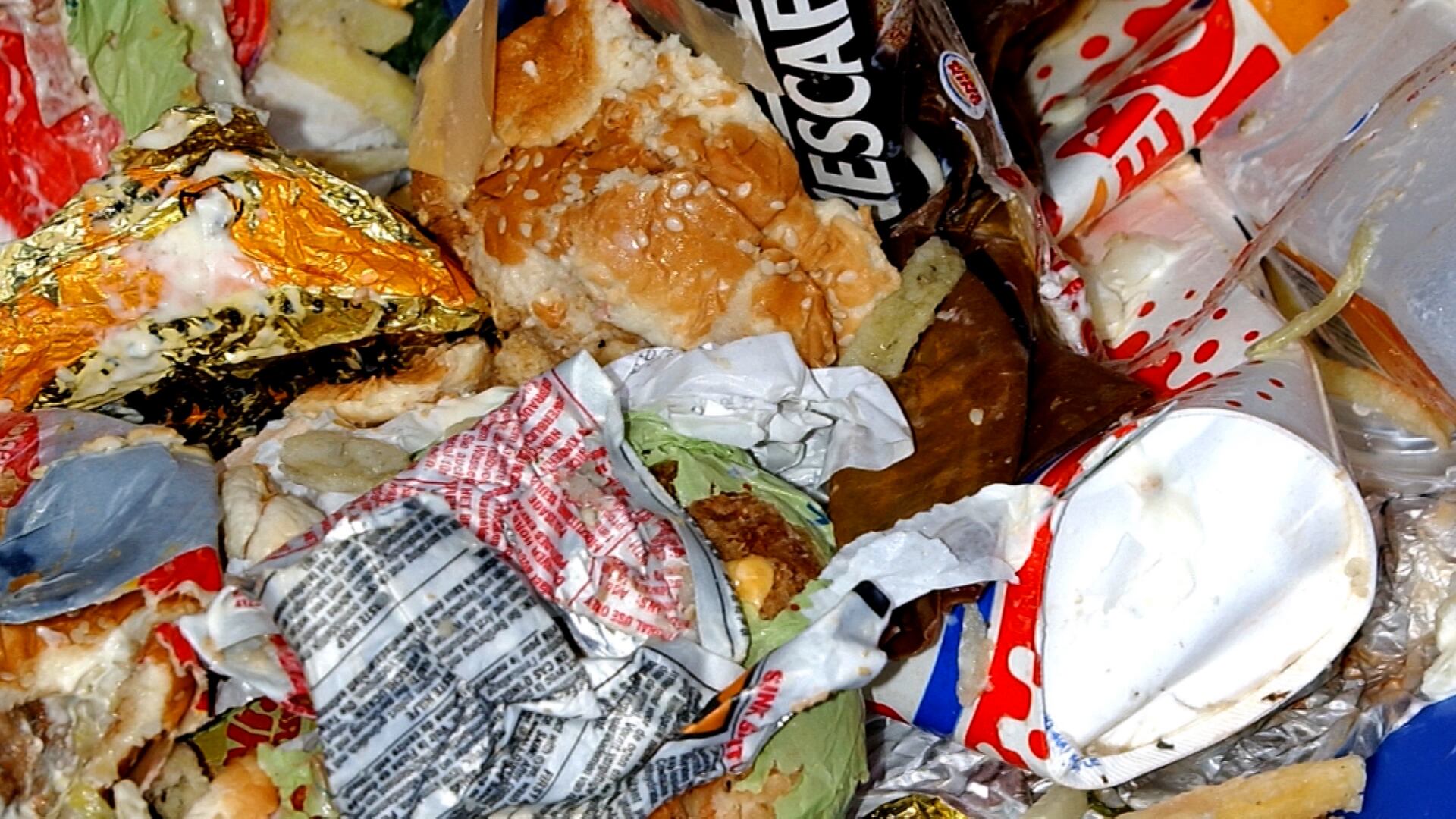
California's new composting law will affect what residents do in their kitchens. As of this week, Californians will have to recycle excess food in an effort to reduce emissions caused by food waste. Cities and counties will turn recycled food into compost or use it as a renewable energy source. California's new law is the largest mandatory residential food waste recycling program in the country. Rachel Wagoner, Director of the California Department of Resources, Recycling and Recovery called the law 'the biggest change to trash' since recycling started in the 1980s. She joined Cheddar Climate to discuss.
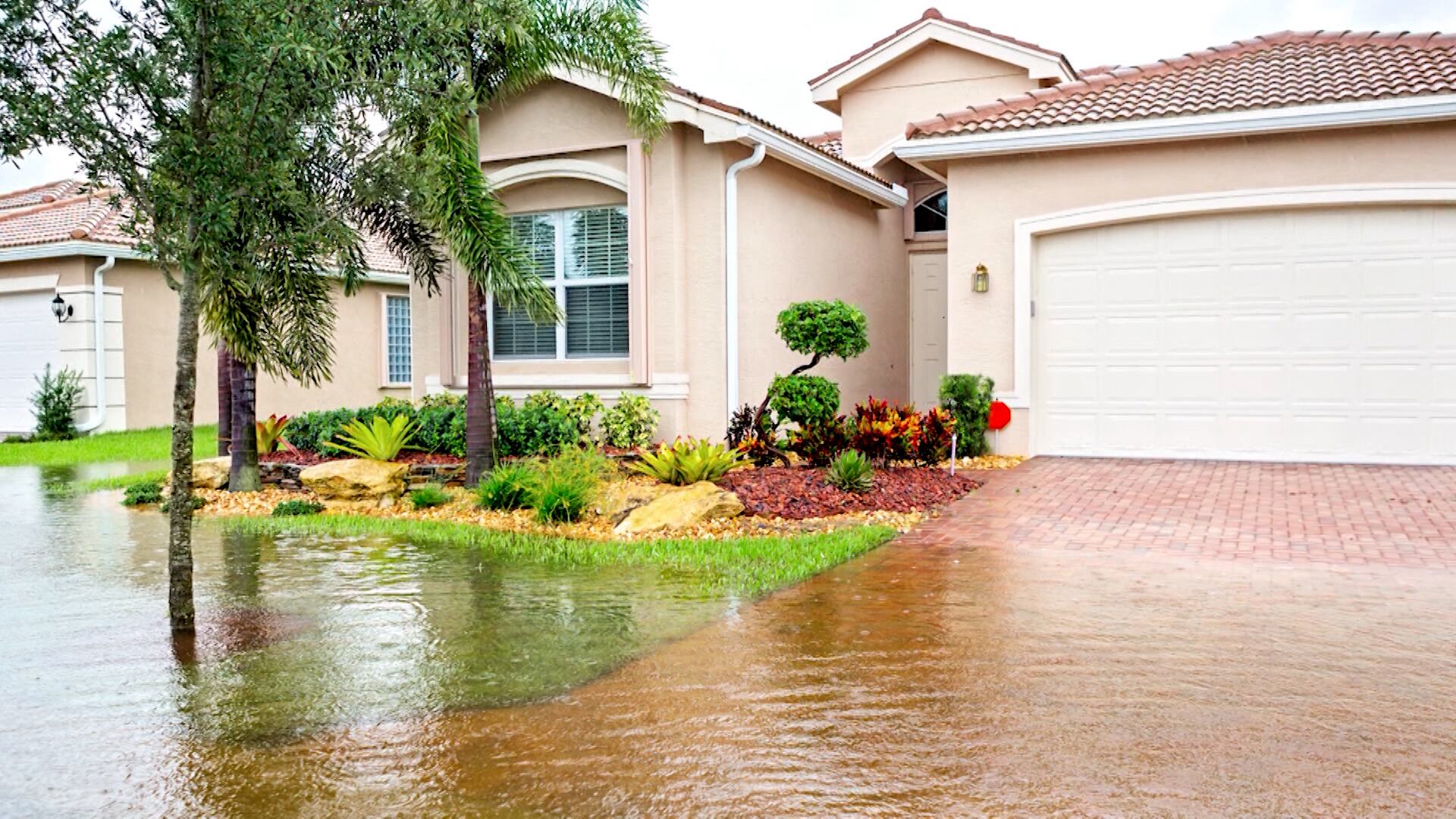
Deborah Brosnan, President of Deborah Brosnan & Associates, joins Cheddar Climate, where she explains why global warming brought about 'a year of reckoning' in 2021 and why previously unprecedented weather events could become the norm going forward.
On this episode of Cheddar Reveals, Dr. Anita Gupta, Adjunct assistant professor of anesthesiology and critical care medicine at the Johns Hopkins University School of Medicine, shares her forecast for the healthcare industry in 2022; Waseem Asghar, Ph.D., Associate Professor, Department of Computer & Electrical Engineering and Computer Science, Florida Atlantic University, breaks down the latest progress, trends, and innovations in wearable health tech; Cheddar gets a look at Curiosity Stream's 'Hacking our Biome.'
Dr. Anita Gupta, Adjunct assistant professor of anesthesiology and critical care medicine at the Johns Hopkins University School of Medicine, joins Cheddar Reveals to share her forecast for the healthcare industry in 2022.
Waseem Asghar, Ph.D., Associate Professor, Department of Computer & Electrical Engineering and Computer Science, Florida Atlantic University, joins Cheddar Reveals to break down the latest progress, trends, and innovations in wearable health tech.
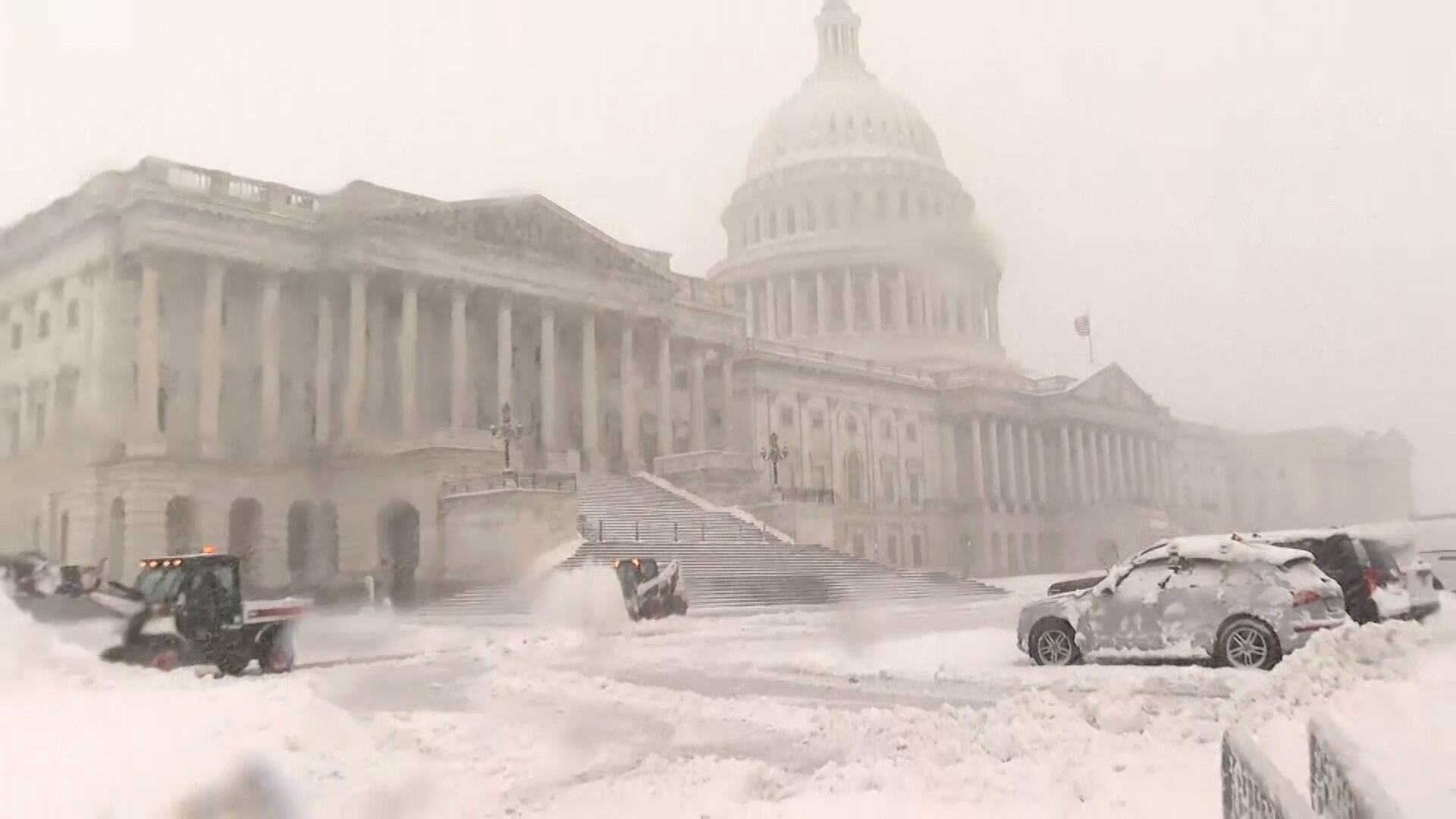
Washington DC and the surrounding areas saw a record breaking snow storm Monday as a strong storm system works its way across the eastern U.S. The extreme weather event caused extensive damage in the greater Washington area, leaving thousands in the region without power. Jonathan Porter, Chief Meteorologist, AccuWeather, joined Wake Up with Cheddar to discuss the fierce storm.
Sweta Chakraborty, U.S. President of We Don't Have Time and climate change expert, joins Cheddar News to discuss how mining the proper resources for the clean energy sector is crucial.
Over the past year alone, we've seen an increasing push-back on fossil fuels, legislation to reduce plastic pollution, greater protection over our worlds' forests, and a growing number of companies working to reduce total carbon footprint. To discuss the sustainability trends that defined 2021 and the changes individuals can make in 2022, J.D. Durkin is joined by Ashlee Piper, a sustainability expert and author of 'Give a Sh*t: Do Good. Live Better. Save the Planet,' joins Cheddar News.