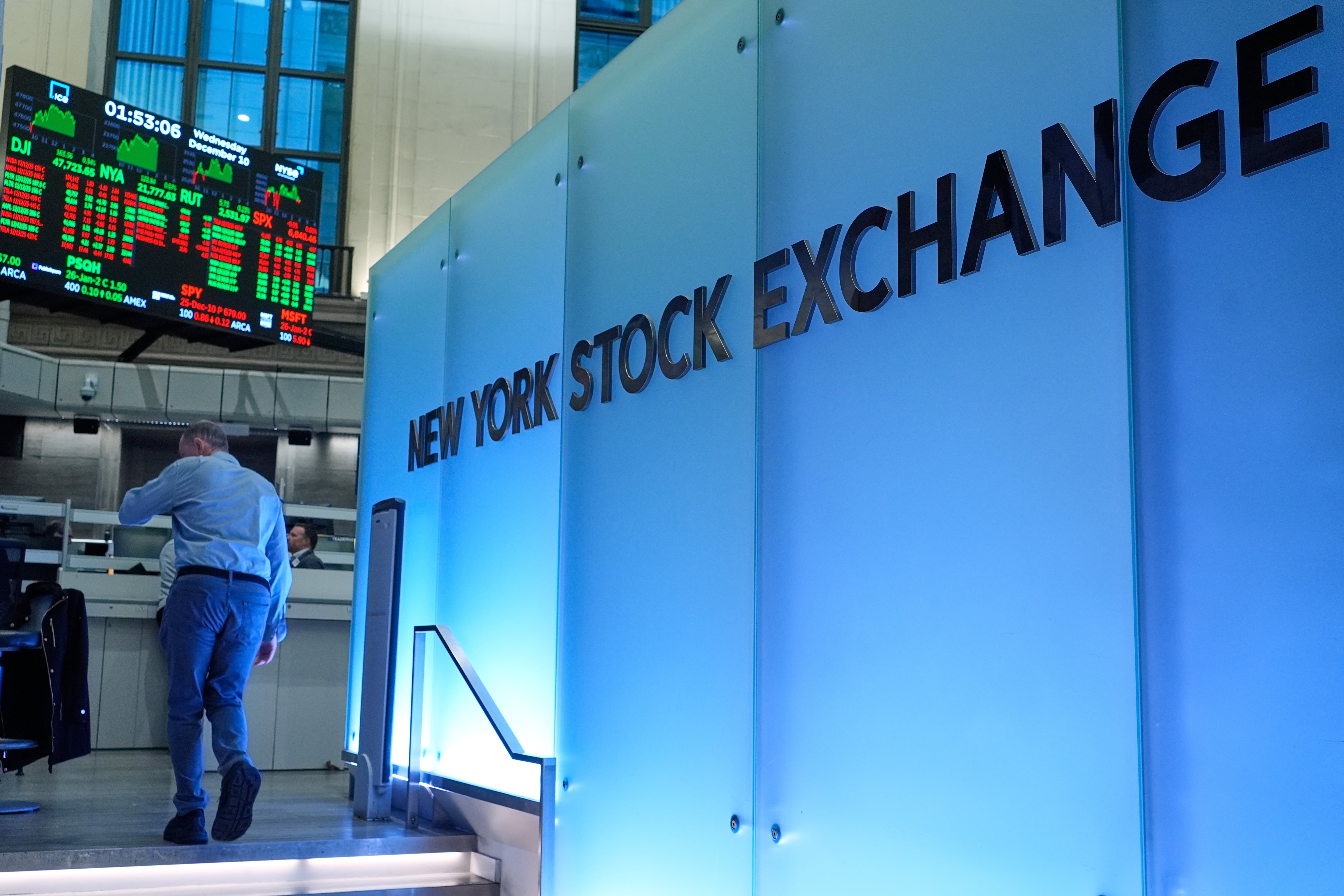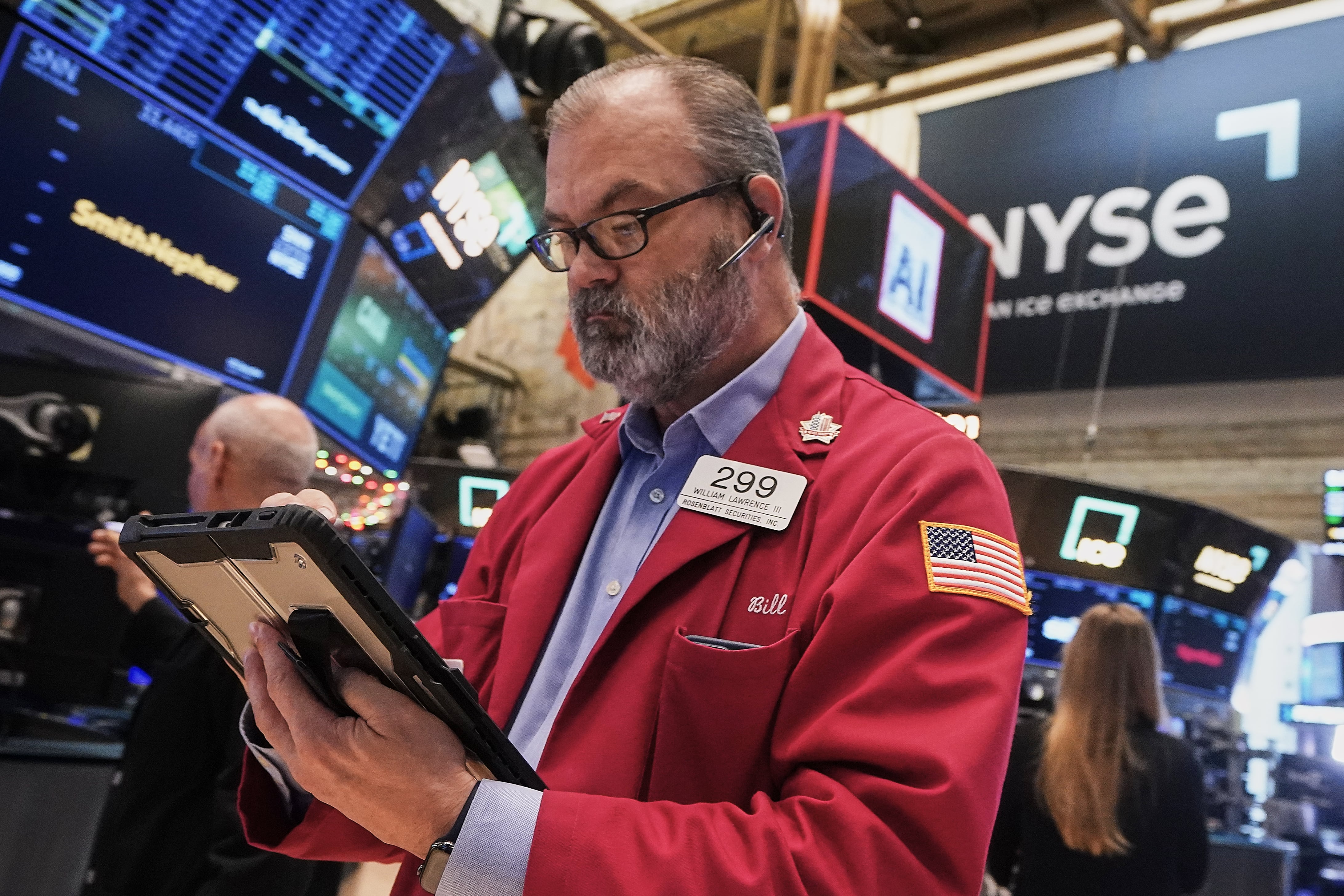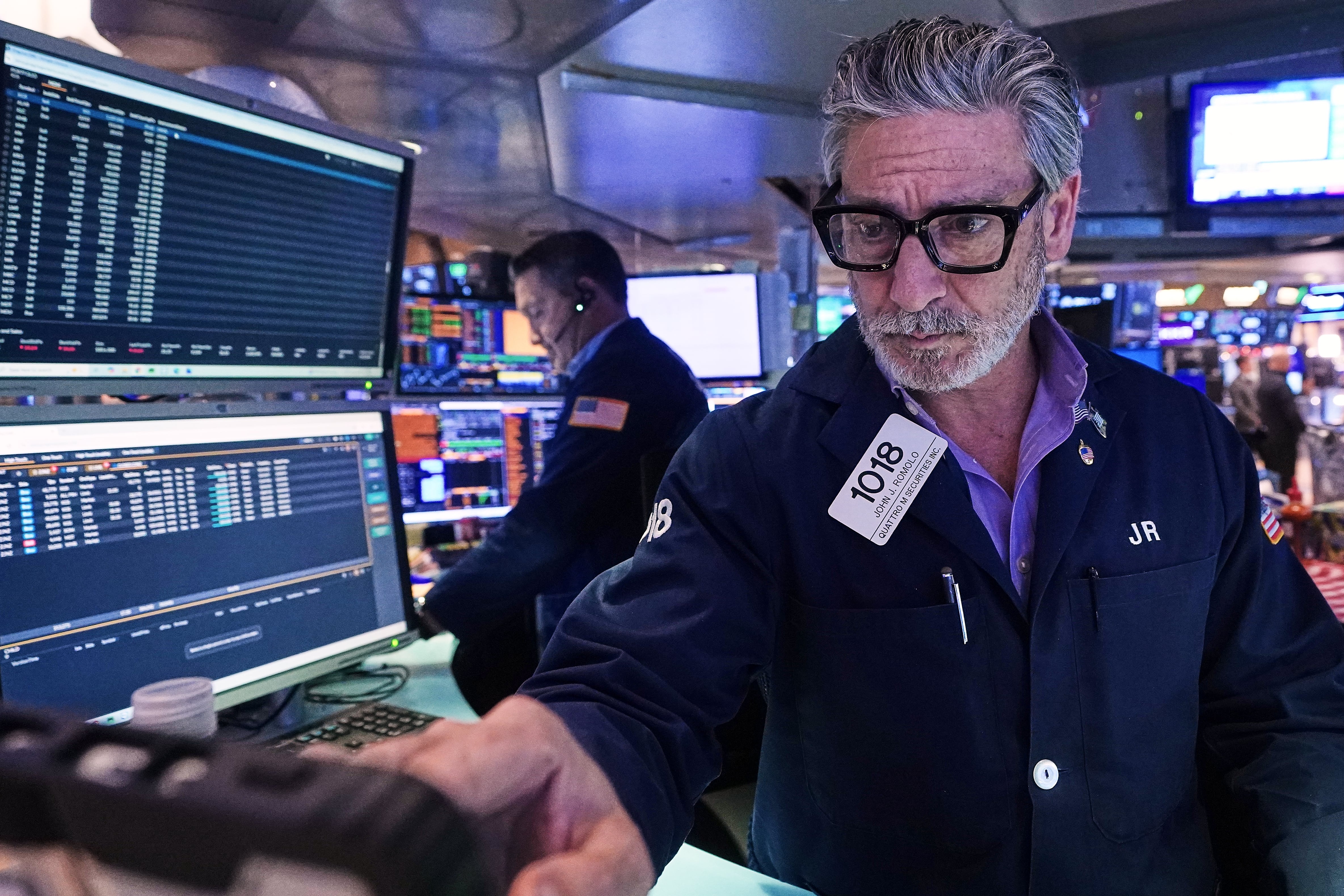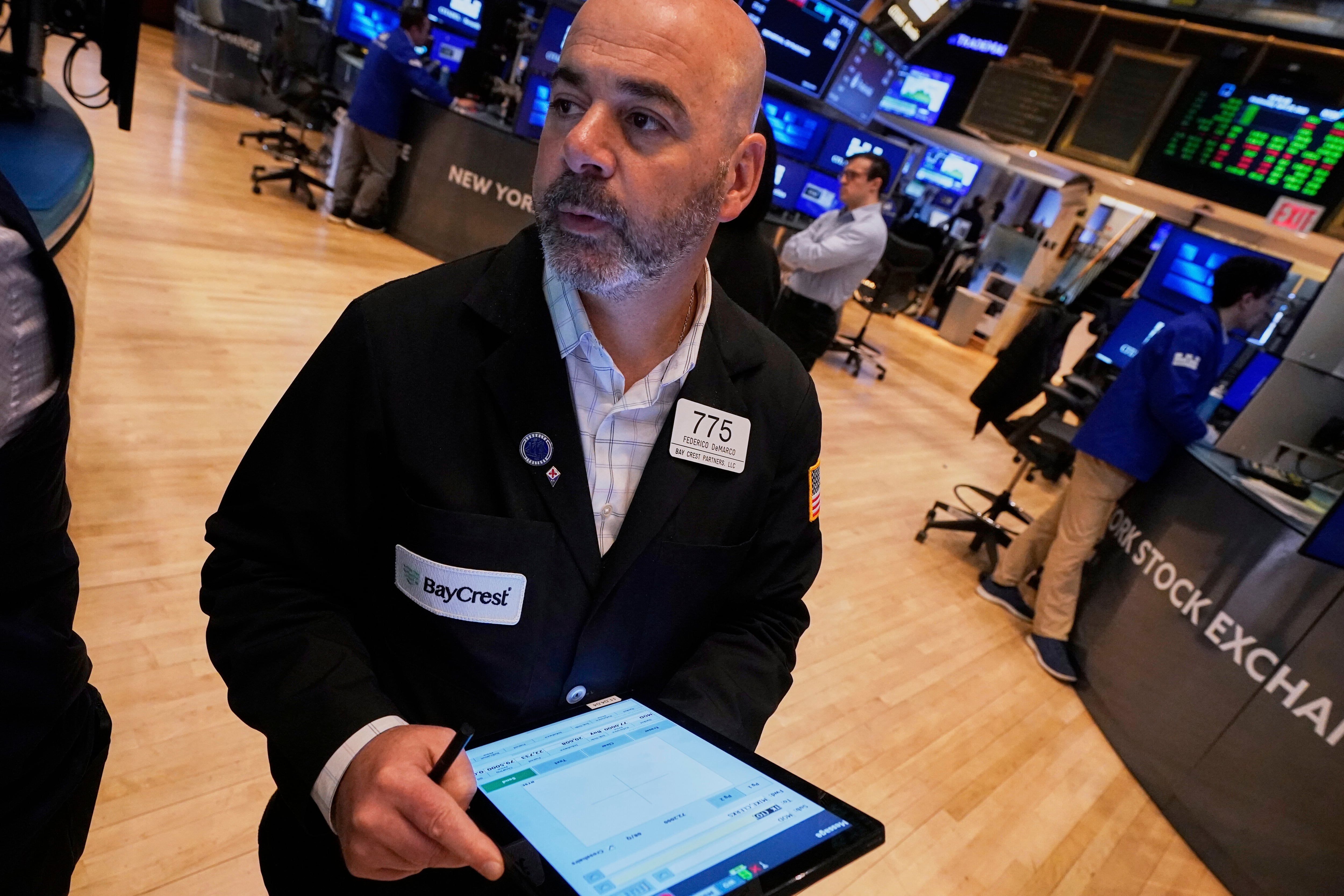
NEW YORK (AP) — U.S. stocks rose as a worldwide rally came back around to Wall Street. The S&P 500 climbed 1.7% Wednesday after President Donald Trump appeared to back off his criticism of the Federal Reserve and his tough talk in his trade war. The Dow Jones Industrial Average added 1.1%, and the Nasdaq composite rose 2.5%. Treasury yields also eased in the U.S. bond market after Trump said he has no intention to fire the Fed’s chair and that his tariffs could come down on China imports. Stocks also rallied across much of Europe and Asia.
THIS IS A BREAKING NEWS UPDATE. AP’s earlier story follows below.
NEW YORK (AP) — U.S. stocks rose Wednesday as a worldwide rally came back around to Wall Street after President Donald Trump appeared to back off his criticism of the Federal Reserve and his tough talk in his trade war.
The S&P 500 climbed 1.4% and added to its big gain from Tuesday that more than made up for a steep loss on Monday. The Dow Jones Industrial Average was up 333 points, or 0.9%, with 20 minutes remaining in trading, and the Nasdaq composite rose 2.2%.
Wall Street’s gains followed strong moves higher for stocks across much of Europe and Asia. They also continued a dizzying, up-and-down run for financial markets as investors struggle with how to react to so much uncertainty about what Trump will do with his economic policies.
The market’s latest move was up in part because Trump said late Tuesday that he has “no intention” to fire the head of the Federal Reserve. Trump had been angry with Jerome Powell, whom Trump had called “a major loser,” because of the Fed’s hesitance to cut interest rates.
Trump’s tough talk had frightened investors because the Fed is supposed to act independently, without pressure from politicians, so that it can make decisions that may be painful in the short term but are best for the long term.
While a cut to interest rates by the Fed could give the economy a boost, it could also put upward pressure on inflation. Economists say Trump’s tariffs are likely both to slow the economy and to raise inflation, at least briefly.
Trump may have recognized the market’s fear about a move against Powell. He may also be looking to keep someone around whom Trump could blame later if the economy does fall into a recession, according to Thierry Wizman, a strategist at Macquarie.
“Indeed, if the Fed cuts its policy interest rates aggressively, Trump would have little excuse for a recession apart from the pugnacity of his tariff policies,” Wizman said.
Markets also rose after Trump said late Tuesday that U.S. tariffs on imports coming from China could come down “substantially” from the current 145%. “It won’t be that high, not going to be that high,” Trump said.
The hope along Wall Street has been that Trump would lower his tariffs after negotiating trade deals with other countries, and Trump said Tuesday he would be “very nice” to the world’s second-largest economy and not play hardball with Chinese President Xi Jinping.
“There is an opportunity for a big deal here,” U.S. Treasury Secretary Scott Bessent said Wednesday.
If Trumps brings his tariffs down enough, investors believe a recession could be averted.
U.S. businesses say they’re already feeling the effects of the trade war. A preliminary reading of U.S. business activity fell to a 16-month low, as the threat of tariffs helped push up prices charged for goods and services, according to S&P Global’s latest survey released Wednesday.
All the uncertainty means one of the few predictions many along Wall Street are willing to make is that sharp swings for financial markets will continue for a while. The market will “more likely than not continue to be dictated by Trump’s latest whims regarding tariffs and trade,” said Tim Waterer, chief market analyst at KCM Trade.
The S&P 500 remains more than 12% below its record set earlier this year after briefly dropping roughly 20% below the mark. Its swings have been coming not just day to day but also hour to hour as Trump and his administration’s officials continue to surprise markets.
On Wednesday alone, the S&P 500 charged to a 3.4% gain in the morning, only to more than halve that rise as the day progressed.
Trump’s latest comments had a relaxing effect on the bond market, where Treasury yields eased. It’s a turnaround from earlier this month, when spiking Treasury yields raised fears that Trump’s actions were scaring investors away from U.S. investments and weakening the U.S. bond market’s reputation as one of the safest places to keep cash.
The yield on the 10-year Treasury fell to 4.38% from 4.41% late Tuesday. It dropped as low as 4.26% earlier in the morning.
On Wall Street, Big Tech helped lead stock indexes higher.
Nvidia rose 3.5% to claw back more of the sharp losses it took last week, when it said U.S. restrictions on exports of its H20 chips to China could hurt its first-quarter results by $5.5 billion. The chip company’s stock was the single strongest single force lifting the S&P 500.
Other stocks in the artificial-intelligence technology ecosystem also drove higher. Vertiv Holdings, which traces its roots to the industry’s first manufacturer of computer room air conditioning, jumped 8% after reporting stronger profit and revenue for the latest quarter than analysts expected. It said it’s continuing to see accelerated demand from AI data centers.
Super Micro Computer, a company that makes servers used in AI, leaped 7%. Palantir Technologies, which offers an AI platform for customers, climbed 6.5%.
Tesla revved 5.5% higher after CEO Elon Musk said he’ll spend less time in Washington and more time running his electric vehicle company after Tesla on late Tuesday reported a big drop in profits. It’s been struggling because of backlash against Musk’s efforts to lead cost-cutting efforts by the U.S. government.
In stock markets abroad, indexes jumped 2.1% in France, 2.4% in Hong Kong and 1.9% in Japan. Stocks in Shanghai were an exception, where they dipped 0.1%.
___
AP Business Writers Yuri Kageyama and Matt Ott contributed.