By Marion Renault and Marshall Ritzel

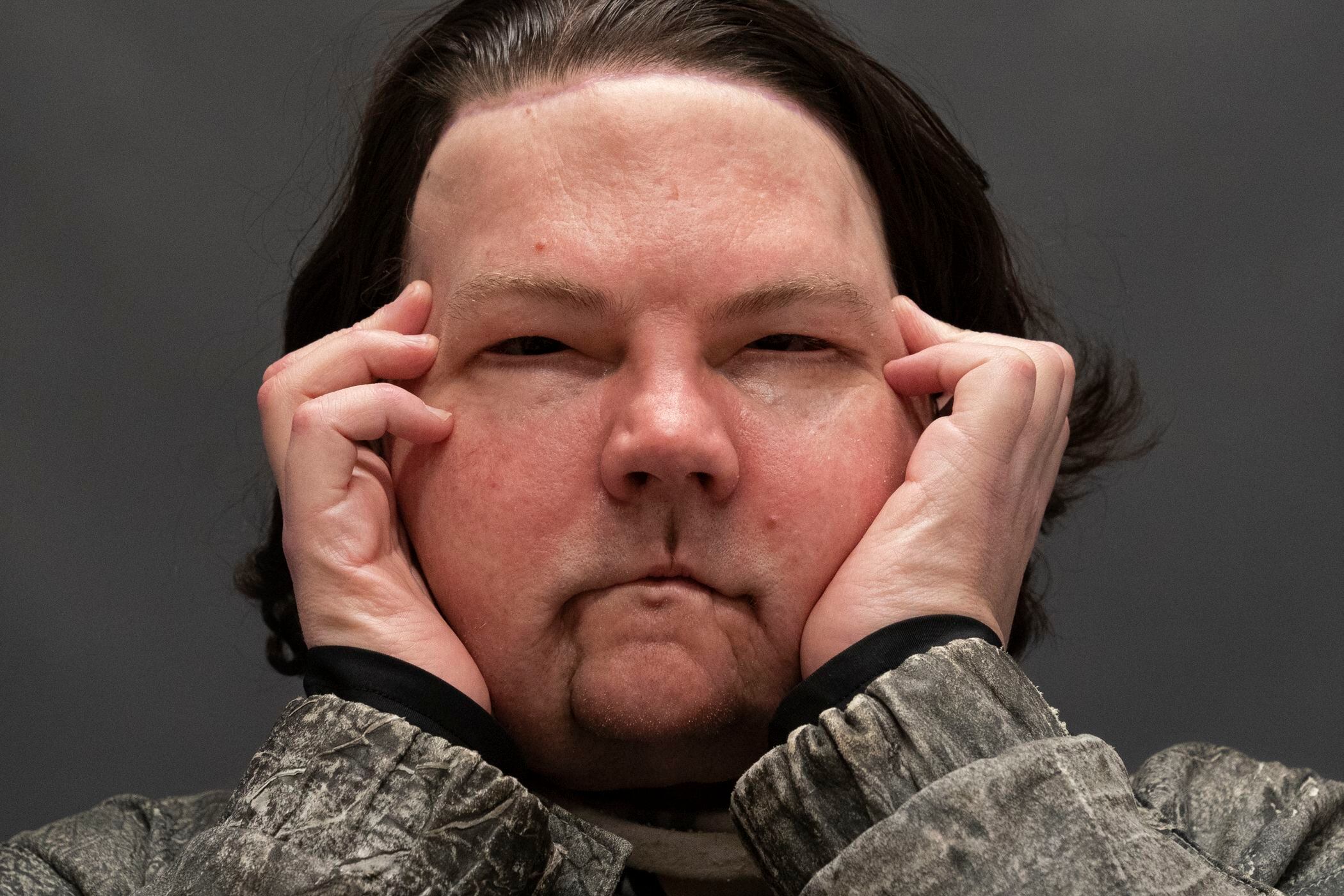
Almost six months after a rare face and hands transplant, Joe DiMeo is relearning how to smile, blink, pinch and squeeze.

The 22-year-old New Jersey resident had the operation last August, two years after being badly burned in a car crash.

“I knew it would be baby steps all the way,” DiMeo told The Associated Press. “You’ve got to have a lot of motivation, a lot of patience. And you’ve got to stay strong through everything.”

Experts say it appears the surgery at NYU Langone Health was a success, but warn it’ll take some time to say for sure.

Worldwide, surgeons have completed at least 18 face transplants and 35 hand transplants, according to the United Network for Organ Sharing, or UNOS, which oversees the U.S. transplant system.

But simultaneous face and double hand transplants are extremely rare and have only been tried twice before. The first attempt was in 2009 on a patient in Paris who died about a month later from complications. Two years later, Boston doctors tried it again on a woman who was mauled by a chimpanzee, but ultimately had to remove the transplanted hands days later.

“The fact they could pull it off is phenomenal,” said Dr. Bohdan Pomahac, a surgeon at Boston’s Brigham and Women’s Hospital who led the second such attempt. “I know firsthand it’s incredibly complicated. It’s a tremendous success.”

DiMeo will be on lifelong medications to avoid rejecting the transplants, as well as continued rehabilitation to gain sensation and function in his new face and hands.

In 2018, DiMeo fell asleep at the wheel, he said, after working a night shift as a product tester for a drug company. The car hit a curb and utility pole, flipped over, and burst into flames. Another driver who saw the accident pulled over to rescue DiMeo.

Afterward, he spent months in a medically induced coma and underwent 20 reconstructive surgeries and multiple skin grafts to treat his extensive third-degree burns.

Once it became clear conventional surgeries could not help him regain full vision or use of his hands, DiMeo’s medical team began preparing for the risky transplant in early 2019.

“Within the world of transplantation, they’re probably the most unusual,” said Dr. David Klassen, UNOS chief medical officer.

Almost immediately, the NYU team encountered challenges including finding a donor.

Doctors estimated he only had a 6% chance of finding a match compatible with his immune system. They also wanted to find someone with the same gender, skin tone and hand dominance.

Then during the search for a donor, the pandemic hit and organ donations plummeted. During New York City’s surge, members of the transplant unit were reassigned to work in COVID-19 wards.

In early August, the team finally identified a donor in Delaware and completed the 23-hour procedure a few days later.

They amputated both of DiMeo’s hands, replacing them mid-forearm and connecting nerves, blood vessels and 21 tendons with hair-thin sutures. They also transplanted a full face, including the forehead, eyebrows, nose, eyelids, lips, both ears and underlying facial bones.

“The possibility of us being successful based on the track record looked slim,” said Dr. Eduardo Rodriguez, who led the medical team of more than 140 people. “It’s not that someone has done this many times before and we have a kind of a schedule, a recipe to follow.”

So far, DiMeo has not shown any signs of rejecting his new face or hands, said Rodriguez, who revealed details of the transplant Wednesday.

Since leaving the hospital in November, DiMeo has been in intensive rehabilitation, devoting hours daily to physical, occupational and speech therapy.

“Rehab was pretty intense,” DiMeo said, and involves a lot of “retraining yourself to do stuff on your own again.”

During a recent session, he practiced raising his eyebrows, opening and closing his eyes, puckering his mouth, giving a thumbs up and whistling. DiMeo can feel his new forehead and hands get cold, and often reaches up to push his long hair off of his face.

DiMeo, who lives with his parents, can now dress and feed himself. He shoots pool and plays with his dog Buster. Once an avid gym-goer, DiMeo is also working out again — benching 50 pounds and practicing his golf swing.

“You got a new chance at life. You really can’t give up," he said.

As with any transplant, the danger of rejection is highest early on, but lasts indefinitely. The medications he takes also leave him vulnerable, for the rest of his life, to infections.

“You’re never free from that risk,” Klassen said. “Transplantation for any patient is a process that plays out over a long period of time.”

Still, Rodriguez said he’s amazed to see that DiMeo has been able to master skills like zipping up his jacket and putting on his shoes.

“It’s very gratifying to all of us,” Rodriguez said. “There’s a tremendous sense of pride.”

The Associated Press Health and Science Department receives support from the Howard Hughes Medical Institute’s Department of Science Education. The AP is solely responsible for all content.
Share:
More In Science
How to Talk to Your Kids About School Shootings
After the latest school shooting in Uvalde, Texas, it wouldn't be a surprise if the traumatic event takes a toll on your mental health — or that of your children. Amy Morin, the editor-in-chief of Verywell Mind and licensed psychotherapist, joined Cheddar News to share coping skills and offer advice about how to talk to your children about these increasingly common tragic events. “I think its important for parents to know what the school’s plan is, what the teacher's plan is, and then we can have our own plans with kids too," she noted. "It's so important for us to talk to kids about how they're feeling — guaranteed they've heard something about it, so ask them what they know already, use age-appropriate language, and rather than just dismissing their fears by saying don't worry about it or I'm sure you'll be safe, talk to them about their feelings."
Poll Finds Racial Splits on Worries Over COVID-19 Pandemic
An recently conducted AP-NORC poll found that majorities of the Black and Hispanic populations in the U.S. still find themselves either somewhat worried or extremely worried over the pandemic, while more than half of white Americans responded with either being not too worried or not worried at all. Dr. Chris Pernell, the chief strategic integration and health equity officer at University Hospital, joined Cheddar News to talk about how perceptions of COVID-19 differ between groups of Americans. "We’re still seeing people get infected, and because of the toll of the disproportionate impact, we have concerns among the Black and brown community about whether or not they have an increased risk of exposure because of where they work, because of the use of public transportation, because they live in homes that they may not be able to safely quarantine and or isolate in, and because they have at baseline chronic health conditions that may make coronavirus more severe in those persons," she said.
Calif. Probes ExxonMobil Over Accusations of Lying About Plastic Recycling
Judith Enck, a former regional administrator for the EPA and the president of Beyond Plastics, joined Cheddar News to talk about the role of plastics in the climate crisis and California's investigation of ExxonMobil and other oil companies for misleading the public on the ability to recycle plastics. "The reason why petrochemical companies like Exxon have gotten away with selling more and more plastic is that they've lied to the public and told us don't worry about all those negative upstream impacts and downstream impacts of plastics. Just be sure to recycle it. Well, guess what? Plastics largely are not recycled," Enck said.
Need2Know: Ukraine Aid Package, GDP Shrinks & Beijing Lockdown
Catching you up on what you need to know on April 29, 2022, with President Biden asking Congress for a $33 billion aid package for Ukraine, a shrinking GDP potentially leading to a recession, Beijing banning weddings and funerals while closings schools amid COVID, and more.
CVS Health Backs Virtual Care and Digital Medicine Provider Biofourmis in $300 Million Funding Round
Virtual care and digital medicine provider Biofourmis recently raised $300 million in a Series D round led by General Atlantic and with participation from CVS Health. Biofourmis offers at-home care and digital therapies backed by artificial intelligence, which can remotely monitor patients while they are at home. The company says it hopes its technology can improve patient outcomes while reducing the cost and burden of care. Kuldeep Signh Rajput, Founder and CEO of Biofourmis, joins Cheddar News' Closing Bell to discuss.
Moderna Looks for FDA Authorization for COVID Vaccine for Youngest Kids
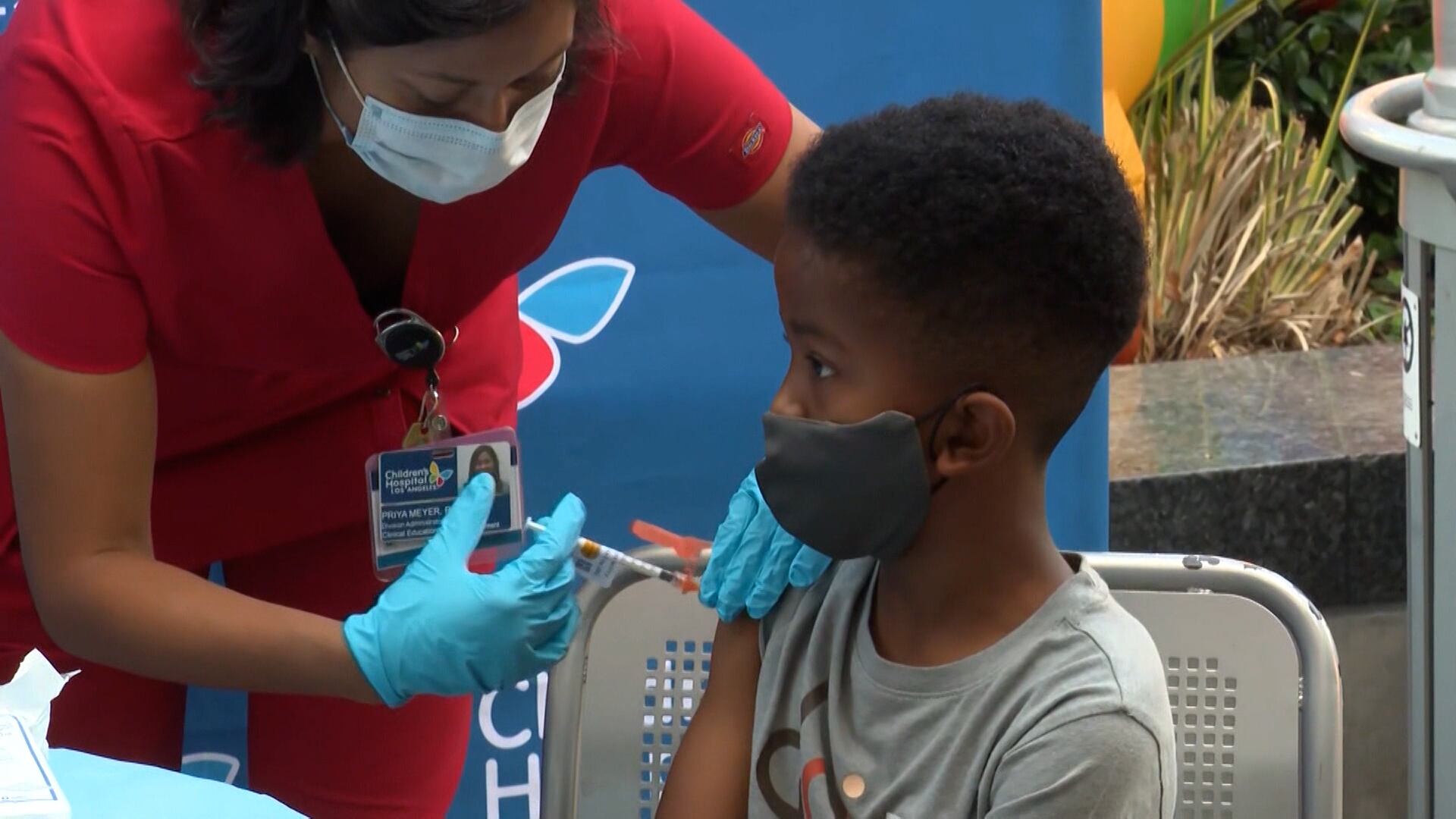
Moderna is asking the FDA to consider emergency use authorization for its COVID vaccine to be used with children under 6 years old. Dr. Christina Johns, a senior medical advisor at PM Pediatrics, joined Cheddar News to talk about the pharmaceutical company's research into the safety and efficacy of the vaccine for the very youngest of children. "This is very exciting news because children met that goal in their neutralizing antibody response in this age group — means that we really can extrapolate a lot from what we know about data in adults," she said. "I will say that there's a caveat that we have not seen yet the full dataset released, so I'm waiting for that and my fingers are crossed for next week."
Mental Health Platform Real Announces Funding Round of $37 Million, Newly Appointed Adviser Megan Rapinoe
Mental health platform Real recently raised $37 million in a Series B round led by Owl Ventures. Through its mobile app, Real says it provides mental health care at a lower cost than traditional therapy and aims to make mental wellness a part of everyone's daily routine. The company also announced that U.S. soccer star Megan Rapinoe will serve as an adviser to the company. Ariela Safira, Founder & CEO of Real, joins Cheddar News' Closing Bell to discuss.
Need2Know: Musk Mocks Twitter Employee, George Floyd Probe & Drought
Catching you up on what you need to know on April 28, 2022, with Elon Musk mocking Twitter's top legal exec Vijaya Gadde on the platform itself, a probe in George Floyd's death finding discrimination within the Minneapolis police force, the latest California drought leading to new water restrictions, and more.
Load More