By Marion Renault and Marshall Ritzel

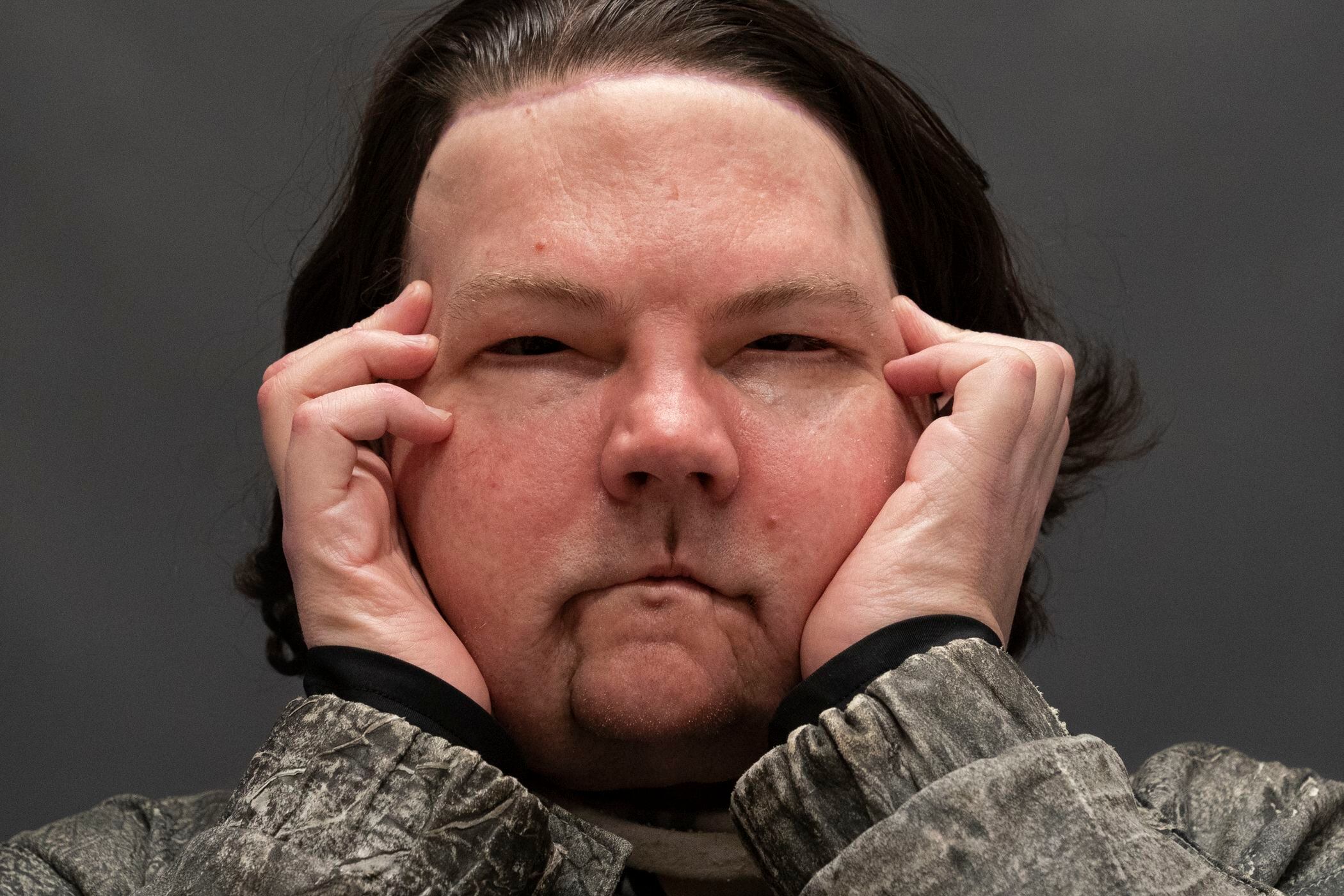
Almost six months after a rare face and hands transplant, Joe DiMeo is relearning how to smile, blink, pinch and squeeze.

The 22-year-old New Jersey resident had the operation last August, two years after being badly burned in a car crash.

“I knew it would be baby steps all the way,” DiMeo told The Associated Press. “You’ve got to have a lot of motivation, a lot of patience. And you’ve got to stay strong through everything.”

Experts say it appears the surgery at NYU Langone Health was a success, but warn it’ll take some time to say for sure.

Worldwide, surgeons have completed at least 18 face transplants and 35 hand transplants, according to the United Network for Organ Sharing, or UNOS, which oversees the U.S. transplant system.

But simultaneous face and double hand transplants are extremely rare and have only been tried twice before. The first attempt was in 2009 on a patient in Paris who died about a month later from complications. Two years later, Boston doctors tried it again on a woman who was mauled by a chimpanzee, but ultimately had to remove the transplanted hands days later.

“The fact they could pull it off is phenomenal,” said Dr. Bohdan Pomahac, a surgeon at Boston’s Brigham and Women’s Hospital who led the second such attempt. “I know firsthand it’s incredibly complicated. It’s a tremendous success.”

DiMeo will be on lifelong medications to avoid rejecting the transplants, as well as continued rehabilitation to gain sensation and function in his new face and hands.

In 2018, DiMeo fell asleep at the wheel, he said, after working a night shift as a product tester for a drug company. The car hit a curb and utility pole, flipped over, and burst into flames. Another driver who saw the accident pulled over to rescue DiMeo.

Afterward, he spent months in a medically induced coma and underwent 20 reconstructive surgeries and multiple skin grafts to treat his extensive third-degree burns.

Once it became clear conventional surgeries could not help him regain full vision or use of his hands, DiMeo’s medical team began preparing for the risky transplant in early 2019.

“Within the world of transplantation, they’re probably the most unusual,” said Dr. David Klassen, UNOS chief medical officer.

Almost immediately, the NYU team encountered challenges including finding a donor.

Doctors estimated he only had a 6% chance of finding a match compatible with his immune system. They also wanted to find someone with the same gender, skin tone and hand dominance.

Then during the search for a donor, the pandemic hit and organ donations plummeted. During New York City’s surge, members of the transplant unit were reassigned to work in COVID-19 wards.

In early August, the team finally identified a donor in Delaware and completed the 23-hour procedure a few days later.

They amputated both of DiMeo’s hands, replacing them mid-forearm and connecting nerves, blood vessels and 21 tendons with hair-thin sutures. They also transplanted a full face, including the forehead, eyebrows, nose, eyelids, lips, both ears and underlying facial bones.

“The possibility of us being successful based on the track record looked slim,” said Dr. Eduardo Rodriguez, who led the medical team of more than 140 people. “It’s not that someone has done this many times before and we have a kind of a schedule, a recipe to follow.”

So far, DiMeo has not shown any signs of rejecting his new face or hands, said Rodriguez, who revealed details of the transplant Wednesday.

Since leaving the hospital in November, DiMeo has been in intensive rehabilitation, devoting hours daily to physical, occupational and speech therapy.

“Rehab was pretty intense,” DiMeo said, and involves a lot of “retraining yourself to do stuff on your own again.”

During a recent session, he practiced raising his eyebrows, opening and closing his eyes, puckering his mouth, giving a thumbs up and whistling. DiMeo can feel his new forehead and hands get cold, and often reaches up to push his long hair off of his face.

DiMeo, who lives with his parents, can now dress and feed himself. He shoots pool and plays with his dog Buster. Once an avid gym-goer, DiMeo is also working out again — benching 50 pounds and practicing his golf swing.

“You got a new chance at life. You really can’t give up," he said.

As with any transplant, the danger of rejection is highest early on, but lasts indefinitely. The medications he takes also leave him vulnerable, for the rest of his life, to infections.

“You’re never free from that risk,” Klassen said. “Transplantation for any patient is a process that plays out over a long period of time.”

Still, Rodriguez said he’s amazed to see that DiMeo has been able to master skills like zipping up his jacket and putting on his shoes.

“It’s very gratifying to all of us,” Rodriguez said. “There’s a tremendous sense of pride.”

The Associated Press Health and Science Department receives support from the Howard Hughes Medical Institute’s Department of Science Education. The AP is solely responsible for all content.

Share:
More In Science
Climate Experts Attend House Committee Meeting in Place of Big Oil Board Members
After months of investigation, board members from U.S. big oil companies were slated to appear before a House oversight committee this week to discuss their respective roles in pushing for climate initiatives internally. However, all four board members from Exxon, Shell, Chevron, and BP said they couldn't attend due to scheduling conflicts. Climate experts are testifying in their place about how effective big oil's climate promises have been so far. Meanwhile, President Joe Biden's lead science adviser Eric Lander has resigned after an investigation found he violated workplace policy. What will this mean for Biden's climate agenda? Amy Harder, executive editor of Cipher, a publication by Breakthrough Energy, joins Cheddar Climate to discuss.
Will The Texas Grid Fail Again? ERCOT Says They Are 'Ready For This Storm'
Although this week's weather is predicted to be less severe than the 2021 storm, Texans are preparing for the worst - stocking up on supplies and emptying shelves in grocery stores, once again. Some Texans still have not recovered from last year's tragedy, and are heading into the next few weeks with anxiety for what's to come. Leslie Beyer, CEO of the Houston-based energy workforce & technology council, joins Cheddar News to discuss if the Texas grid will fail again.
American Red Cross Calls for Donors Amid Worst Blood Shortage in Over a Decade
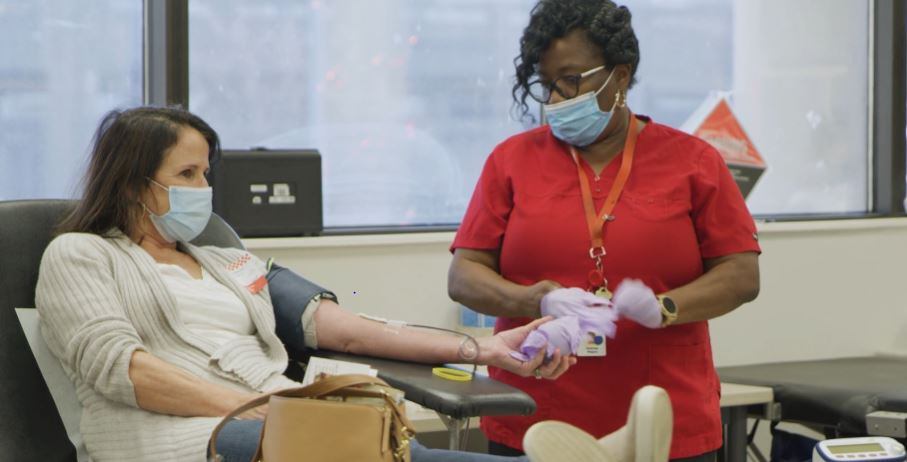
The American Red Cross has declared its first-ever "national blood crisis" in the United States. Since COVID hit the U.S. in March 2020, blood donations have declined by 10 percent. American Red Cross Medical Director, Dr. Baia Lasky joined Cheddar News to discuss the country facing the worst blood shortage in over a decade. Dr. Lasky noted that as much as 40 percent of Americans are eligible to donate blood but only about 4 percent do so. "This is going to be ongoing," she said. "This is not an acute shortage. We really do need the commitment of people to come out and donate and donate again." Appointments to donate can be made by using the Red Cross Donor App, at RedCrossBlood.org, or calling 1-800-RED CROSS (1-800-733-2767).
NFL Awards $1 Million to Study Impact of Cannabis and CBD on Pain Management
Eight months after the National Football League announced $1 million in research into cannabinoids, the NFL-NFLPA Joint Pain Management Committee has awarded the funding to two teams of medical researchers at the University of California San Diego and the University of Regina. The NFL says the studies will investigate the effects of cannabinoids on pain management and neuroprotection from concussion in elite football players, respectively. Cheddar correspondent Chloe Ailello spoke with Jeff Miller, the executive vice president of communications, public affairs, and policy for the NFL, about the studies, as well as the recent lawsuit filed against the NFL by former Miami Dolphins head coach Brian Flores. "Maybe we can learn things from other alternative pain approaches that are going to benefit our player population and then sports medicine as a whole," Miller said.
How A.I. is Reinventing Remembrance; Biodiversity of the Humboldt Current
On this episode of Cheddar Innovates: CEO of HereAfter AI discusses how artificial intelligence can be used to preserve family history and stories, and allow you to 'talk' to loved ones that have passed; Creator of the board game 'Travel Explore Discover' explains how she came up with the idea for this informative and educational board game, and how she's using the proceeds to give back to her community; Cheddar gets a look at Curiosity Stream's 'The Humboldt Current.'
Long COVID: Millions Dealing with Residual Symptoms
Immunologist Dr. Purvi Parikh of the Allergy & Asthma Network joined Cheddar News to break down long Covid, in which Covid symptoms remain up to two years after infection; a phenomenon that has so far mystified health experts.
Factorial Energy Raises $200 Million to Accelerate Commercialization of Its Solid-State Batteries for Electric Vehicles
Solid-state battery maker Factorial Energy recently raised $200 million in a Series D round led by Mercedes-Benz and Stellantis. Factorial says the funding will be used to accelerate commercial production and deployment of its solid-state battery technology, which the company says is safer, and offers up to 50% more driving range than current lithium-ion technology. Factorial also has joint development agreements (announced in late 2021) with Mercedes-Benz, Stellantis, and Hyundai, three of the top 10 global automotive manufacturers, to commercialize its batteries. Factorial CEO Siyu Huang joined Cheddar News' Closing Bell to discuss.
Energy Storage Solutions Company Leclanché Powers EV Fleets to Reduce Emissisions
A 2021 report from UK Research and Innovation found that the shipping industry makes up at least 2.5 percent of the world's total CO2 emissions. It's a problem that energy solutions company, Leclanché, is trying to solve. Founded in 1909, the company has been developing and producing batteries for more than 100 years. Today, Leclanché's lithium-ion battery is used to electrify not just ships, but also railroad locomotives, trucks, and specialty vehicles. Cheddar News spoke with Pierre Blanc, chief technology and industrial officer of Leclanché, to discuss.
Load More