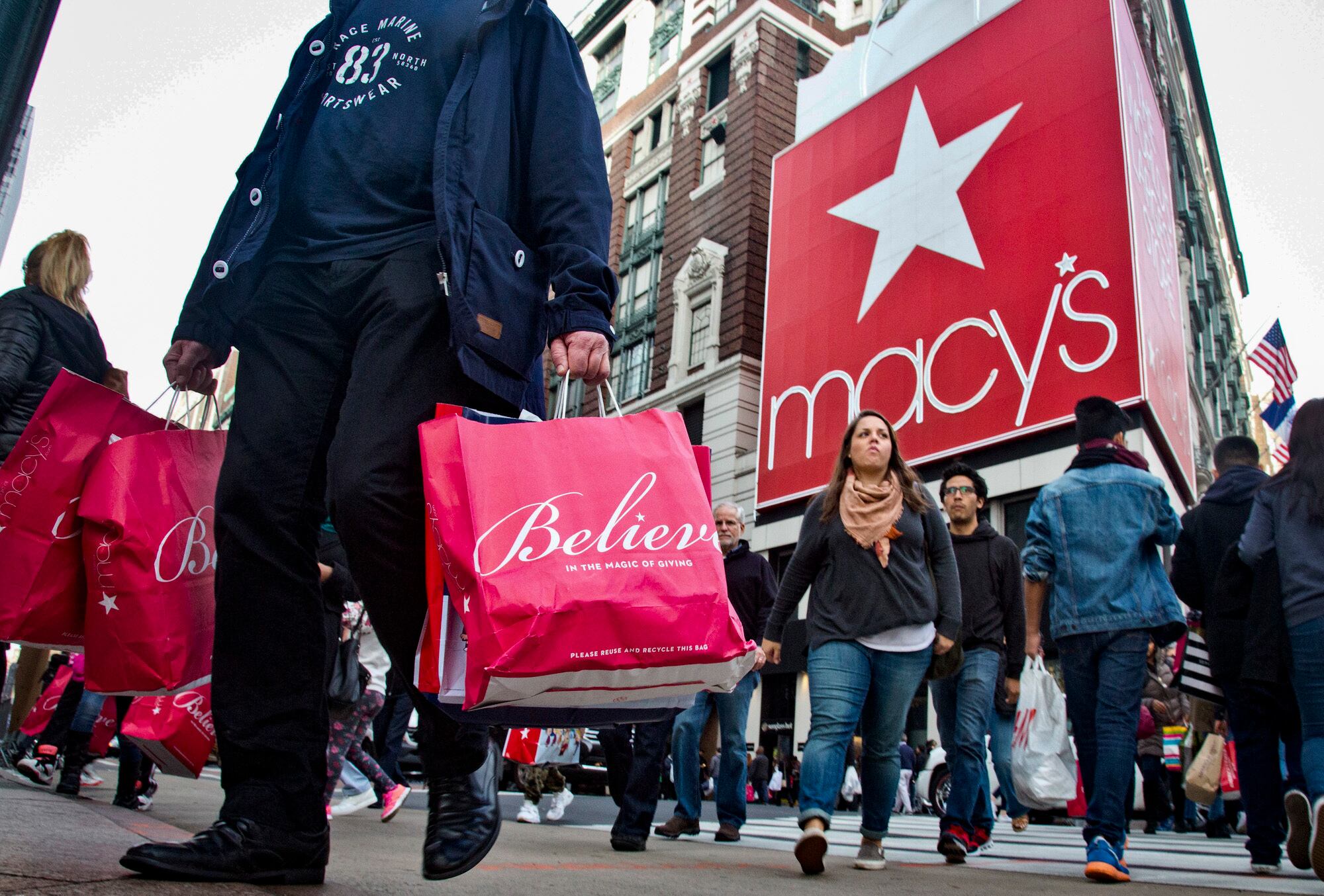
This file photo from Monday Oct. 17, 2016, shows shoppers and pedestrians in a crosswalk near a giant billboard next to Macy's flagship department store in Herald Square in New York. Macy's has filed a lawsuit against the company that owns the billboard, fighting to prevent Amazon from taking over the advertising space that carried Macy's name for almost 60 years. (AP Photo/Bebeto Matthews, File)
Macy's has filed a lawsuit against the company that owns the giant billboard next to its flagship Manhattan store, fighting to prevent Amazon from taking over the advertising space that carried Macy's name for almost 60 years.
In the lawsuit, filed last week in state Supreme Court in Manhattan, the department store retailer said there has been a restrictive covenant in place since 1963 barring the billboard space from being used by any Macy's competitor.
But Macy's said that when it tried to negotiate a lease renewal this year, the billboard's owners, the Kaufman Organization, told them they were in discussions with a “prominent online retailer," and there was “little doubt" that meant Amazon, according to the lawsuit.
Messages were left with the Kaufman Organization seeking comment. Amazon had no comment.
In the lawsuit, Macy's asked the judge for an injunction that would keep Kaufman from leasing the space to Amazon or any other competitor.
“The damages to Macy’s customer goodwill, image, reputation and brand, should a ‘prominent online retailer’ (especially, Amazon) advertise on the billboard are impossible to calculate," the company said in the lawsuit.
The lawsuit pointed out that the billboard is highly visible in its annual Thanksgiving Day parade, which is nationally televised.
Kim Perell, author and entrepreneur, shares actionable tips and tricks to help current and aspiring entrepreneurs kick off 2026 with confidence and momentum.
Emera CEO Scott Balfour discusses soaring energy demand, AI-driven grid challenges, clean-power investments, and how the company is building a resilient future.
JB Mackenzie discusses Robinhood’s new entertainment prediction markets, letting users engage with pop culture, award shows, and more through low-stakes bets.
Rhett Power shares his startup journey, lessons from his early years and insights from his book on overcoming negative self-talk to lead with confidence.
Despite inflation, Americans aren’t giving up the gym. Crunch Fitness CEO Jim Rowley discusses strong growth, value-driven expansion and what the future holds.
Home prices far outpacing incomes, low inventory, and higher living costs are reshaping the market. WSJ’s Veronica Dagher breaks down the challenges ahead.
As commercial options tighten, more travelers are turning to private aviation. Wheels Up CEO George Mattson breaks down capacity and demand challenges.
Layoffs, hiring slowdowns, and shifting skill demands dominate this year’s job talk. LinkedIn’s Kory Kantenga explains what workers should watch for next.