The U.S. economy added 224,000 jobs in June, heavily beating expectations and creating a cautious optimism among analysts wary of the dismal growth seen in May.
The unemployment rate remained largely unchanged at 3.7 percent — or 6 million people — in June, the Bureau of Labor Statistics (BLS) announced Friday in its monthly jobs report.
“The number did beat expections but ... it was pretty abysmal a month ago, and that was revised downward,” Mitch Roschelle, a partner at PwC, told Cheddar.
In Friday’s report, the BLS amended its May figures from 75,000 to just 72,000 jobs added. June’s employment growth was, however, way above the average of 172,000 per month in 2019 so far. The average monthly gain for 2018 was 223,000 jobs.
The industries with the largest gains were professional and business services and health care, which added more than 51,000 and 35,000 jobs in June respectively. The transportation and warehousing sector added roughly 24,000 jobs.
"JOBS, JOBS, JOBS!" President Donald Trump tweeted Friday morning.
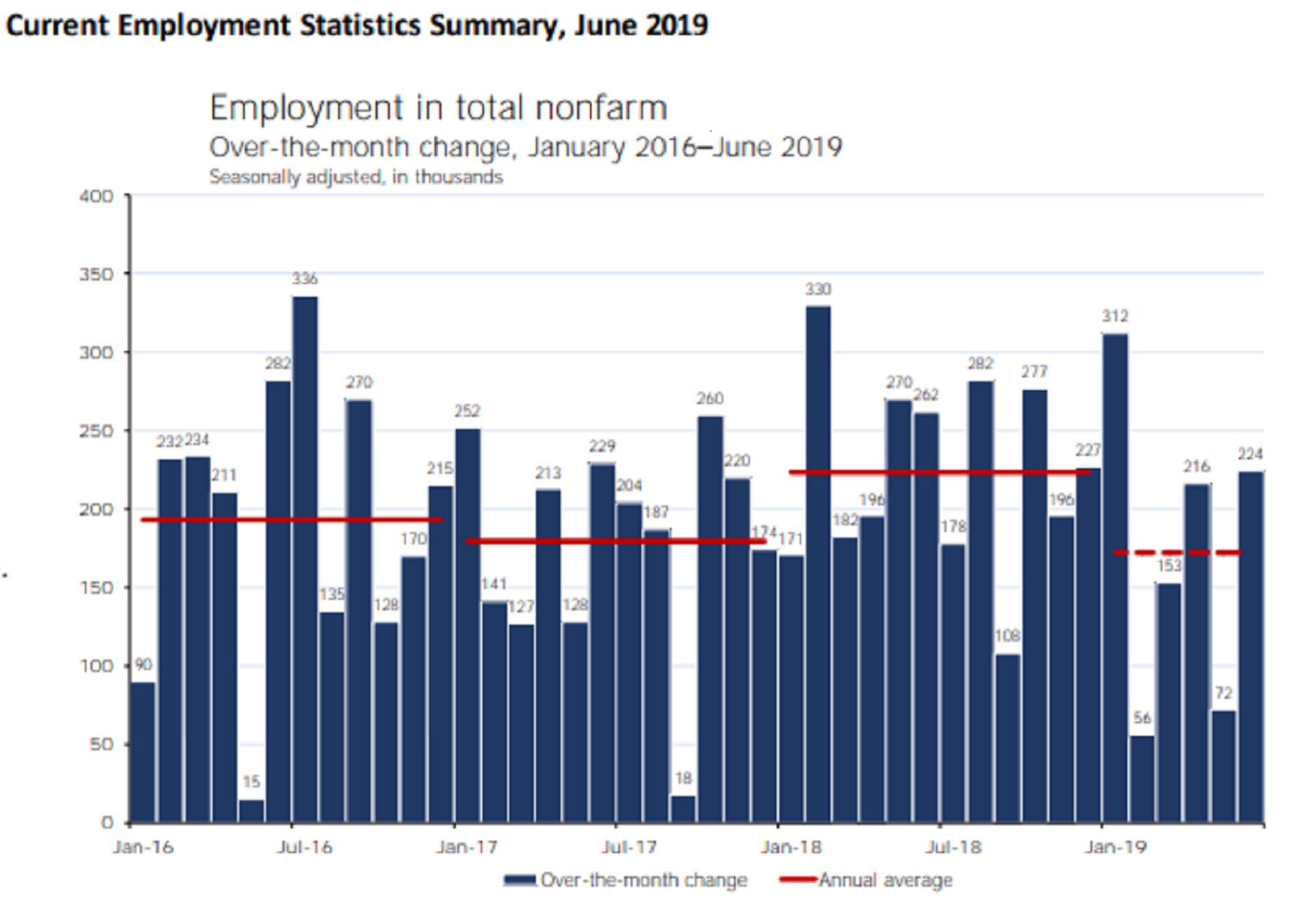
<i>U.S. Labor Department</i>
In June, average hourly earnings rose by 6 cents and have increased by 3.1 percent over the past 12 months.
The report indicates “that the labor market remains a strength of the economy” and “should ease some of the pressure that the Fed faces to cut rates,” Doug Duncan, the senior vice president and chief economist at Fannie Mae, said in a statement to Cheddar.
The Federal Reserve is expected to cut interest rates at its Federal Open Market Committee meeting later this month in an effort to hinder a potential downturn in the economy, which is currently experiencing its longest expansion on record.
“There is really nothing out there short of some big black swan event that will slow down this economy,” Roschelle said, noting, however, that a shrinking of the global economy would threaten domestic growth.
It's a tough time for the job market. Amid wider economic uncertainty, some analysts have said that businesses are at a “no-hire, no fire” standstill. At the same time, some sizeable layoffs have continued to pile up — raising worker anxieties across sectors. Some companies have pointed to rising operational costs due to U.S.'s new tariffs, while others have redirected money to artificial intelligence investments. Workers in the public sector have also been hit hard. Federal jobs were cut by the thousands earlier this year. And many workers are now going without pay as the U.S. government shutdown has now dragged on for more than a month.
Nvidia smashes earnings with record-breaking revenue and soaring Blackwell demand as shares slip this morning, Barron’s senior writer Adam Levine unpacks it all
Jeff Wagoner, CEO of Outrigger Hospitality Group, discusses the company’s coral preservation initiatives and sustainable practices at their hotels and resorts.
Dena Jalbert, Head of M&A at Align Advisory, discusses the state of mergers and acquisitions in 2025 and beyond, highlighting key trends and opportunities.
Kim Perell, author and entrepreneur, shares actionable tips and tricks to help current and aspiring entrepreneurs kick off 2026 with confidence and momentum.
Computer chipmaker Nvidia is poised to release a quarterly earnings report that is expected to either deepen a recent downturn in the stock market or prompt an ebullient sigh of relief among investors increasingly worried the world’s most valuable company is perched upon an artificial intelligence bubble about to burst.
Emera CEO Scott Balfour discusses soaring energy demand, AI-driven grid challenges, clean-power investments, and how the company is building a resilient future.
JB Mackenzie discusses Robinhood’s new entertainment prediction markets, letting users engage with pop culture, award shows, and more through low-stakes bets.